Islam is an Abrahamic religion based on the Quran and the teachings of Muhammad. The monotheistic religion has an estimated 2 billion worldwide adherents, called Muslims. Islam is the world's second-largest religious population after Christianity.
Muslims believe that there is a primordial faith that was revealed many times through earlier prophets and messengers, including Adam, Noah, Abraham, Moses, and Jesus, and they believe that Islam is the universal and complete version of this faith. Muslims consider the Quran to be the verbatim word of God and the unaltered, final revelation. Alongside the Quran, Muslims also believe in previous revelations, such as the Tawrat (Torah), the Zabur (Psalms), and the Injil (Gospel). They believe that Muhammad is the main and final of God's prophets, through whom the religion was completed, and after whom no new prophet or divine law will come. The teachings and normative examples of Muhammad, called the Sunnah, documented in accounts called hadith, provide a constitutional model for Muslims. Islam is based on the belief in the oneness and uniqueness of God (tawhid), and belief in an afterlife (akhirah) with the Last Judgment—wherein the righteous will be rewarded in paradise (jannah) and the unrighteous will be punished in hell (jahannam). The Five Pillars, considered obligatory acts of worship, are the Islamic oath and creed (shahada), daily prayers (salah), almsgiving (zakat), fasting (sawm) in the month of Ramadan, and a pilgrimage (hajj) to Mecca. Islamic law, sharia, touches on virtually every aspect of life, from banking and finance and welfare to men's roles and women's roles and the environment. The two main religious festivals are Eid al-Fitr and Eid al-Adha. The three holiest sites in Islam are Masjid al-Haram in Mecca, Prophet's Mosque in Medina, and al-Aqsa Mosque Compound in Jerusalem.
The religion of Islam originated in Mecca c. 610 CE. Muslims believe this is when Muhammad received his first revelation. By the time of his death, most of the Arabian Peninsula had converted to Islam. Muslim rule expanded outside Arabia under the Rashidun Caliphate. The two main Islamic branches are Sunni Islam (87–90%) and Shia Islam (10–13%). While the Shia–Sunni divide initially arose from disagreements over the succession to Muhammad, they grew to cover a broader dimension, both theologically and juridically. The Sunni canonical hadith collection consists of the six books, while the Shia canonical hadith collection consists of the four books. Muslims make up a majority of the population in 53 countries. Approximately 12% of the world's Muslims live in Indonesia, the most populous Muslim-majority country; 31% live in South Asia; 20% live in the Middle East–North Africa; and 15% live in sub-Saharan Africa. Muslim communities are also present in the Americas, China, and Europe. Muslims are the world's fastest-growing major religious group, according to Pew Research. This is primarily due to a higher fertility rate and younger age structure compared to other major religions.
Summary from Wikipedia (CC BY-SA 4.0)
01Etymology

In Arabic, Islam (Arabic: إسلام, lit. 'submission [to God]') is the verbal noun of Form IV originating from the verb سلم (salama), from the triliteral root س-ل-م (S-L-M), which forms a large class of words mostly relating to concepts of submission, safeness, and peace. In a religious context, it refers to the total surrender to the will of God. A Muslim (مُسْلِم), the word for a follower of Islam, is the active participle of the same verb form, and means "submitter (to God)" or "one who surrenders (to God)". However, Quranic studies scholar Mohsen Goudarzi has argued that in the Quran the word dīn means "worship", the islām means "monotheism" and the muslim means "monotheist". In the Hadith of Gabriel, Islam is presented as one part of a triad that also includes imān (faith), and ihsān (excellence).
Islam itself was historically called Mohammedanism in the English-speaking world. This term has fallen out of use and is sometimes said to be offensive, as it suggests that a human being, rather than God, is central to Muslims' religion.
02Articles of faith
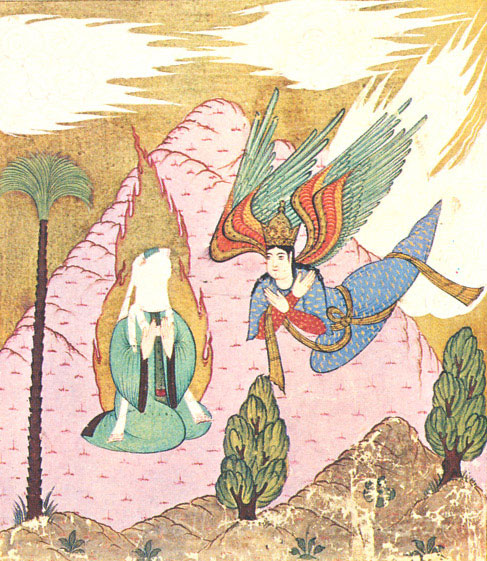
The Islamic creed (aqidah) requires belief in six articles: God, angels, revelation, prophets, the Day of Resurrection, and the divine predestination.
The central concept of Islam is tawḥīd (Arabic: توحيد), the oneness of God. It is usually thought of as a precise monotheism, but is also panentheistic in Islamic mystical teachings. God is seen as incomparable and without multiplicity of persons such as in the Christian Trinity, and associating multiplicity to God or attributing God's attributes to others is seen as idolatry, called shirk. Thus, Muslims are not iconodules and do not attribute forms to God. God is instead described and referred to by several names or attributes, the most common being Ar-Rahmān (الرحمان) meaning "The Entirely Merciful", and Ar-Rahīm (الرحيم) meaning "The Especially Merciful" which are invoked at the beginning of most chapters of the Quran. The direct Arabic name for God, Allāh (الله), a term with no plural or gender, is also commonly used in other languages by Muslims and Arabic-speaking Christians and Jews to refer to God, whereas ʾilāh (إله) is a term used for a deity or a god in general.
Islam teaches that the creation of everything in the universe was brought into being by God's command as expressed by the wording, "Be, and it is," and that the purpose of existence is to worship God. He is viewed as a personal god and no intermediaries, such as clergy, are needed to enable contact with God. Awareness of God is referred to as taqwa.
Angels (singular: Arabic: ملك, malak) are beings described in the Quran and hadith. They are described as created to worship God and also to serve in other specific duties such as communicating revelations from God, recording every person's actions, and taking a person's soul at the time of death. They are described as being created variously from 'light' (nūr) or 'fire' (nār). Islamic angels are often represented in anthropomorphic forms combined with supernatural images, such as wings, being of great size or wearing heavenly articles. Common characteristics for angels include a lack of bodily needs and desires, such as eating and drinking. Some of them, such as Gabriel (Jibrīl) and Michael (Mika'il), are mentioned by name in the Quran. Angels play a significant role in literature about the Mi'raj, where Muhammad encounters several angels during his journey through the heavens. Further angels have often been featured in Islamic eschatology, theology and philosophy.
The pre-eminent holy text of Islam is the Quran. Muslims believe that the verses of the Quran were revealed to Muhammad by God, through the archangel Gabriel, on multiple occasions between 610 CE and 632, the year Muhammad died. While Muhammad was alive, these revelations were written down by his companions, although the primary method of transmission was orally through memorization. The Quran is divided into 114 chapters (sūrah) which contain a combined 6,236 verses (āyāt). The chronologically earlier chapters, revealed at Mecca, are concerned primarily with spiritual topics, while the later Medinan chapters discuss more social and legal issues relevant to the Muslim community. Muslim jurists consult the hadith ('accounts'), or the written record of Muhammad's life, to both supplement the Quran and assist with its interpretation. The science of Quranic commentary and exegesis is known as tafsir. In addition to its religious significance, the Quran is widely regarded as the finest work in Arabic literature, and has influenced art and the Arabic language.
Islam also holds that God has sent revelations, called wahy, to different prophets numerous times throughout history. However, Islam teaches that parts of the previously revealed scriptures, such as the Tawrat (Torah) and the Injil (Gospel), have become distorted—either in interpretation, in text, or both, while the Quran (lit. 'Recitation') is viewed as the final, verbatim and unaltered word of God.
Prophets (Arabic: أنبياء, anbiyāʾ) are believed to have been chosen by God to preach a divine message. Some of these prophets additionally deliver a new book and are called "messengers" (رسول, rasūl). Muslims believe prophets are human and not divine. All of the prophets are said to have preached the same basic message of Islam – submission to the will of God – to various nations in the past, and this is said to account for many similarities among religions. The Quran recounts the names of numerous figures considered prophets in Islam, including Adam, Noah, Abraham, Moses, David and Jesus, among others. The stories associated with the prophets beyond the Quranic accounts are collected and explored in the Qisas al-Anbiya (Stories of the Prophets).
Muslims believe that God sent Muhammad as the final prophet ("Seal of the prophets") to convey the completed message of Islam. In Islam, the "normative" example of Muhammad's life is called the sunnah (literally "trodden path"). Muslims are encouraged to emulate Muhammad's moral behaviors in their daily lives, and the sunnah is seen as crucial to guiding interpretation of the Quran. This example is preserved in traditions known as hadith, which are accounts of his words, actions, and personal characteristics. Hadith Qudsi is a sub-category of hadith, regarded as God's verbatim words quoted by Muhammad that are not part of the Quran. A hadith involves two elements: a chain of narrators, called sanad, and the actual wording, called matn. There are various methodologies to classify the authenticity of hadiths, with the commonly used grading scale being "authentic" or "correct" (صحيح, ṣaḥīḥ); "good" (حسن, ḥasan); or "weak" (ضعيف, ḍaʻīf), among others. The Kutub al-Sittah are a collection of six books, regarded as the most authentic reports in Sunni Islam. Among them is Sahih al-Bukhari, often considered by Sunnis to be one of the most authentic sources after the Quran. Another well-known source of hadiths is known as The Four Books, which Shias consider as the most authentic hadith reference.
Belief in the "Day of Resurrection" or Yawm al-Qiyāmah (Arabic: يوم القيامة) is also crucial for Muslims. It is believed that the time of Qiyāmah is preordained by God, but unknown to man. The Quran and the hadith, as well as the commentaries of scholars, describe the trials and tribulations preceding and during the Qiyāmah. The Quran emphasizes bodily resurrection, a break from the pre-Islamic Arabian understanding of death.
On Yawm al-Qiyāmah, Muslims believe all humankind will be judged by their good and bad deeds and consigned to Jannah (paradise) or Jahannam (hell). The Quran in Surat al-Zalzalah describes this as: "So whoever does an atom's weight of good will see it. And whoever does an atom's weight of evil will see it." The Quran lists several sins that can condemn a person to hell. However, the Quran makes it clear that God will forgive the sins of those who repent if he wishes. Good deeds, like charity, prayer, and compassion towards animals will be rewarded with entry to heaven. Muslims view heaven as a place of joy and blessings, with Quranic references describing its features. Mystical traditions in Islam place these heavenly delights in the context of an ecstatic awareness of God. Yawm al-Qiyāmah is also identified in the Quran as Yawm ad-Dīn (يوم الدين "Day of Religion"); as-Sāʿah (الساعة "the Last Hour"); and al-Qāriʿah (القارعة "The Clatterer").
Some Muslims believe in divine predestination, (Arabic: القضاء والقدر, al-qadāʾ wa l-qadar) that every matter is decreed by God. The Muʿtazila and certain Shi'as do not believe in the concept. Often, this belief in divine destiny is expressed with the phrase Inshallah, (Arabic: إن شاء الله, if God wills) when speaking on future events.
03Acts of worship

There are five acts of worship that are considered duties–the Shahada (declaration of faith), the five daily prayers, Zakat (almsgiving), fasting during Ramadan, and the Hajj pilgrimage–collectively known as "The Pillars of Islam" (Arkān al-Islām). In addition, Muslims also perform other optional supererogatory acts that are encouraged but not considered to be duties.
The shahadah is an oath declaring belief in Islam. The expanded statement is "ʾašhadu ʾal-lā ʾilāha ʾillā-llāhu wa ʾašhadu ʾanna muħammadan rasūlu-llāh" (أشهد أن لا إله إلا الله وأشهد أن محمداً رسول الله), or, "I testify that there is no deity except God and I testify that Muhammad is the messenger of God." Islam is sometimes argued to have a very simple creed with the shahada being the premise for the rest of the religion. Non-Muslims wishing to convert to Islam are required to recite the shahada in front of witnesses.
Prayer in Islam is called as-salah (Arabic: الصلاة), or the more Persianate word namaaz. It is seen as a personal communication with God, and consists of repeating units called rakat that include bowing and prostrating to God. There are five timed prayers each day that are considered duties. The prayers are recited in the Arabic language and performed in the direction of the Kaaba. The act also requires a state of ritual purity achieved by means of either a routine wudu ritual wash or, in certain circumstances, a ghusl full body ritual wash.
A mosque, also called a masjid or a namazgah, is a place of worship for Muslims. Although the primary purpose of the mosque is to serve as a place of prayer, it is also an important social centre for the Muslim community. For example, the Masjid an-Nabawi ("Prophetic Mosque") in Medina, Saudi Arabia, used to also serve as a shelter for the poor. Minarets are towers used to call the adhan, a vocal call to signal the prayer time.
Zakat (Arabic: زكاة, zakāh), also spelled Zakāt or Zakah, is a type of almsgiving characterized by the giving of a fixed portion (2.5% annually) of accumulated wealth by those who can afford it to help the poor or needy, such as for freeing captives, those in debt, or for (stranded) travellers, and for those employed to collect zakat. It acts as a form of welfare in Muslim societies. It is considered a religious obligation that the well-off owe the needy because their wealth is seen as a trust from God's bounty, and is seen as a purification of one's excess wealth. The total annual value contributed due to zakat is 15 times greater than global humanitarian aid donations, using conservative estimates. Sadaqah, as opposed to Zakat, is a much-encouraged optional charity. A waqf is a perpetual charitable trust, which finances hospitals and schools in Muslim societies.
In Islam, fasting (Arabic: صوم, ṣawm) precludes food and drink, as well as other forms of consumption, such as smoking, and is performed from dawn to sunset. During the month of Ramadan, it is considered a duty for Muslims to fast. The fast is to encourage a feeling of nearness to God by restraining oneself for God's sake from what is otherwise permissible and to think of the needy. In addition, there are other days, such as the Day of Arafah, when fasting is optional.
The Islamic pilgrimage, called the ḥajj (Arabic: حج), is to be done at least once a lifetime by every Muslim with the means to do so during the Islamic month of Dhu al-Hijjah. Rituals of the Hajj mostly imitate the story of the family of Abraham. In Mecca, pilgrims walk seven times around the Kaaba, which Muslims believe Abraham built as a place of worship, and they walk seven times between Mount Safa and Marwa, recounting the steps of Abraham's wife, Hagar, who was looking for water for her baby Ishmael in the desert before Mecca developed into a settlement. The pilgrimage also involves spending a day praying and worshipping in the plain of Mount Arafat as well as symbolically stoning the Devil. All Muslim men wear only two simple white unstitched pieces of cloth called ihram, intended to bring continuity through generations and uniformity among pilgrims despite class or origin. Another form of pilgrimage, Umrah, is optional and can be undertaken at any time of the year. Other sites of Islamic pilgrimage are Medina, where Muhammad died, as well as Jerusalem, a city of many Islamic prophets and the site of Al-Aqsa, which was the direction of prayer before Mecca.
Muslims recite and memorize the whole or parts of the Quran as acts of virtue. Tajwid refers to the set of rules for the proper elocution of the Quran. Many Muslims recite the whole Quran during the month of Ramadan. One who has memorized the whole Quran is called a hafiz ("memorizer"), and hadiths mention that these individuals will be able to intercede for others on Judgment Day.
Supplication to God, called in Arabic duʿāʾ (Arabic: دعاء IPA: [dʊˈʕæːʔ]) has its own etiquette such as raising hands as if begging.
Remembrance of God (ذكر, Dhikr') refers to phrases repeated referencing God. Commonly, this includes Tahmid, declaring praise be due to God (الحمد لله, al-Ḥamdu lillāh) during prayer or when feeling thankful, Tasbih, declaring glory to God during prayer or when in awe of something and saying 'in the name of God' (بسملة, basmalah) before starting an act such as eating.
04History
According to Islamic tradition, Muhammad was born in Mecca in 570 CE and was orphaned early in life. Growing up as a trader, he became known as the "trusted one" (Arabic: الامين) and was sought after as an impartial arbitrator. He later married his employer, the businesswoman Khadija. In the year 610 CE, troubled by the moral decline and idolatry prevalent in Mecca and seeking seclusion and spiritual contemplation, Muhammad retreated to the Cave of Hira in the mountain Jabal al-Nour, near Mecca. It was during his time in the cave that he is said to have received the first revelation of the Quran from the angel Gabriel. The event of Muhammad's retreat to the cave and subsequent revelation is known as the "Night of Power" (Laylat al-Qadr) and is considered a significant event in Islamic history. During the next 22 years of his life, from age 40 onwards, Muhammad continued to receive revelations from God, becoming the last or seal of the prophets sent to mankind.
During this time, while in Mecca, Muhammad preached first in secret and then in public, imploring his listeners to abandon polytheism and worship one God. Many early converts to Islam were women, the poor, foreigners, and slaves like the first muezzin Bilal ibn Rabah al-Habashi. The Meccan elite felt Muhammad was destabilizing their social order by preaching about one God and giving questionable ideas to the poor and slaves because they profited from the pilgrimages to the idols of the Kaaba.
After 12 years of the persecution of Muslims by the Meccans, Muhammad and his companions performed the Hijra ("emigration") in 622 to the city of Yathrib (current-day Medina). He established the first Islamic state there with the Medinan converts (the Ansar) and the Meccan migrants (the Muhajirun). The Constitution of Medina was signed by all the tribes of Medina. This established religious freedoms and freedom to use their own laws among the Muslim and non-Muslim communities as well as an agreement to defend Medina from external threats. Meccan forces and their allies lost against the Muslims at the Battle of Badr in 624 and then fought an inconclusive battle in the Battle of Uhud before unsuccessfully besieging Medina in the Battle of the Trench (March–April 627). In 628, the Treaty of Hudaybiyyah was signed between Mecca and the Muslims, but it was broken by Mecca two years later. As more tribes converted to Islam, Meccan trade routes were cut off by the Muslims. By 629 Muhammad was victorious in the nearly bloodless conquest of Mecca, and by the time of his death in 632 (at age 62) he had united the tribes of Arabia into a single religious polity.
Muhammad died in 632 and the first successors, called Caliphs – Abu Bakr, Umar, Uthman ibn al-Affan, Ali ibn Abi Talib and sometimes Hasan ibn Ali – are known in Sunni Islam as al-khulafā' ar-rāshidūn ("Rightly Guided Caliphs"). Some tribes left Islam and rebelled under leaders who declared themselves new prophets but were crushed by Abu Bakr in the Ridda wars. Local populations of Jews and indigenous Christians, persecuted as religious minorities and heretics and taxed heavily, often helped Muslims take over their lands, resulting in rapid expansion of the caliphate into the Persian and Byzantine empires. Uthman was elected in 644 and his assassination by rebels led to Ali being elected the next Caliph. In the First Civil War, Muhammad's widow, Aisha, raised an army against Ali, attempting to avenge the death of Uthman, but was defeated at the Battle of the Camel. Ali attempted to remove the governor of Syria, Mu'awiya, who was seen as corrupt. Mu'awiya then declared war on Ali and was defeated in the Battle of Siffin. Ali's decision to arbitrate angered the Kharijites, an extremist sect, who felt that by not fighting a sinner, Ali became a sinner as well. The Kharijites rebelled and were defeated in the Battle of Nahrawan but a Kharijite assassin later killed Ali. Ali's son, Hasan ibn Ali, was elected Caliph and signed a peace treaty to avoid further fighting, abdicating to Mu'awiya in return for Mu'awiya not appointing a successor. Mu'awiya began the Umayyad dynasty with the appointment of his son Yazid I as successor, sparking the Second Civil War. During the Battle of Karbala, Husayn ibn Ali was killed by Yazid's forces; the event has been annually commemorated by Shias ever since. Sunnis, led by Ibn al-Zubayr and opposed to a dynastic caliphate, were defeated in the siege of Mecca. These disputes over leadership would give rise to the Sunni-Shia schism, with the Shia believing leadership belongs to Muhammad's family through Ali, called the ahl al-bayt.
Abu Bakr's leadership oversaw the beginning of the compilation of the Quran. The Caliph Umar ibn Abd al-Aziz set up the committee, The Seven Fuqaha of Medina, and Malik ibn Anas wrote one of the earliest books on Islamic jurisprudence, the Muwatta, as a consensus of the opinion of those jurists. The Kharijites believed there was no compromised middle ground between good and evil, and any Muslim who committed a grave sin would become an unbeliever. The term "kharijites" would also be used to refer to later groups such as ISIS. The Murji'ah taught that people's righteousness could be judged by God alone. Therefore, wrongdoers might be considered misguided, but not denounced as unbelievers. This attitude came to prevail into mainstream Islamic beliefs.
The Umayyad dynasty conquered the Maghreb, the Iberian Peninsula, Narbonnese Gaul and Sindh. The Early Muslim conquests have been described as Islamic imperialism. The Umayyads struggled with a lack of legitimacy and relied on a heavily patronized military. Since the jizya tax was a tax paid by non-Muslims which exempted them from military service, the Umayyads denied recognizing the conversion of non-Arabs, as it reduced revenue. While the Rashidun Caliphate emphasized austerity, with Umar even requiring an inventory of each official's possessions, Umayyad luxury bred dissatisfaction among the pious. The Kharijites led the Berber Revolt, leading to the first Muslim states independent of the Caliphate. In the Abbasid Revolution, non-Arab converts (mawali), Arab clans pushed aside by the Umayyad clan, and some Shi'a rallied and overthrew the Umayyads, inaugurating the more cosmopolitan Abbasid dynasty in 750.
Al-Shafi'i codified a method to determine the reliability of hadith. During the early Abbasid era, scholars such as Muhammad al-Bukhari and Muslim ibn al-Hajjaj compiled the major Sunni hadith collections while scholars like Al-Kulayni and Ibn Babawayh compiled major Shia hadith collections. The four Sunni Madh'habs, the Hanafi, Hanbali, Maliki, and Shafi'i, were established around the teachings of Abū Ḥanīfa, Ahmad ibn Hanbal, Malik ibn Anas and al-Shafi'i. In contrast, the teachings of Ja'far al-Sadiq formed the Ja'fari jurisprudence. In the 9th century, Al-Tabari completed the first commentary of the Quran, the Tafsir al-Tabari, which became one of the most cited commentaries in Sunni Islam. Some Muslims began questioning the piety of indulgence in worldly life and emphasized poverty, humility, and avoidance of sin based on renunciation of bodily desires. Ascetics such as Hasan al-Basri inspired a movement that would evolve into tasawwuf or Sufism.
At this time, theological problems, notably on free will, were prominently tackled, with Hasan al Basri holding that although God knows people's actions, good and evil come from abuse of free will and the devil. Greek rationalist philosophy influenced a speculative school of thought known as Muʿtazila, who famously advocated the notion of free-will originated by Wasil ibn Ata. Caliph Mamun al Rashid made it an official creed and unsuccessfully attempted to force this position on the majority. Caliph Al-Mu'tasim carried out inquisitions, with the traditionalist Ahmad ibn Hanbal notably refusing to conform to the Muʿtazila idea that the Quran was created rather than being eternal, which resulted in him being tortured and kept in an unlit prison cell for nearly thirty months. However, other schools of speculative theology – Māturīdism founded by Abu Mansur al-Maturidi and Ash'ari founded by Al-Ash'ari – were more successful in being widely adopted. Philosophers such as Al-Farabi, Avicenna and Averroes sought to harmonize Aristotle's ideas with the teachings of Islam, similar to later scholasticism within Christianity in Europe and Maimonides' work within Judaism, while others like Al-Ghazali argued against such syncretism and ultimately prevailed.
This era is sometimes called the "Islamic Golden Age". Islamic scientific achievements spanned a wide range of subject areas including medicine, mathematics, astronomy, and agriculture as well as physics, economics, engineering and optics. Avicenna was a pioneer in experimental medicine, and his The Canon of Medicine was used as a standard medicinal text in the Islamic world and Europe for centuries. Rhazes was the first to identify the diseases smallpox and measles. Public hospitals of the time issued the first medical diplomas to license doctors. Ibn al-Haytham is regarded as the father of the modern scientific method and often referred to as the "world's first true scientist", in particular regarding his work in optics. In engineering, the Banū Mūsā brothers' automatic flute player is considered to have been the first programmable machine. In mathematics, the concept of the algorithm is named after Muhammad ibn Musa al-Khwarizmi, who is considered a founder of algebra, which is named after his book al-jabr, while others developed the concept of a function. The government paid scientists the equivalent salary of professional athletes today. Guinness World Records recognizes the University of Al Karaouine, founded in 859, as the world's oldest degree-granting university. Many non-Muslims, such as Christians, Jews and Sabians, contributed to the Islamic civilization in various fields, and the institution known as the House of Wisdom employed Christian and Persian scholars to both translate works into Arabic and to develop new knowledge.
Soldiers broke away from the Abbasid empire and established their own dynasties, such as the Tulunids in 868 in Egypt and the Ghaznavid dynasty in 977 in Central Asia. In this fragmentation came the Shi'a Century, roughly between 945 and 1055, which saw the rise of the millennialist Isma'ili Shi'a missionary movement. One Isma'ili group, the Fatimid dynasty, took control of North Africa in the 10th century and another Isma'ili group, the Qarmatians, sacked Mecca and stole the Black Stone, a rock placed within the Kaaba, in their unsuccessful rebellion. Yet another Isma'ili group, the Buyid dynasty, conquered Baghdad and turned the Abbasids into a figurehead monarchy. The Sunni Seljuk dynasty campaigned to reassert Sunni Islam by promulgating the scholarly opinions of the time, notably with the construction of educational institutions known as Nizamiyyas, which are associated with al-Ghazali and Saadi Shirazi.
The expansion of the Muslim world continued with religious missions converting Volga Bulgaria to Islam. The Delhi Sultanate reached deep into the Indian subcontinent and many converted to Islam, in particular low-caste Hindus whose descendants make up the vast majority of Indian Muslims. Trade brought many Muslims to China, where they virtually dominated the import and export industry of the Song dynasty. Muslims were recruited as a governing minority class in the Yuan dynasty.
Through Muslim trade networks and the activity of Sufi orders, Islam spread into new areas and Muslims assimilated into new cultures.
Under the Ottoman Empire, Islam spread to Southeast Europe. Conversion to Islam often involved a degree of syncretism, as illustrated by Muhammad's appearance in Hindu folklore. Muslim Turks incorporated elements of Turkish Shamanism beliefs to Islam.
05Demographics
As of 2020, about 25.6% of the global population, or about 2 billion people, are Muslims. In 1900, this estimate was 12.3%, in 1990 it was 19.9% and projections suggest the proportion will be 29.7% by 2050. A Pew study from 2020 found that the global Muslim population was the fastest-growing religious group over the decade, mainly because Muslims tend to be younger on average and have higher birth rates—two key factors driving natural population growth. According to the 2020 population estimate, 65% of the Muslim population is concentrated in ten countries, with the largest populations residing in Indonesia, Pakistan, India, Bangladesh, Nigeria, Egypt, Iran, Turkey, Sudan, and Algeria, in descending order. Indonesia is home to over 230,000,000 Muslims, Pakistan over 220,000,000, India over 210,000,000, Bangladesh over 150,000,000, Nigeria over 110,000,000, Egypt over 100,000,000, Iran and Turkey each over 80,000,000, and Sudan and Algeria each over 40,000,000.
According to a report by CNN, "Islam has drawn converts from all walks of life, most notably African-Americans". In Britain, around 6,000 people convert to Islam per year and, according to an article in the British Muslims Monthly Survey, the majority of new Muslim converts in Britain were women. According to The Huffington Post, "observers estimate that as many as 20,000 Americans convert to Islam annually", most of them being women and African-Americans.
By both percentage and total numbers, Islam is the world's fastest growing major religious group, and is projected to be the world's largest by the end of the 21st century, surpassing that of Christianity. It is estimated that, by 2050, the number of Muslims will nearly equal the number of Christians around the world, "due to the young age and high fertility rate of Muslims relative to other religious groups."
Pew Research Center estimated in 2009 that 87–90% of Muslims are Sunni and 10–13% are Shia (between 154 and 200 million Shia out of 1.57 billion Muslims as of 2009). Approximately 49 countries are Muslim-majority, with 62% of the world's Muslims living in Asia, and 683 million adherents in Indonesia, Pakistan, India, and Bangladesh alone. Arab Muslims form the largest ethnic group among Muslims in the world, followed by Bengalis and Punjabis. Most estimates indicate China has approximately 20 to 30 million Muslims (1.5% to 2% of the population). Islam in Europe is the second-largest religion after Christianity in many countries, with growth rates due primarily to immigration and higher birth rates of Muslims in 2005, accounting for 4.9% of all of Europe's population in 2016.
According to the Pew Research Center, conversion to Islam has no major net impact on the Muslim population growth as "the number of people who become Muslims through conversion seems to be roughly equal to the number of Muslims who leave the faith." Although, Islam is expected to experience a modest gain of 3 million through religious conversion between 2010 and 2050, mostly from Sub Saharan Africa (2.9 million). According to a 2020 Pew study, about 1% of adults raised Muslim leave the faith, while an equal proportion —about 1%— convert to Islam from other religions, resulting in low levels of religious switching both into and out of Islam. Ex-Muslims are more likely to convert to another religion than to become irreligious.
06Main branches or denominations
Sunni Islam, or Sunnism, is the name for the largest denomination in Islam. The term is a contraction of the phrase "ahl as-sunna wa al-jama'at", which means "people of the sunna (the traditions of Muhammad) and the community". Sunni Islam is sometimes referred to as "orthodox Islam", though some scholars view this as inappropriate, and many non-Sunnis may find this offensive. Sunnis, or sometimes Sunnites, believe that the first four caliphs were the rightful successors to Muhammad and primarily reference six major hadith works for legal matters, while following one of the four traditional schools of jurisprudence: Hanafi, Hanbali, Maliki or Shafi'i.
Traditionalist theology is a Sunni school of thought, prominently advocated by Ahmad ibn Hanbal (780–855 CE), that is characterized by its adherence to a textualist understanding of the Quran and the sunnah, the belief that the Quran is uncreated and eternal, and opposition to speculative theology, called kalam, in religious and ethical matters. Maturidism, founded by Abu Mansur al-Maturidi (853–944 CE), asserts that scripture is not needed for basic ethics and that good and evil can be understood by reason alone, but people rely on revelation for matters beyond human comprehension. Ash'arism, founded by Al-Ashʿarī (c. 874–936), holds that ethics can derive just from divine revelation but accepts reason regarding exegetical matters and combines Muʿtazila approaches with traditionalist ideas.
Salafism is a revival movement advocating the return to the practices of the earliest generations of Muslims. In the 18th century, Muhammad ibn Abd al-Wahhab led a Salafi movement, referred by outsiders as Wahhabism, in modern-day Saudi Arabia. A similar movement called Ahl al-Hadith also de-emphasized the centuries' old Sunni legal tradition, preferring to directly follow the Quran and Hadith. The Nurcu Sunni movement was initiated by Said Nursi (1877–1960); it incorporates elements of Sufism and science.
Shia Islam is the second-largest Muslim denomination. Shias maintain that Muhammad's successor as leader, must be from certain descendants of Muhammad's family known as the Ahl al-Bayt and those leaders, referred to as Imams, have additional spiritual authority. Shias are guided by the Ja'fari school of jurisprudence.
According to both Sunni and Shia Muslims, a significant event took place at Ghadir Khumm during Muhammad's return from his final pilgrimage to Mecca, where he stopped thousands of Muslims in the midday heat. Muhammad appointed his cousin Ali as the executor of his last will and testament, as well as his Wali (authority). Shias recognize that Muhammad designated Ali as his successor (khalīfa) and Imam (spiritual and political leader) after him, but was prevented from succeeding Muhammad as the leader of the Muslims because of some other companions who selected Abū Bakr as caliph. Sunnis, instead believe that Muhammad did not appoint a successor before his death and consider Abū Bakr to be the first rightful caliph after Muhammad. Shias state the community deliberately ignored Ali's nomination, citing Umar's appointment by Abu Bakr, other historical evidence, and the Qur'an's stance that majority does not imply legitimacy.
Some of the first Shia Imams are revered by all Shia and Sunnis Muslims, such as Ali and Husayn. Twelvers, the largest Shia branch and most influential, believe in Twelve Imams, the last of whom went into occultation to return one day. They recognize that the prophecy of the Twelve Imams has been foretold in the Hadith of the Twelve Successors which is recorded by both Sunni and Shia sources. Zaydism rejects infallibility of Imams and were sometimes regarded a 'fifth school' of Sunni Islam rather than a Shia denomination. They differed with other Shias over the status of the fifth imam and are sometimes known as "Fivers". The Isma'ilis split with the Twelvers over who was the seventh Imam and have further fragmented into more groups over the status of successive Imams, with the largest group being the Nizaris.
For Shias, the Imam Ali Shrine in Najaf, the Imam Husayn Shrine in Karbala, and the Fatima Masumeh Shrine in Qom are also among the Islamic Holy sites.
Ibadism is the third-largest branch of Islam whose roots go back to the Kharijite secession from the fourth Caliph, Ali. It is practised by 1.45 million Muslims around the world (~0.08% of all Muslims), most of them in Oman. Ibadism is often associated with and viewed as a moderate variation of the Kharijites, though Ibadis themselves object to this classification. The kharijites were groups that rebelled against Caliph Ali for his acceptance of arbitration with someone they viewed as a sinner. Unlike most kharijite groups, Ibadism does not regard sinful Muslims as unbelievers. Ibadi hadiths, such as the Jami Sahih collection, use chains of narrators from early Islamic history they consider trustworthy, but most Ibadi hadiths are also found in standard Sunni collections and contemporary Ibadis often approve of the standard Sunni collections.
The Ahmadiyya Movement was founded in British India in 1889 by Mirza Ghulam Ahmad of Qadian, who claimed to be the promised Messiah ("Second Coming of Christ"), the Mahdi awaited by the Muslims as well as a "subordinate" prophet to the Islamic prophet Muhammad. There are a wide variety of distinct beliefs and teachings of Ahmadis compared to those of most other Muslims, which include the interpretation of the Quranic title Khatam an-Nabiyyin and interpretation of the Messiah's Second Coming. These perceived deviations from normative Islamic thought have resulted in rejection by most Muslims as heretics and persecution of Ahmadis in various countries, particularly Pakistan, where they have been officially declared as non-Muslims by the Government of Pakistan. The followers of the Ahmadiyya Movement in Islam are divided into two groups: the first being the Ahmadiyya Muslim Community, currently the dominant group, and the Lahore Ahmadiyya Movement for the Propagation of Islam.
Alevism is a syncretic and heterodox local Islamic tradition, whose adherents follow the mystical (bāṭenī) teachings of Ali and Haji Bektash Veli. Alevism is a blend of traditional 14th-century Turkish beliefs, with possible syncretist origins in Shamanism and Animism alongside Shia and Sufi beliefs. It has been estimated that there are 10 million to over 20 million (~0.5–1% of all Muslims) Alevis worldwide.
Quranism is a religious movement of Islam based on the belief that Islamic law and guidance should only be based on the Quran and not the sunnah or Hadith, with Quranists notably differing in their approach to the five pillars of Islam. The movement developed from the 19th century onwards, with thinkers like Syed Ahmad Khan, Abdullah Chakralawi and Ghulam Ahmed Perwez in India questioning the hadith tradition. In Egypt, Muhammad Tawfiq Sidqi penned the article Islam is the Quran alone in the magazine Al-Manār, arguing for the sole authority of the Quran. A prominent late 20th century Quranist was Rashad Khalifa, an Egyptian-American biochemist who claimed to have discovered a numerological code in the Quran, and founded the Quranist organization United Submitters International.
Mu'tazilism was an early Islamic theological school known for their use of rationalism, particularly towards the two primary sources of Islam, the Qur'an and the hadith. The school was founded on five main principles: the monotheism (tawhid), divine justice, the certainty of divine promises and threats, an intermediate position regarding the status of great sinners, and the obligation to enjoin good and forbid evil. Unlike the Sunnis, Mu'tazilite rejected the traditional view that the Qur'an was the uncreated word of God, and instead held that the Qur'an was a created revelation, to affirm the absolute oneness of God. Emphasizing the use of reason, they argued that human free will allowed individuals to choose between good and evil, making them responsible for their actions. Although the Mu'tazila's influence waned due to social and political pressure from orthodox Sunnis, their rationalist legacy remains important in Islamic intellectualism.
Non-denominational Muslims is an umbrella term that has been used for and by Muslims who do not belong to or do not self-identify with a specific Islamic denomination. Recent surveys report that large proportions of Muslims in some parts of the world self-identify as solely Muslim, although there is little published analysis available regarding the motivations underlying this response. Pew Research reports that respondents self-identifying as solely muslim make up a majority of Muslims in seven countries (and a plurality in three others), with the highest proportion in Kazakhstan at 74%. At least one in five Muslims in at least 22 countries self-identifies in this way.
Article sections from Wikipedia (CC BY-SA 4.0). Excerpted for readability.