The Islamic Golden Age was a period of cultural flourishing in the history of Islam, dated from the 8th century CE to the 14th century. The period is understood to have begun during the reign of the Abbasid caliph Harun al-Rashid (786–809), with the establishment of the House of Wisdom in Baghdad, one of the world's largest cities at the time. The institution attracted scholars from across the Muslim world to translate the classical knowledge of the known world into Arabic. In addition to Baghdad, the intellectual and cultural activity also flourished in other urban centers of the medieval Islamic world, including Cairo, and Umayyad Córdoba (capital of Al-Andalus), as well as Damascus, Nishapur, Samarkand, Ghazni, Kairouan, and Fez, and in later centuries, Nasrid Granada.
The period is said to have ended with the collapse of the Abbasid caliphate following the Mongol invasions and the Siege of Baghdad in 1258. Select scholars extend the end of the golden age to around 1350, thereby including the Timurid Renaissance. Others extend it to the 15th century, including the Nasrid Kingdom of Granada, whose court remained an important centre of scholarship, culture and literature, or even to the 16th century, incorporating the rise of the Islamic gunpowder empires.
Summary from Wikipedia (CC BY-SA 4.0)
01History of concepts
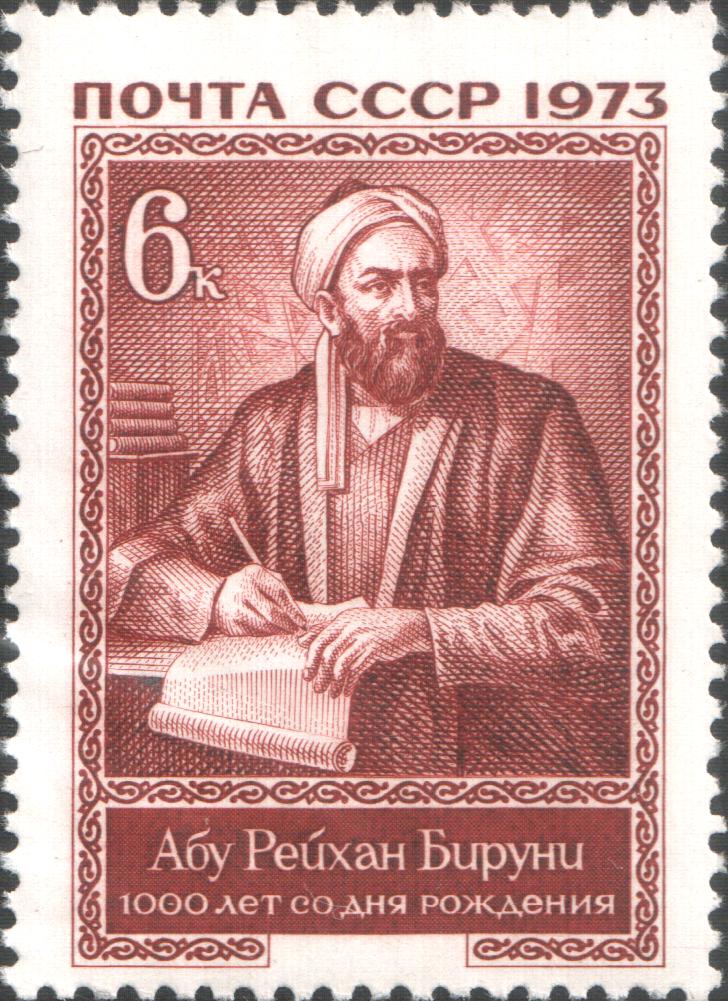
The metaphor of a golden age began to be applied in 19th-century literature about Islamic history, in the context of the western aesthetic fashion known as Orientalism. The author of a Handbook for Travelers in Syria and Palestine in 1868 observed that the most beautiful mosques of Damascus were "like Mohammedanism itself, now rapidly decaying" and relics of "the golden age of Islam".
There is no unambiguous definition of the term, and depending on whether it is used with a focus on cultural or on military achievement, it may be taken to refer to rather disparate time spans. Thus, one 19th century author would have it extend to the duration of the caliphate, or to "six and a half centuries", while another would have it end after only a few decades of Rashidun conquests, with the death of Umar and the First Fitna.
During the early 20th century, the term was used only occasionally and often referred to as the early military successes of the Rashidun caliphs. It was only in the second half of the 20th century that the term came to be used with any frequency, now mostly referring to the cultural flourishing of science and mathematics under the caliphates during the 9th to 11th centuries (between the establishment of organised scholarship in the House of Wisdom and the beginning of the crusades), but often extended to include part of the late 8th or the 12th to early 13th centuries. Definitions may still vary considerably.
Equating the end of the golden age with the end of the caliphates is a convenient cut-off point based on a historical landmark, but it can be argued that Islamic culture had entered a gradual decline much earlier; thus, Khan (2003) identifies the proper golden age as being the two centuries between 750 and 950, arguing that the beginning loss of territories under Harun al-Rashid worsened after the death of al-Ma'mun in 833, and that the crusades in the 12th century resulted in a weakening of the Islamic empire from which it never recovered.
Regarding the end of the Gola, Mohamad Abdalla argues the dominant approach by scholars is the "decline theory.":The golden age is considered to have come into existence through a major effort to acquire and translate the ancient sciences of the Greeks between the eighth and ninth centuries. The translation era was followed by two centuries of splendid original thinking and contributions, and is known as the "golden age" of Islamic science. This so-called "golden age" is supposed to have lasted from the end of the ninth to the end of the eleventh century. The era after this period is conventionally known as the "age of decline". A survey of literature from the nineteenth century onward demonstrates that the decline theory has become the preferred paradigm in general academia.
02Causes

The various Quranic injunctions, which place values on education and emphasize the importance of acquiring knowledge may have played a vital role in influencing the Muslims of this age in their search for knowledge and the development of the body of science.
The Islamic Empire heavily patronized scholars. The money spent on the Translation Movement for some translations is estimated to be equivalent to about twice the annual research budget of the United Kingdom's Medical Research Council. The best scholars and notable translators, such as Hunayn ibn Ishaq, had salaries that are estimated to be the equivalent of professional athletes today. The House of Wisdom was a library established in Abbasid-era Baghdad, Iraq by Caliph al-Mansur in 825 modeled after the academy of Jundishapur.
During this period, the Muslims showed a strong interest in assimilating the scientific knowledge of the civilizations that had been conquered. Many classic works of antiquity that might otherwise have been lost were translated from Greek, Syriac, Middle Persian, and Sanskrit into Syriac and Arabic, some of which were later in turn translated into other languages like Hebrew and Latin.
Christians, especially the adherents of the Church of the East (Nestorians), contributed to Islamic civilization during the reign of the Umayyads and the Abbasids by translating works of Greek philosophers and ancient science to Syriac and afterwards to Arabic. They also excelled in many fields, in particular philosophy, science (such as Hunayn ibn Ishaq, Yusuf Al-Khuri, Al Himsi, Qusta ibn Luqa, Masawaiyh, Patriarch Eutychius, and Jabril ibn Bukhtishu) and theology. For a long period of time the personal physicians of the Abbasid Caliphs were often Assyrian Christians. Among the most prominent Christian families to serve as physicians to the caliphs were the Bukhtishu dynasty. Throughout the 4th to 7th centuries, Christian scholarly work in the Greek and Syriac languages was either newly translated or had been preserved since the Hellenistic period. Among the prominent centers of learning and transmission of classical wisdom were Christian colleges such as the School of Nisibis and the School of Edessa, the pagan center of learning in Harran, and the hospital and medical Academy of Gondishapur, which was the intellectual, theological and scientific center of the Church of the East. Many scholars of the House of Wisdom were of Christian background and it was led by Christian physician Hunayn ibn Ishaq, with the support of Byzantine medicine. Many of the most important philosophical and scientific works of the ancient world were translated, including the work of Galen, Hippocrates, Plato, Aristotle, Ptolemy and Archimedes.
Persians also were a notably high proportion of scientists who contributed to the Islamic Golden Age. According to Bernard Lewis: "Culturally, politically, and most remarkable of all even religiously, the Persian contribution to this new Islamic civilization is of immense importance. The work of Iranians can be seen in every field of cultural endeavor, including Arabic poetry, to which poets of Iranian origin composing their poems in Arabic made a very significant contribution."
While cultural influence used to radiate outward from Baghdad, after the Mongol destruction of the Abbasid Caliphate, Arab influence decreased. Iran and Central Asia, benefiting from increased cross-cultural access to East Asia under Mongol rule, flourished and developed more distinctively from Arab influence, such as the Timurid Renaissance under the Timurid dynasty.
With a new and easier writing system, and the introduction of paper, information was democratized to the extent that, for probably the first time in history, it became possible to make a living from only writing and selling books. The use of paper spread from China into Muslim regions in the eighth century through mass production in Samarkand and Khorasan, arriving in Al-Andalus on the Iberian Peninsula (modern Spain and Portugal) in the 10th century. It was easier to manufacture than parchment, less likely to crack than papyrus, and could absorb ink, making it difficult to erase and ideal for keeping records. Islamic paper makers devised assembly-line methods of hand-copying manuscripts to turn out editions far larger than any available in Europe for centuries. It was from these countries that the rest of the world learned to make paper from linen.
03Education

The centrality of scripture and its study in the Islamic tradition helped to make education a central pillar of the religion in virtually all times and places in the history of Islam. The importance of learning in the Islamic tradition is reflected in a number of hadiths attributed to Muhammad, including one that states "Seeking knowledge is obligatory upon every Muslim". This injunction was seen to apply particularly to scholars, but also to some extent to the wider Muslim public, as exemplified by the dictum of al-Zarnuji, "learning is prescribed for us all". While it is impossible to calculate literacy rates in pre-modern Islamic societies, it is almost certain that they were relatively high, at least in comparison to their European counterparts.
Education would begin at a young age with study of Arabic and the Quran, either at home or in a primary school, which was often attached to a mosque. Some students would then proceed to training in tafsir (Quranic exegesis) and fiqh (Islamic jurisprudence), which was seen as particularly important. Education focused on memorization, but also trained the more advanced students to participate as readers and writers in the tradition of commentary on the studied texts. It also involved a process of socialization of aspiring scholars, who came from virtually all social backgrounds, into the ranks of the ulema.
For the first few centuries of Islam, educational settings were entirely informal, but beginning in the 11th and 12th centuries, the ruling elites began to establish institutions of higher religious learning known as madrasas in an effort to secure support and cooperation of the ulema. Madrasas soon multiplied throughout the Islamic world, which helped to spread Islamic learning beyond urban centers and to unite diverse Islamic communities in a shared cultural project. Nonetheless, instruction remained focused on individual relationships between students and their teacher. The formal attestation of educational attainment, ijaza, was granted by a particular scholar rather than the institution, and it placed its holder within a genealogy of scholars, which was the only recognized hierarchy in the educational system. While formal studies in madrasas were open only to men, women of prominent urban families were commonly educated in private settings and many of them received and later issued ijazas in hadith studies, calligraphy and poetry recitation. Working women learned religious texts and practical skills primarily from each other, though they also received some instruction together with men in mosques and private homes.
Madrasas were devoted principally to study of law, but they also offered other subjects such as theology, medicine, and mathematics. The madrasa complex usually consisted of a mosque, boarding house, and a library. It was maintained by a waqf (charitable endowment), which paid salaries of professors, stipends of students, and defrayed the costs of construction and maintenance. The madrasa was unlike a modern college in that it lacked a standardized curriculum or institutionalized system of certification.
Muslims distinguished disciplines inherited from pre-Islamic civilizations, such as philosophy and medicine, which they called "sciences of the ancients" or "rational sciences", from Islamic religious sciences. Sciences of the former type flourished for several centuries, and their transmission formed part of the educational framework in classical and medieval Islam. In some cases, they were supported by institutions such as the House of Wisdom in Baghdad, but more often they were transmitted informally from teacher to student.
The University of al-Qarawiyyin (al-Karaouine), founded in 859 AD, is listed in The Guinness Book Of Records as the world's oldest degree-granting university. The Al-Azhar University was another early madrasa now recognized as a university. The madrasa is one of the relics of the Fatimid caliphate. The Fatimids traced their descent to Muhammad's daughter Fatimah and named the institution using a variant of her honorific title Al-Zahra (the brilliant). Organized instruction in the Al-Azhar Mosque began in 978. Arabic became a trade language. The Muslim-ruled Spanish capital of Córdoba, which surpassed Constantinople as the Europe's largest city, also became a prominent world leading centre of education and learning producing numerous polymaths.
04Law

Juristic thought gradually developed in study circles, where independent scholars met to learn from a local master and discuss religious topics. At first, these circles were fluid in their membership, but with time distinct regional legal schools crystallized around shared sets of methodological principles. As the boundaries of the schools became clearly delineated, the authority of their doctrinal tenets came to be vested in a master jurist from earlier times, who was henceforth identified as the school's founder. In the course of the first three centuries of Islam, all legal schools came to accept the broad outlines of classical legal theory, according to which Islamic law had to be firmly rooted in the Quran and hadith.
The classical theory of Islamic jurisprudence elaborates how scriptures should be interpreted from the standpoint of linguistics and rhetoric. It also comprises methods for establishing authenticity of hadith and for determining when the legal force of a scriptural passage is abrogated by a passage revealed at a later date. In addition to the Quran and sunnah, the classical theory of Sunni fiqh recognizes two other sources of law: juristic consensus (ijmaʿ) and analogical reasoning (qiyas). It therefore studies the application and limits of analogy, as well as the value and limits of consensus, along with other methodological principles, some of which are accepted by only certain legal schools. This interpretive apparatus is brought together under the rubric of ijtihad, which refers to a jurist's exertion in an attempt to arrive at a ruling on a particular question. The theory of Twelver Shia jurisprudence parallels that of Sunni schools with some differences, such as recognition of reason (ʿaql) as a source of law in place of qiyas and extension of the notion of sunnah to include traditions of the imams.
The body of substantive Islamic law was created by independent jurists (muftis). Their legal opinions (fatwas) were taken into account by ruler-appointed judges who presided over qāḍī's courts, and by maẓālim courts, which were controlled by the ruler's council and administered criminal law.
05Theology
Classical Islamic theology emerged from an early doctrinal controversy which pitted the ahl al-hadith movement, led by Ahmad ibn Hanbal, who considered the Quran and authentic hadith to be the only acceptable authority in matters of faith, against Mu'tazilites and other theological currents, who developed theological doctrines using rationalistic methods. In 833 the caliph al-Ma'mun tried to impose Mu'tazilite theology on all religious scholars and instituted an inquisition (mihna), but the attempts to impose a caliphal writ in matters of religious orthodoxy ultimately failed. This controversy persisted until al-Ash'ari (874–936) found a middle ground between Mu'tazilite rationalism and Hanbalite literalism, using the rationalistic methods championed by Mu'tazilites to defend most substantive tenets maintained by ahl al-hadith. A rival compromise between rationalism and literalism emerged from the work of al-Maturidi (d. c. 944), and, although a minority of scholars remained faithful to the early ahl al-hadith creed, Ash'ari and Maturidi theology came to dominate Sunni Islam from the 10th century on.
06Philosophy
Ibn Sina (Avicenna) and Ibn Rushd (Averroes) played a major role in interpreting the works of Aristotle, whose ideas came to dominate the non-religious thought of the Christian and Muslim worlds. According to the Stanford Encyclopedia of Philosophy, translation of philosophical texts from Arabic to Latin in Western Europe "led to the transformation of almost all philosophical disciplines in the medieval Latin world". The influence of Islamic philosophers in Europe was particularly strong in natural philosophy, psychology and metaphysics, though it also influenced the study of logic and ethics.
Ibn Sina argued his "Floating man" thought experiment concerning self-awareness, in which a man deprived of sense experience by being blindfolded and free falling would still be aware of his existence.
In epistemology, Ibn Tufail wrote the novel Hayy ibn Yaqdhan and in response Ibn al-Nafis wrote the novel Theologus Autodidactus. Both were concerning autodidacticism as illuminated through the life of a feral child spontaneously generated in a cave on a desert island.
Article sections from Wikipedia (CC BY-SA 4.0). Excerpted for readability.