Sir Isaac Newton ( ; 4 January 1643 [O.S. 25 December 1642] – 31 March 1727 [O.S. 20 March 1726]) was an English polymath who was a mathematician, physicist, astronomer, alchemist, theologian, historian and inventor. He was a key figure in the Scientific Revolution and the Enlightenment that followed. His book Philosophiæ Naturalis Principia Mathematica (Mathematical Principles of Natural Philosophy), first published in 1687, achieved the first great unification in physics and established classical mechanics. Newton also made seminal contributions to optics, and shares credit with the German mathematician Gottfried Wilhelm Leibniz for formulating infinitesimal calculus, although he developed calculus years before Leibniz. Newton contributed to and refined the scientific method, and his work is considered the most influential in bringing forth modern science.
In the Principia, Newton formulated the laws of motion and universal gravitation that formed the dominant scientific viewpoint for centuries until it was superseded by the theory of relativity. While this is the case, his laws still serve as sufficient approximations for all physical phenomena involving low speeds (much less than the speed of light) and weak gravitational fields. He used his mathematical description of gravity to derive Kepler's laws of planetary motion, account for tides, the trajectories of comets, the precession of the equinoxes and other phenomena, eradicating doubt about the Solar System's heliocentricity. Newton solved the two-body problem and introduced the three-body problem. He demonstrated that the motion of objects on Earth and celestial bodies could be accounted for by the same principles. Newton's inference that the Earth is an oblate spheroid was subsequently confirmed by the geodetic measurements of Pierre Louis Maupertuis, Alexis Clairaut, Charles Marie de La Condamine, and others, convincing most European scientists of the superiority of Newtonian mechanics over earlier systems. He was also the first to calculate the age of Earth by experiment, and described a precursor to the modern wind tunnel. Further, he was the first to provide a quantitative estimate of the solar mass.
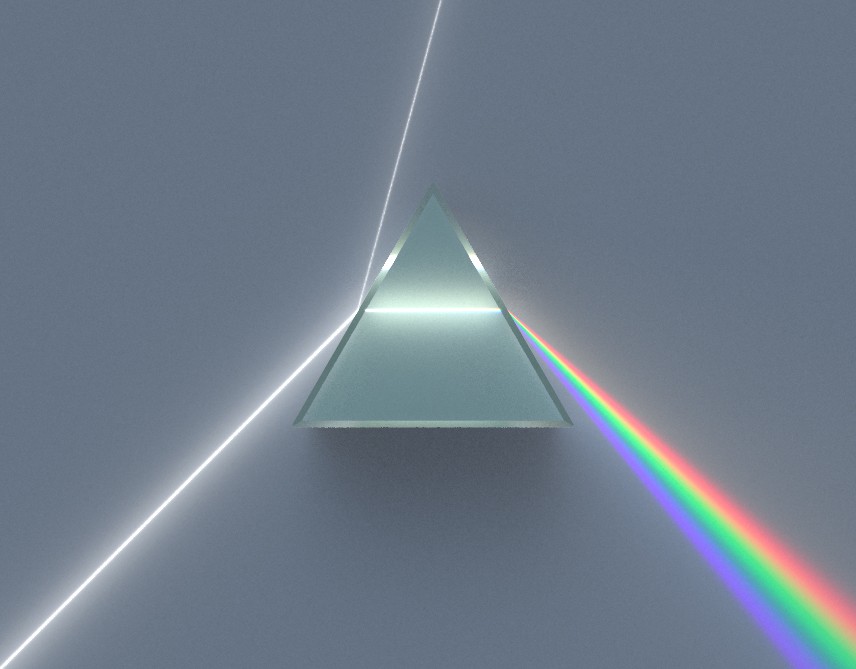
Newton built the first reflecting telescope and developed a sophisticated theory of colour based on the observation that a prism separates white light into the colours of the visible spectrum. His work on light was collected in his book Opticks, published in 1704. He originated prisms as beam expanders and multiple-prism arrays, which would later become integral to the development of tunable lasers. Newton also formulated an empirical law of cooling, which was the first heat transfer formulation and serves as the formal basis of convective heat transfer, made the first theoretical calculation of the speed of sound, and introduced the notions of a Newtonian fluid and a black body. He was also the first to explain the Magnus effect. Moreover, he was the first to analyse Couette flow. In addition to his creation of calculus, Newton's work on mathematics was extensive. He generalised the binomial theorem to any real number, introduced the Puiseux series, was the first to state Bézout's theorem, classified most of the cubic plane curves, contributed to the study of Cremona transformations, developed a method for approximating the roots of a function, originated the Newton–Cotes formulas used for numerical integration, and further produced the earliest explicit enunciation of the general Taylor series. Additionally, Newton initiated the field of calculus of variations, formulated and solved the earliest problem in geometric probability, devised the earliest form of linear regression, and was a pioneer of vector analysis.
Newton was a fellow of Trinity College and the second Lucasian Professor of Mathematics at the University of Cambridge; he was appointed at the age of 26. He was a devout but unorthodox Christian who privately rejected the doctrine of the Trinity. He refused to take holy orders in the Church of England, unlike most members of the Cambridge faculty of the day. Beyond his work on the mathematical sciences, Newton dedicated much of his time to the study of alchemy and biblical chronology, but most of his work in those areas remained unpublished until long after his death. Politically and personally tied to the Whigs, Newton served two brief terms as Member of Parliament for the University of Cambridge, in 1689–1690 and 1701–1702. He was knighted by Queen Anne in 1705 and spent the last three decades of his life in London, serving as Warden (1696–1699) and Master (1699–1727) of the Royal Mint, in which he increased the accuracy and security of British coinage. He was also the president of the Royal Society (1703–1727). He died at the age of 84 and was the first scientist to be buried at Westminster Abbey.
Summary from Wikipedia (CC BY-SA 4.0)
01Early life

Isaac Newton was born (according to the Julian calendar in use in England at the time) on Christmas Day, 25 December 1642 (NS 4 January 1643) at Woolsthorpe Manor in Woolsthorpe-by-Colsterworth, a hamlet in Lincolnshire. His father, also named Isaac Newton, had died three months before. Born prematurely, Newton was a small child; his mother, Hannah Ayscough, said that he could have fit inside a quart mug. When Newton was three, his mother remarried and went to live with her new husband, the Reverend Barnabas Smith, leaving her son in the care of his maternal grandmother, Margery Ayscough (née Blythe). Newton disliked his stepfather and maintained some enmity towards his mother for marrying him, as revealed by this entry in a list of sins committed up to the age of 19: "Threatening my father and mother Smith to burn them and the house over them." Newton's mother had three children (Mary, Benjamin, and Hannah) from her second marriage.
From the age of about twelve until he was seventeen, Newton was educated at The King's School in Grantham, which taught Latin and Ancient Greek and probably imparted a significant foundation of mathematics. He was removed from school by his mother and returned to Woolsthorpe by October 1659. His mother, widowed for the second time, attempted to make him a farmer, an occupation he hated. Henry Stokes, master at The King's School, and Reverend William Ayscough (Newton's uncle) persuaded his mother to send him back to school. Motivated by a desire for revenge against a schoolyard bully, whom Newton beat in a fight and humiliated, he became the top-ranked student, distinguishing himself mainly by building sundials and models of windmills.
In June 1661, Newton was admitted to Trinity College at the University of Cambridge. His uncle the Reverend William Ayscough, who had studied at Cambridge, recommended him to the university. At Cambridge, Newton started as a subsizar, paying his way by performing valet duties until he was awarded a scholarship in 1664, which covered his university costs for four more years until the completion of his MA. At the time, Cambridge's teachings were based on those of Aristotle, whom Newton read along with then more modern philosophers, including René Descartes and astronomers such as Galileo Galilei and Thomas Street. He set down in his notebook a series of "Quaestiones" about mechanical philosophy as he found it. In 1665, he discovered the generalised binomial theorem and began to develop a mathematical theory that later became calculus. Soon after Newton obtained his BA degree at Cambridge in August 1665, the university temporarily closed as a precaution against the Great Plague.
Although he had been undistinguished as a Cambridge student, his private studies and the years following his bachelor's degree have been described as "the richest and most productive ever experienced by a scientist". The next two years alone saw the development of theories on calculus, optics, and the law of gravitation, at his home in Woolsthorpe. The physicist Louis Trenchard More writes that "There are no other examples of achievement in the history of science to compare with that of Newton during those two golden years."
Newton has been described as an "exceptionally organized" person when it came to note-taking, further dog-earing pages he saw as important. Ilan Mochari wrote in 2015 that Newton's "indexes look like present-day indexes: They are alphabetical, by topic." His books showed his interests to be wide-ranging, with Newton himself described as a "Janusian thinker, someone who could mix and combine seemingly disparate fields to stimulate creative breakthroughs." William Stukeley wrote that Newton "was not only very expert with his mechanical tools, but he was equally so with his pen", and further illustrated how Newton's lodging room wall at Grantham was covered in drawings of "birds, beasts, men, ships & mathematical schemes. & very well designed". He also noted his "uncommon skill & industry in mechanical works".
In April 1667, Newton returned to the University of Cambridge, and in October he was elected as a fellow of Trinity. Fellows were required to take holy orders and be ordained as Anglican priests, although this was not enforced in the Restoration years, and an assertion of conformity to the Church of England was sufficient. He made the commitment that "I will either set Theology as the object of my studies and will take holy orders when the time prescribed by these statutes [7 years] arrives, or I will resign from the college." Up until this point he had not thought much about religion and had twice signed his agreement to the Thirty-nine Articles, the basis of Church of England doctrine. By 1675 the issue could not be avoided, and his unconventional views stood in the way.
His academic work impressed the Lucasian Professor Isaac Barrow, who was anxious to develop his own religious and administrative potential (he became master of Trinity College two years later); in 1669, Newton succeeded him, only one year after receiving his MA. Newton argued that this should exempt him from the ordination requirement, and King Charles II, whose permission was needed, accepted this argument; thus, a conflict between Newton's religious views and Anglican orthodoxy was averted. He was appointed at the age of 26.
As accomplished as Newton was as a theoretician, he was less effective as a teacher; his classes were almost always empty. Humphrey Newton, his sizar (assistant), noted that Newton would arrive on time and, if the room was empty, he would reduce his lecture time in half from 30 to 15 minutes, talk to the walls, then retreat to his experiments, thus fulfilling his contractual obligations. For his part Newton enjoyed neither teaching nor students. Over his career he was only assigned three students to tutor.
Newton was elected a Fellow of the Royal Society (FRS) in 1672.
The Lucasian Professor of Mathematics at Cambridge position included the responsibility of instructing geography. In 1672, and again in 1681, Newton published a revised, corrected, and amended edition of the Geographia Generalis, a geography textbook first published in 1650 by the then-deceased Bernhardus Varenius. In the Geographia Generalis, Varenius attempted to create a theoretical foundation linking scientific principles to classical concepts in geography, and considered geography to be a mix between science and pure mathematics applied to quantifying features of the Earth. While it is unclear if Newton ever lectured in geography, the 1733 Dugdale and Shaw English translation of the book stated Newton published the book to be read by students while he lectured on the subject. The Geographia Generalis is viewed by some as the dividing line between ancient and more modern traditions in the history of geography, and Newton's involvement in the subsequent editions is thought to be a large part of the reason for this enduring legacy.
02Scientific studies

Newton's work has been said "to distinctly advance every branch of mathematics then studied". His work on calculus, usually referred to as fluxions, began in 1664, and by 20 May 1665 as seen in a manuscript, Newton "had already developed the calculus to the point where he could compute the tangent and the curvature at any point of a continuous curve". His work by 1665 amounted to a systematic calculus that unified differentiation and integration, which he applied to the dynamic analysis of algebraic and transcendental curves, an approach described by scholar Tom Whiteside as "radically novel, indeed unprecedented" and which later directly informed the theory of central-force orbits in the Principia. Another manuscript of October 1666, is now published among Newton's mathematical papers. Newton recorded a definitive tract of calculus in what is called his "Waste Book". He was self-taught in mathematics and did his research without help, as according to scholar Richard S. Westfall, "By every indication we have, Newton carried out his education in mathematics and his program of research entirely on his own." His work De analysi per aequationes numero terminorum infinitas, sent by Isaac Barrow to John Collins in June 1669, was identified by Barrow in a letter sent to Collins that August as the work "of an extraordinary genius and proficiency in these things".
Newton later became involved in a dispute with the German polymath Gottfried Wilhelm Leibniz over priority in the development of calculus. Both are now credited with independently developing calculus, though with very different mathematical notations. However, it is established that Newton came to develop calculus much earlier than Leibniz. Despite this, the notation of Leibniz is recognised as the more convenient notation, being adopted by continental European mathematicians, and after 1820, by British mathematicians.
The historian of science A. Rupert Hall notes that while Leibniz deserves credit for his independent formulation of calculus, Newton was undoubtedly the first to develop it, stating:But all these matters are of little weight in comparison with the central truth, which has indeed long been universally recognized, that Newton was master of the essential techniques of the calculus by the end of 1666, almost exactly nine years before Leibniz . . . Newton's claim to have mastered the new infinitesimal calculus long before Leibniz, and even to have written — or at least made a good start upon — a publishable exposition of it as early as 1671, is certainly borne out by copious evidence, and though Leibniz and some of his friends sought to belittle Newton's case, the truth has not been seriously in doubt for the last 250 years. Hall further notes that in Principia, Newton was able to "formulate and resolve problems by the integration of differential equations" and "in fact, he anticipated in his book many results that later exponents of the calculus regarded as their own novel achievements." Hall notes Newton's rapid development of calculus in comparison to his contemporaries, stating that Newton "well before 1690 . . . had reached roughly the point in the development of the calculus that Leibniz, the two Bernoullis, L'Hospital, Hermann and others had by joint efforts reached in print by the early 1700s".
Despite the convenience of Leibniz's notation, it has been noted that Newton's notation could also have developed multivariate techniques, with his dot notation still widely used in physics. Some academics have noted the richness and depth of Newton's work, such as the physicist Roger Penrose, stating "in most cases Newton's geometrical methods are not only more concise and elegant, they reveal deeper principles than would become evident by the use of those formal methods of calculus that nowadays would seem more direct." The mathematician Vladimir Arnold stated that "Comparing the texts of Newton with the comments of his successors, it is striking how Newton's original presentation is more modern, more understandable and richer in ideas than the translation due to commentators of his geometrical ideas into the formal language of the calculus of Leibniz."
His work extensively uses calculus in geometric form based on limiting values of the ratios of vanishingly small quantities: in the Principia itself, Newton gave demonstration of this under the name of "the method of first and last ratios" and explained why he put his expositions in this form, remarking also that "hereby the same thing is performed as by the method of indivisibles." Because of this, the Principia has been called "a book dense with the theory and application of the infinitesimal calculus" in the 20th century and in Newton's time "nearly all of it is of this calculus." His use of methods involving "one or more orders of the infinitesimally small" is present in his De motu corporum in gyrum of 1684 and in his papers on motion "during the two decades preceding 1684".
It has been argued that Newton had an imprecise or limited understanding of limits. However, the mathematician Bruce Pourciau contends that in his Principia, Newton actually demonstrated a more sophisticated understanding of limits than he is generally credited with, including being the first to present an epsilon argument.
Newton had been reluctant to publish his calculus because he feared controversy and criticism. He was close to the Swiss mathematician Nicolas Fatio de Duillier. In 1691, Duillier started to write a new version of Newton's Principia, and corresponded with Leibniz. In 1693, the relationship between Duillier and Newton deteriorated and the book was never completed. Starting in 1699, Duillier accused Leibniz of plagiarism. The mathematician John Keill accused Leibniz of plagiarism in 1708 in the Royal Society journal, thereby deteriorating the situation even more. The dispute then broke out in full force in 1711 when the Royal Society proclaimed in a study that it was Newton who was the true discoverer and labelled Leibniz a fraud; it was later found that Newton wrote the study's concluding remarks on Leibniz. Thus began the bitter controversy which marred the lives of both men until Leibniz's death in 1716.
Newton's first major mathematical discovery was the generalised binomial theorem, valid for any exponent, in 1664–65, which has been called "one of the most powerful and significant in the whole of mathematics." He discovered Newton's identities (probably without knowing of earlier work by Albert Girard in 1629), Newton's method, the Newton polygon, and classified cubic plane curves (polynomials of degree three in two variables). Newton is also a founder of the theory of Cremona transformations, and he made substantial contributions to the theory of finite differences, with Newton regarded as "the single most significant contributor to finite difference interpolation", with many formulas created by Newton. He was the first to state Bézout's theorem, and was also the first to use fractional indices and to employ coordinate geometry to derive solutions to Diophantine equations. He approximated partial sums of the harmonic series by logarithms (a precursor to Euler's summation formula) and was the first to use power series with confidence and to revert power series. He introduced the Puisseux series. He also provided the earliest explicit formulation of the general Taylor series, which appeared in a 1691-1692 draft of his De Quadratura Curvarum. He originated the Newton-Cotes formulas for numerical integration. Newton's work on infinite series was inspired by Simon Stevin's decimals. He also initiated the field of calculus of variations, being the first to formulate and solve a problem in the field, that being Newton's minimal resistance problem, which he posed and solved in 1685, later publishing it in Principia in 1687. It is regarded as one of the most difficult problems tackled by variational methods prior to the twentieth century. He then used calculus of variations in his solving of the brachistochrone curve problem in 1697, which was posed by Johann Bernoulli in 1696, and which he famously solved in a night, thus pioneering the field with his work on the two problems. He was also a pioneer of vector analysis, as he demonstrated how to apply the parallelogram law for adding various physical quantities and realised that these quantities could be broken down into components in any direction. He is credited with introducing the notion of the vector in his Principia, by proposing that physical quantities like velocity, acceleration, momentum, and force be treated as directed quantities, thereby making Newton the "true originator of this mathematical object".
Newton was probably first to develop a system of polar coordinates in a strictly analytic sense, with his work in relation to the topic being superior, in both generality and flexibility, to any other during his lifetime. His 1671 Method of Fluxions work preceded the earliest publication on the subject by Jacob Bernoulli in 1691. He is also credited as the originator of bipolar coordinates in a strict sense.
A private manuscript of Newton's which dates to 1664–66 contains what is the earliest known problem in the field of geometric probability. The problem dealt with the likelihood of a negligible ball landing in one of two unequal sectors of a circle. In analysing this problem, he proposed substituting the enumeration of occurrences with their quantitative assessment, and replacing the estimation of an area's proportion with a tally of points, which has led to him being credited as founding stereology.
Newton was responsible for the origin of Gaussian elimination in Europe. In 1669 to 1670, Newton wrote that all the algebra books known to him lacked a lesson for solving simultaneous equations, which he then supplied. His notes lay unpublished for decades, but once released, his textbook became the most influential of its kind, establishing the method of substitution and the key terminology of 'extermination' (now known as elimination).
In the 1660s and 1670s, Newton found 72 of the 78 "species" of cubic curves and categorised them into four types, systemising his results in later publications. However, a 1690s manuscript later analysed showed that Newton had identified all 78 cubic curves, but chose not to publish the remaining six for unknown reasons. In 1717, and probably with Newton's help, James Stirling proved that every cubic was one of these four types. He claimed that the four types could be obtained by plane projection from one of them, and this was proved in 1731, four years after his death.
In 1693, Samuel Pepys asked Newton for advice on a problem in probability, which later became known as the Newton–Pepys problem. The problem concerns three scenarios: six dice thrown and at least one six appears, twelve dice thrown and two or more sixes appear, or eighteen dice thrown resulting in three or more sixes. Pepys had placed his bet on the eighteen dice scenario, but Newton presented three different arguments that the most likely scenario was the first one, with six dice. One of his arguments was a bit tricky and had a flaw.
In 1666, Newton observed that the spectrum of colours exiting a prism in the position of minimum deviation is oblong, even when the light ray entering the prism is circular, which is to say, the prism refracts different colours by different angles. This led him to conclude that colour is a property intrinsic to light – a point which had, until then, been a matter of debate.
From 1670 to 1672, Newton lectured on optics. During this period he investigated the refraction of light, demonstrating that the multicoloured image produced by a prism, which he named a spectrum, could be recomposed into white light by a lens and a second prism.
03Later life

In the 1690s, Newton wrote a number of religious tracts dealing with the literal and symbolic interpretation of the Bible. A manuscript Newton sent to John Locke in which he disputed the fidelity of 1 John 5:7—the Johannine Comma—and its fidelity to the original manuscripts of the New Testament, remained unpublished until 1785.
Newton was also a member of the Parliament of England for Cambridge University in 1689 and 1701, but according to some accounts his only comments were to complain about a cold draught in the chamber and request that the window be closed. He was, however, noted by the Cambridge diarist Abraham de la Pryme to have rebuked students who were frightening locals by claiming that a house was haunted.
Newton moved to London to take up the post of Warden of the Mint during the reign of King William III in 1696, a position that he had obtained through the patronage of Charles Montagu, 1st Earl of Halifax, then Chancellor of the Exchequer. He took charge of England's great recoining, clashed with Robert Lucas, 3rd Baron Lucas of Shenfield, the Governor of the Tower, and secured the job of deputy comptroller of the temporary Chester branch for Edmond Halley. Newton became perhaps the best-known Master of the Mint upon the death of Thomas Neale in 1699, a position he held for the last 30 years of his life. These appointments were intended as sinecures, but Newton took them seriously. He retired from his Cambridge duties in 1701, and exercised his authority to reform the currency and punish clippers and counterfeiters.
As Warden, and afterwards as Master, of the Royal Mint, Newton estimated that 20 per cent of the coins taken in during the Great Recoinage of 1696 were counterfeit. Counterfeiting was high treason, punishable by the felon being hanged, drawn and quartered. Despite this, convicting even the most flagrant criminals could be extremely difficult, but Newton proved equal to the task.
Disguised as a habitué of bars and taverns, he gathered much of that evidence himself. For all the barriers placed to prosecution, and separating the branches of government, English law still had ancient and formidable customs of authority. Newton had himself made a justice of the peace in all the home counties. A draft letter regarding the matter is included in Newton's personal first edition of Philosophiæ Naturalis Principia Mathematica, which he must have been amending at the time. Then he conducted more than 100 cross-examinations of witnesses, informers, and suspects between June 1698 and Christmas 1699. He successfully prosecuted 28 coiners, including the serial counterfeiter William Chaloner, who was hanged.
Beyond prosecuting counterfeiters, he improved minting technology and reduced the standard deviation of the weight of guineas from 1.3 grams to 0.75 grams. Starting in 1707, Newton introduced the practice of testing a small sample of coins, a pound in weight, in the trial of the pyx, which helped to reduce the size of admissible error. He ultimately saved the Treasury a then £41,510, roughly £3 million in 2012, with his improvements lasting until the 1770s, thereby increasing the accuracy of British coinage. He greatly increased the productivity of the Mint, as he raised the weekly output of coin from 15,000 pounds to 100,000 pounds. Newton has also been credited with pioneering time and motion studies, although his work was a theoretical calculation of physical capability rather than a standardised industrial productivity model.
Newton's activities at the Mint influenced rising scientific and commercial interests in fields such as numismatics, geology, mining, metallurgy, and metrology in the early 18th century.
In economics, Newton believed that paper credit, such as government debt, was a practical and wise solution to the limitations of a currency based solely on metal. He argued that increasing the supply of this paper credit could lower interest rates, which would in turn stimulate trade and create employment. Newton also held a radical minority opinion that the value of both metal and paper currency was set by public opinion and trust.
Newton was made president of the Royal Society in 1703 and an associate of the French Académie des Sciences. In his position at the Royal Society, Newton made an enemy of John Flamsteed, the Astronomer Royal, by prematurely publishing Flamsteed's Historia Coelestis Britannica, which Newton had used in his studies.
In April 1705, Newton was knighted by Queen Anne during a royal visit to Trinity College, Cambridge. The knighthood is likely to have been motivated by political considerations connected with the parliamentary election in May 1705, rather than any recognition of Newton's scientific work or services as Master of the Mint. Newton was the second scientist to be knighted, after Francis Bacon.
As a result of a report written by Newton on 21 September 1717 to the Lords Commissioners of His Majesty's Treasury, the bimetallic relationship between gold coins and silver coins was changed by royal proclamation on 22 December 1717, forbidding the exchange of gold guineas for more than 21 silver shillings. This inadvertently resulted in a silver shortage as silver coins were used to pay for imports, while exports were paid for in gold, effectively moving Britain from the silver standard to its first gold standard. It is a matter of debate as to whether he intended to do this or not. It has been argued that Newton viewed his work at the Mint as a continuation of his alchemical work.
Toward the end of his life, Newton spent some time at Cranbury Park, near Winchester, the country residence of his niece and her husband, though he primarily lived in London. His half-niece, Catherine Barton, served as his hostess in social affairs at his house on Jermyn Street in London. In a surviving letter written in 1700 while she was recovering from smallpox, Newton closed with the phrase "your very loving uncle", expressing familial concern in a manner typical of seventeenth-century epistolary style. The historian Patricia Fara notes that the letter's tone is warm and paternal, including medical advice and attention to her appearance during convalescence, rather than conveying any romantic implication.
Newton was an active investor at times, including in the South Sea Company and lost at least £10,000, and plausibly more than £20,000 (£4.4 million in 2020) when it collapsed in the South Sea Bubble around 1720. Since Newton was already rich before the bubble, he still died rich, at estate value around £30,000, the equivalent of nearly £1 billion measured as a share of contemporary GDP, or roughly £6 million by standard inflation measures.
Newton died in his sleep in London on 20 March 1727 (NS 31 March 1727), aged 84. Newton was given a state funeral—the first in England for someone recognized primarily for intellectual achievement. The Lord Chancellor, two dukes, and three earls bore his pall, with most of the Royal Society following. His body lay in state in Westminster Abbey for eight days before burial in the nave. Newton was the first scientist to be buried in the abbey. Voltaire may have been present at his funeral. Newton's death received sizable attention in the contemporary press. Several gazettes announced his death, while The Political State of Great Britain devoted three pages to praising his achievements and described him as "the greatest of Philosophers, and the Glory of the British Nation." Poet James Thomson's "Poem Sacred to the Memory of Sir Isaac Newton" also went through five editions before the end of the year. A bachelor, he had divested much of his estate to relatives during his last years, and died intestate. His papers went to John Conduitt and Catherine Barton.
Shortly after his death, a plaster death mask was moulded of Newton. It was used by the Flemish sculptor John Michael Rysbrack in making a sculpture of Newton. It is now held by the Royal Society.
Newton's hair was posthumously examined and found to contain mercury, probably resulting from his alchemical pursuits. Mercury poisoning could explain Newton's eccentricity in late life.
04Personality
Newton has been described as an incredibly driven and disciplined man who dedicated his life to his work. He is known for having a prodigious appetite for work, which he prioritised above his personal health. He maintained strict control over his physical appetites, being sparing with food and drink; contemporary accounts report that he refused to eat rabbits because they were strangled and avoided black pudding because it was made from blood. According to Catherine Conduitt, these choices were motivated by ethical concerns rather than personal taste, with Newton regarding strangling as a cruel method of killing animals and believing that consuming blood encouraged brutality. He has been described as an "incredible polymath" who was "immensely versatile", with some of his first studies relating to a potential phonetic alphabet and universal language. His interests also extended into economics and monetary affairs later in life. As the Master of the Mint, Newton became involved in combating counterfeiting and in matters concerning monetary theory and international currency.
Newton's diverse range of interests is seen in his library, which contained 1,752 books that could be identified. A large portion consisted of works on theology (27.2%, or 477 books), followed by alchemy (9.6%, 169 books), mathematics (7.2%, 126 books), physics (3.0%, 52 books), and finally astronomy (1.9%, 33 books). Ultimately, books related to his famous scientific work made up slightly less than 12% of the total collection.
Although it was claimed that he was once engaged, Newton never married. Voltaire, who was in London at the time of Newton's funeral, said that he "was never sensible to any passion, was not subject to the common frailties of mankind, nor had any commerce with women—a circumstance which was assured me by the physician and surgeon who attended him in his last moments."
Newton had a close friendship with the Swiss mathematician Nicolas Fatio de Duillier, whom he met in London around 1689; some of their correspondence has survived. Their relationship came to an abrupt and unexplained end in 1693, and at the same time Newton suffered a nervous breakdown, which included sending wild accusatory letters to his friends Samuel Pepys and John Locke. His note to the latter included the charge that Locke had endeavoured to "embroil" him with "woemen & by other means".
Newton appeared to be relatively modest about his achievements, writing in a later memoir, "I do not know what I may appear to the world, but to myself I seem to have been only like a boy playing on the sea-shore, and diverting myself in now and then finding a smoother pebble or a prettier shell than ordinary, whilst the great ocean of truth lay all undiscovered before me." Nonetheless, he could be fiercely competitive and did on occasion hold grudges against his intellectual rivals, not abstaining from personal attacks when it suited him—a common trait found in many of his contemporaries. In a letter to Robert Hooke in February 1675, for instance, he confessed "If I have seen further it is by standing on the shoulders of giants." Some historians argued that this, written at a time when Newton and Hooke were disputing over optical discoveries, was an oblique attack on Hooke who was presumably short and hunchbacked, rather than (or in addition to) a statement of modesty. On the other hand, the widely known proverb about standing on the shoulders of giants, found in the 17th-century poet George Herbert's Jacula Prudentum (1651) among others, had as its main point that "a dwarf on a giant's shoulders sees farther of the two", and so in effect place Newton himself rather than Hooke as the 'dwarf' who saw farther.
05Theology and chronology

Although born into an Anglican family, by his thirties Newton had developed unorthodox beliefs, with historian Stephen Snobelen labelling him a heretic. Despite this, Newton in his time was considered a knowledgeable and insightful theologian who was respected by his contemporaries, with Thomas Tenison, the then Archbishop of Canterbury, telling him "You know more divinity than all of us put together", and the philosopher John Locke describing him as "a very valuable man not onely for his wonderful skill in Mathematicks but in divinity too and his great knowledg in the Scriptures where in I know few his equals". By 1680, his reputation in biblical scholarship was established. John Mill sought his advice on a critical New Testament edition, and the two had a short correspondence on interpreting the early chapters of Genesis as well. Thomas Burnet consulted Newton on drafts of Telluris theoria sacra, and with Henry More he discussed the interpretation of the Apocalypse at Cambridge.
William Stukeley wrote of Newton’s diligence in reading and studying the Bible:No man in England read the Bible more carefully than he did, none study’d it more, as appears by his printed works, by many pieces he left which are not printed, and even by the Bible which he commonly used, thumbd over, as they call it, in an extraordinary degree, with frequency of use.By 1672, he had started to record his theological researches in notebooks which he showed to no one and which have only been available for public examination since 1972. Over half of what Newton wrote concerned theology and alchemy, and most has never been printed. His writings show extensive knowledge of early Church texts and reveal that he sided with Arius, who rejected the conventional view of the Trinity and was the losing party in the conflict with Athanasius over the Creed. Newton "recognized Christ as a divine mediator between God and man, who was subordinate to the Father who created him." He was especially interested in prophecy, but for him, "the great apostasy was trinitarianism."
Newton tried unsuccessfully to obtain one of the two fellowships that exempted the holder from the ordination requirement. At the last moment in 1675, he received a government dispensation that excused him and all future holders of the Lucasian chair.
Worshipping Jesus Christ as God was, in Newton's eyes, idolatry, an act he believed to be the fundamental sin. In 1999, Snobelen wrote, that "Isaac Newton was a heretic. But ... he never made a public declaration of his private faith—which the orthodox would have deemed extremely radical. He hid his faith so well that scholars are still unraveling his personal beliefs." Snobelen concludes that Newton was at least a Socinian sympathiser (he owned and had thoroughly read at least eight Socinian books), possibly an Arian and almost certainly an anti-trinitarian.
Although the laws of motion and universal gravitation became Newton's best-known discoveries, he warned against using them to view the Universe as a mere machine, as if akin to a great clock. He said, "So then gravity may put the planets into motion, but without the Divine Power it could never put them into such a circulating motion, as they have about the sun".
Along with his scientific fame, Newton's studies of the Bible and of the early Church Fathers were also noteworthy. Newton wrote works on textual criticism, most notably An Historical Account of Two Notable Corruptions of Scripture and Observations upon the Prophecies of Daniel, and the Apocalypse of St. John. He placed the crucifixion of Jesus Christ at 3 April, AD 33, which agrees with one traditionally accepted date.
He believed in a rationally immanent world, but he rejected the hylozoism implicit in Gottfried Wilhelm Leibniz and Baruch Spinoza. The ordered and dynamically informed Universe could be understood, and must be understood, by an active reason. In his correspondence, he claimed that in writing the Principia "I had an eye upon such Principles as might work with considering men for the belief of a Deity". He saw evidence of design in the system of the world: "Such a wonderful uniformity in the planetary system must be allowed the effect of choice". But Newton insisted that divine intervention would eventually be required to reform the system, due to the slow growth of instabilities. For this, Leibniz lampooned him: "God Almighty wants to wind up his watch from time to time: otherwise it would cease to move. He had not, it seems, sufficient foresight to make it a perpetual motion."
Newton's position was defended by his follower Samuel Clarke in a famous correspondence. A century later, Pierre-Simon Laplace's work Celestial Mechanics had a natural explanation for why the planet orbits do not require periodic divine intervention. The contrast between Laplace's mechanistic worldview and Newton's one is the most strident considering the famous answer which the French scientist gave Napoleon, who had criticised him for the absence of the Creator in the Mécanique céleste: "Sire, j'ai pu me passer de cette hypothèse" ("Sir, I can do without this hypothesis").
Scholars long debated whether Newton disputed the doctrine of the Trinity. His first biographer, David Brewster, who compiled his manuscripts, interpreted Newton as questioning the veracity of some passages used to support the Trinity, but never denying the doctrine of the Trinity as such. In the twentieth century, encrypted manuscripts written by Newton and bought by John Maynard Keynes (among others) were deciphered and it became known that Newton did indeed reject Trinitarianism.
Newton broadly endorsed the future restoration of the Jews to the Land of Israel as a component of biblical prophecy while refraining from assigning it a precise date. This view was widely shared among seventeenth- and early eighteenth-century theologians and natural philosophers, including figures connected to the Royal Society and the universities. For Newton and his contemporaries, such as Locke and Daniel Whitby, belief in a future restoration functioned less as a statement about contemporary Jewish communities than as a theological response to deist critiques, reinforcing the messianic claims of Christianity through appeals to fulfilled and anticipated prophecy.
Newton and Robert Boyle's approach to mechanical philosophy was promoted by rationalist pamphleteers as a viable alternative to pantheism and enthusiasm. It was accepted hesitantly by orthodox preachers as well as dissident preachers like the latitudinarians. The clarity and simplicity of science was seen as a way to combat the emotional and metaphysical superlatives of both superstitious enthusiasm and the threat of atheism, and at the same time, the second wave of English deists used Newton's discoveries to demonstrate the possibility of a "Natural Religion".
The attacks made against pre-Enlightenment "magical thinking", and the mystical elements of Christianity, were given their foundation with Boyle's mechanical conception of the universe. Newton gave Boyle's ideas their completion through mathematical proofs and was very successful in popularising them.
Newton devoted considerable attention to ancient history and chronology over the last four decades of his life. His investigations developed from his study of ancient mathematics and natural philosophy, expanding into the history of religion and the development of early civilizations. He sought to reconstruct universal history by reconciling biblical accounts with Greek, Egyptian, and other ancient traditions. Applying a methodology similar to that of his scientific research, Newton worked backward from comparatively well-established historical events to reconstruct earlier periods. He compared ancient historical accounts, genealogies, regnal lists, and myths, and employed demographic calculations and estimates of royal reigns to revise conventional chronologies. He also examined the historical development and textual transmission of Christianity, arguing that theological doctrines and biblical passages had undergone later corruption.
Newton also used astronomical observations, particularly the precession of the equinoxes, to establish dates for ancient events. His historical investigations culminated in The Chronology of Ancient Kingdoms Amended, published posthumously in 1728, which proposed a substantially revised chronology of the ancient world. The work attracted considerable scholarly attention and controversy. Historian Mordechai Feingold emphasizes Newton's ingenuity and extensive intellectual effort in reconstructing universal history, while noting his selective use of historical evidence and the limitations of his chronological conclusions.
06Alchemy
Of an estimated ten million words of writing in Newton's papers, about one million deal with alchemy. Many of Newton's writings on alchemy are copies of other manuscripts, with his own annotations. Alchemical texts mix artisanal knowledge with philosophical speculation, often hidden behind layers of wordplay, allegory, and imagery to protect craft secrets. Some of the content contained in Newton's papers could have been considered heretical by the church.
In 1888, after spending sixteen years cataloguing Newton's papers, Cambridge University kept a small number and returned the rest to the Earl of Portsmouth. In 1936, a descendant offered the papers for sale at Sotheby's. The collection was broken up and sold for a total of about £9,000. John Maynard Keynes was one of about three dozen bidders who obtained part of the collection at auction. Keynes went on to reassemble an estimated half of Newton's collection of papers on alchemy before donating his collection to Cambridge University in 1946.
All of Newton's known writings on alchemy are currently being put online in a project undertaken by Indiana University: "The Chymistry of Isaac Newton" and has been summarised in a book.
Newton's fundamental contributions to science include the quantification of gravitational attraction, the discovery that white light is actually a mixture of immutable spectral colors, and the formulation of the calculus. Yet there is another, more mysterious side to Newton that is imperfectly known, a realm of activity that spanned some thirty years of his life, although he kept it largely hidden from his contemporaries and colleagues. We refer to Newton's involvement in the discipline of alchemy, or as it was often called in seventeenth-century England, "chymistry."
In June 2020, two unpublished pages of Newton's notes on Jan Baptist van Helmont's book on plague, De Peste, were being auctioned online by Bonhams. Newton's analysis of this book, which he made in Cambridge while protecting himself from London's 1665–66 epidemic of the bubonic plague, is the most substantial written statement he is known to have made about the plague, according to Bonhams. As far as the therapy is concerned, Newton writes that "the best is a toad suspended by the legs in a chimney for three days, which at last vomited up earth with various insects in it, on to a dish of yellow wax, and shortly after died. Combining powdered toad with the excretions and serum made into lozenges and worn about the affected area drove away the contagion and drew out the poison".
Article sections from Wikipedia (CC BY-SA 4.0). Excerpted for readability.