Maria Salomea Skłodowska Curie (née Skłodowska; 7 November 1867 – 4 July 1934), better known as Marie Curie, was a Polish and naturalised-French physicist and chemist. She shared the 1903 Nobel Prize in Physics with her husband, Pierre Curie, "for their joint researches on the radioactivity phenomena discovered by Professor Henri Becquerel". She won the 1911 Nobel Prize in Chemistry "[for] the discovery of the elements radium and polonium, by the isolation of radium and the study of the nature and compounds of this remarkable element".
Curie was the first woman to win a Nobel Prize, the first person to win a Nobel Prize twice and the only person to win a Nobel Prize in two different scientific fields. She and Pierre were the first married couple to win the Nobel Prize, launching the Curie family legacy of five Nobel Prizes. She was, in 1906, the first woman to become a professor at the University of Paris.
Curie was born in Warsaw, Russian Empire, where she studied at the clandestine Flying University and began her practical scientific training. In 1891, Curie followed her elder sister Bronisława to study in Paris, where she earned her higher degrees and conducted her subsequent scientific work. In 1895, Curie married Pierre, with whom she conducted pioneering research on radioactivity—a term she coined. Pierre died in 1906 in a Paris street accident.
Under Curie's direction, the world's first studies were conducted into the treatment of neoplasms by the use of radioactive isotopes. She founded the Curie Institute in Paris in 1920, and the Curie Institute in Warsaw in 1932; both remain major medical research centres. During the First World War, she developed mobile radiography units to provide X-ray services to field hospitals.
While a French citizen, Curie, who used both surnames, never lost her sense of Polish identity. She taught her daughters the Polish language and took them on visits to Poland. She named the first chemical element she and Pierre discovered polonium, after her native country.
Curie died in 1934, aged 66, at the Sancellemoz sanatorium in Passy, Haute-Savoie, France, of aplastic anaemia likely from exposure to radiation in the course of her scientific research and in the course of her radiological work at field hospitals during the First World War. In addition to her Nobel Prizes, she received numerous other honours and tributes; in 1995, she became the first woman to be entombed on her own merits in the Paris Panthéon, and Poland declared 2011 the Year of Marie Curie during the International Year of Chemistry. Curie is the subject of numerous biographies, including Madame Curie by her daughter Ève. The synthetic element curium is named in her honour.
Summary from Wikipedia (CC BY-SA 4.0)
01Life and career

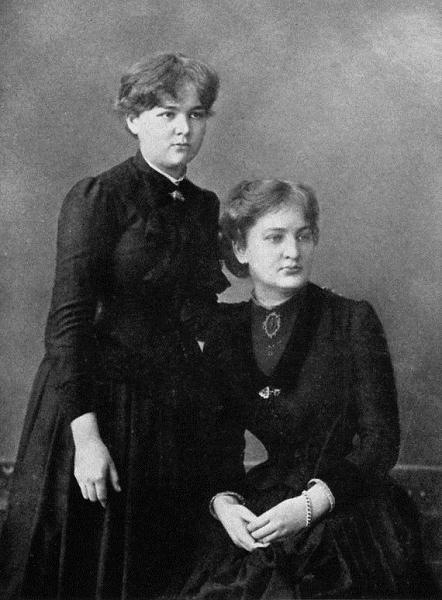
Maria (nicknamed Mania) Salomea Skłodowska was born on 7 November 1867 in Warsaw, the capital of Congress Poland in the Russian Empire. She was the fifth and youngest child of teachers Bronisława (née Boguska) and Władysław Skłodowski. Her siblings were Zofia (born 1862, nicknamed Zosia), Józef (born 1863, nicknamed Józio), Bronisława (born 1865, nicknamed Bronia) and Helena (born 1866, nicknamed Hela).
On both the paternal and maternal sides, the family had lost their property and fortunes through patriotic involvements in Polish national uprisings aimed at restoring Poland's independence (the most recent had been the January Uprising of 1863–1865). This condemned the subsequent generation, including Maria and her elder siblings, to a difficult struggle to get ahead in life.
Władysław Skłodowski taught mathematics and physics, subjects that Maria was to pursue, and was also director of two Warsaw gymnasia (secondary schools) for boys. After Russian authorities eliminated laboratory instruction from the Polish schools, he brought much of the laboratory equipment home and instructed his children in its use. He was eventually fired by his Russian supervisors for pro-Polish sentiments and forced to take lower-paying posts; the family also lost money on a bad investment and eventually chose to supplement their income by lodging boys in the house. Maria's mother Bronisława operated a prestigious Warsaw boarding school for girls; she resigned from the position after Maria was born. She died of tuberculosis in May 1878, when Maria was ten years old. Less than three years earlier, Maria's oldest sibling, Zofia, had died of typhus contracted from a boarder. Maria's father was an atheist, her mother a devout Catholic. The deaths of Maria's mother and sister caused her to give up Catholicism and become agnostic.
When she was ten years old, Maria began attending J. Sikorska's boarding school; next she attended a gymnasium (secondary school) for girls, from which she graduated on 12 June 1883 with a gold medal. After a collapse, possibly due to depression, she spent the following year in the countryside with relatives of her father, and the next year with her father in Warsaw, where she did some tutoring. Unable to enrol in a regular institution of higher education because she was a woman, she and her sister Bronisława became involved with the clandestine Flying University (sometimes translated as "Floating University"), a Polish patriotic institution of higher learning that admitted women students.
Marie wished to study in Paris, but delayed her studies to aid her sister. Marie and Bronisława made an agreement that Marie would provide financial assistance during Bronisława's medical studies in Paris, in exchange for similar assistance two years later. In connection with this, Maria took a position first as a home tutor in Warsaw, then for two years as a governess in Szczuki with a landed family, the Żorawskis, who were relatives of her father, all while continuing to study in her free time While working for the latter family, she fell in love with their son, Kazimierz Żorawski, a future eminent mathematician. His parents rejected the idea of his marrying the penniless relative, and Kazimierz was unable to oppose them. Maria's loss of the relationship with Żorawski was tragic for both. He soon earned a doctorate and pursued an academic career as a mathematician, becoming a professor and rector of Kraków University. Still, as an old man and a mathematics professor at the Warsaw Polytechnic, he would sit contemplatively before the statue of Maria Skłodowska that had been erected in 1935 before the Radium Institute, which she had founded in 1932.
At the beginning of 1890, Bronisława invited Maria to join them in Paris. Maria declined because she could not afford the university tuition; it would take her a year and a half longer to gather the necessary funds. She was helped by her father, who was able to secure a more lucrative position again. She continued to educate herself, reading books, exchanging letters, and being tutored herself. In early 1889 she returned home to her father in Warsaw. She continued working as a governess and remained there until late 1891. She worked as a tutor, studied at the Flying University, and began her practical scientific training (1890–1891) in a chemistry laboratory at the Museum of Industry and Agriculture at Krakowskie Przedmieście 66, near Warsaw's Old Town. The laboratory was run by her cousin Józef Boguski, who had been an assistant in Saint Petersburg to the Russian chemist Dmitri Mendeleyev.
In late 1891, she left Poland for France. In Paris, Maria (or Marie, as she would be known in France) briefly found shelter with her sister and brother-in-law before renting a garret closer to the university, in the Latin Quarter, and proceeding with her studies of physics, chemistry, and mathematics at the University of Paris, where she enroled in late 1891. She subsisted on her meagre resources, keeping herself warm during cold winters by wearing all the clothes she had. She focused so hard on her studies that she sometimes forgot to eat. Skłodowska studied during the day and tutored evenings, barely earning her keep. In 1893, she was awarded a degree in physics and began work in an industrial laboratory of Gabriel Lippmann. Meanwhile, she continued studying at the University of Paris and with the aid of a fellowship she was able to earn a second degree in 1894.
Skłodowska had begun her scientific career in Paris with an investigation of the magnetic properties of various steels, commissioned by the Society for the Encouragement of National Industry. That same year, Pierre Curie entered her life: it was their mutual interest in natural sciences that drew them together. Pierre Curie was an instructor at The City of Paris Industrial Physics and Chemistry Higher Educational Institution (ESPCI Paris). They were introduced by Polish physicist Józef Wierusz-Kowalski, who had learned that she was looking for a larger laboratory space, something that Wierusz-Kowalski thought Pierre could access. Though Curie did not have a large laboratory, he was able to find some space for Skłodowska where she was able to begin work.
Their mutual passion for science brought them increasingly closer, and they began to develop feelings for one another. Eventually, Pierre proposed marriage, but at first Skłodowska did not accept as she was still planning to go back to her native country. Curie, however, declared that he was ready to move with her to Poland, even if it meant being reduced to teaching French. Meanwhile, for the 1894 summer break, Skłodowska returned to Warsaw, where she visited her family. She was still labouring under the illusion that she would be able to work in her chosen field in Poland, but she was denied a place at Kraków University because of sexism in academia. A letter from Pierre convinced her to return to Paris to pursue a PhD. At Skłodowska's insistence, Curie had written up his research on magnetism and received his own doctorate in March 1895; he was also promoted to professor at the School. A contemporary quip would call Skłodowska "Pierre's biggest discovery".
On 26 July 1895, they were married in the Hôtel de Ville in Sceaux; neither wanted a religious service. Marie's dark blue outfit, worn instead of a bridal gown, would serve her for many years as a laboratory outfit. They shared two pastimes: long bicycle trips and journeys abroad, which brought them even closer. In Pierre, Marie had found a new love, a partner, and a scientific collaborator on whom she could depend.
In 1895, Wilhelm Röntgen discovered the existence of X-rays, though the mechanism behind their production was not yet understood. In 1896, Henri Becquerel discovered that uranium salts emitted rays that resembled X-rays in their penetrating power. He demonstrated that this radiation, unlike phosphorescence, did not depend on an external source of energy but seemed to arise spontaneously from uranium itself. Influenced by these two important discoveries, Curie decided to look into uranium rays as a possible field of research for a thesis.
She used an innovative technique to investigate samples. Fifteen years earlier, her husband and his brother had developed a version of the electrometer, a sensitive device for measuring electric charge. Using her husband's electrometer, she discovered that uranium rays caused the air around a sample to conduct electricity. Using this technique, her first result was the finding that the activity of the uranium compounds depended only on the quantity of uranium present. She hypothesized that the radiation was not the outcome of some interaction of molecules but must come from the atom itself. This hypothesis was an important step in disproving the assumption that atoms were indivisible.
In 1897, her daughter Irène was born. To support her family, Curie began teaching at the École normale supérieure. The Curies did not have a dedicated laboratory; most of their research was carried out in a converted shed next to ESPCI. The shed, formerly a medical school dissecting room, was poorly ventilated and not even waterproof. They were unaware of the deleterious effects of radiation exposure attendant on their continued unprotected work with radioactive substances. ESPCI did not sponsor her research, but she received subsidies from metallurgical and mining companies and from various organisations and governments.
Curie's systematic studies included two uranium minerals, pitchblende and torbernite (also known as chalcolite). Her electrometer showed that pitchblende was four times as active as uranium itself, and chalcolite twice as active. She concluded that, if her earlier results relating the quantity of uranium to its activity were correct, then these two minerals must contain small quantities of another substance that was far more active than uranium. She began a systematic search for additional substances that emit radiation, and by 1898 she discovered that the element thorium was also radioactive. Pierre Curie was increasingly intrigued by her work. By mid-1898 he was so invested in it that he decided to drop his work on crystals and to join her.
The [research] idea [writes Reid] was her own; no one helped her formulate it, and although she took it to her husband for his opinion she clearly established her ownership of it. She later recorded the fact twice in her biography of her husband to ensure there was no chance whatever of any ambiguity. It [is] likely that already at this early stage of her career [she] realized that... many scientists would find it difficult to believe that a woman could be capable of the original work in which she was involved.
She was acutely aware of the importance of promptly publishing her discoveries and thus establishing her priority. Curie chose to present her work to the Académie des Sciences, the same rapid means of publication that Becquerel had used two years earlier. Since she was not a member of the Académie, her paper, giving a brief and simple account of her work, was presented for her to the Académie on 12 April 1898 by her former professor, Gabriel Lippmann. However, while Becquerel had presented his discovery the day after he made it and got credit for the discovery of radioactivity before Silvanus Thompson, Curie was beaten by Gerhard Carl Schmidt in the race to report that thorium gives off rays in the same way as uranium.
At that time, no one else in the world of physics had noticed what Curie recorded in a sentence of her paper, describing how much greater were the activities of pitchblende and chalcolite than that of uranium itself: "The fact is very remarkable, and leads to the belief that these minerals may contain an element which is much more active than uranium." She later would recall how she felt "a passionate desire to verify this hypothesis as rapidly as possible".
02Legacy
The physical and societal aspects of the Curies' work contributed to shaping the world of the twentieth and twenty-first centuries. Curie's work laid the foundation for modern nuclear physics, cancer treatments, and radiography. Her techniques for isolating radioactive isotopes are still used in research and medicine. Cornell University professor L. Pearce Williams observes:
The result of the Curies' work was epoch-making. Radium's radioactivity was so great that it could not be ignored. It seemed to contradict the principle of the conservation of energy and therefore forced a reconsideration of the foundations of physics. On the experimental level the discovery of radium provided men like Ernest Rutherford with sources of radioactivity with which they could probe the structure of the atom. As a result of Rutherford's experiments with alpha radiation, the nuclear atom was first postulated. In medicine, the radioactivity of radium appeared to offer a means by which cancer could be successfully attacked.
In addition to helping to overturn established ideas in physics and chemistry, Curie's work has had a profound effect in the societal sphere. To attain her scientific achievements, she had to overcome barriers, in both her native and her adoptive country, that were placed in her way because she was a woman. She also mentored female scientists at the Radium Institute, helping pave the way for women in physics and chemistry.
She was known for her honesty and moderate lifestyle. Having received a small scholarship in 1893, she returned it in 1897 as soon as she began earning her keep. She gave much of her first Nobel Prize money to friends, family, students, and research associates. Curie intentionally refrained from patenting the radium-isolation process so that the scientific community could do research unhindered. She insisted that monetary gifts and awards be given to the scientific institutions she was affiliated with rather than to her. She and her husband often refused awards and medals. Albert Einstein reportedly remarked that she was probably the only person who could not be corrupted by fame.
03Commemorations

As one of the most famous scientists in history, Marie Curie has become an icon in the scientific world and has received tributes from across the globe, even in the realm of pop culture. She also received many honorary degrees from universities across the world.
Marie Curie was the first woman to win a Nobel Prize, the first person to win two Nobel Prizes, the only woman to win in two fields, and the only person to win in multiple sciences. Awards and honours that she received include:
Nobel Prize in Physics (1903, with her husband Pierre Curie and Henri Becquerel)
Davy Medal (1903, with Pierre)
Matteucci Medal (1904, with Pierre)
Actonian Prize (1907)
Elliott Cresson Medal (1909)
Legion of Honour (1909, rejected)
Nobel Prize in Chemistry (1911)
Civil Order of Alfonso XII (1919)
Franklin Medal of the American Philosophical Society (1921)
Order of the White Eagle (2018, posthumously)
Entities that have been named after Marie Curie include:
The curie (symbol Ci), a unit of radioactivity, is named in honour of her and Pierre Curie (although the commission which agreed on the name never clearly stated whether the standard was named after Pierre, Marie, or both).
The element with atomic number 96 was named curium (symbol Cm).
Three radioactive minerals are also named after the Curies: curite, sklodowskite, and cuprosklodowskite.
The Marie Skłodowska-Curie Actions fellowship program of the European Union for young scientists wishing to work in a foreign country
In 2007, a Paris Metro station (in Ivry) was renamed from Pierre Curie to Pierre et Marie Curie.
The Marie-Curie station, a planned underground Réseau express métropolitain (REM) station in the borough of Saint-Laurent in Montreal is named in her honour. A nearby road, Avenue Marie Curie, is also named in her honour.
The Polish research nuclear reactor Maria
The 7000 Curie asteroid
Marie Curie charity, in the United Kingdom
The IEEE Marie Sklodowska-Curie Award, an international award presented for outstanding contributions to the field of nuclear and plasma sciences and engineering, was established by the Institute of Electrical and Electronics Engineers in 2008.
The Marie Curie Medal, an annual science award established in 1996 and conferred by the Polish Chemical Society
The Marie Curie–Sklodowska Medal and Prize, an annual award conferred by the London-based Institute of Physics for distinguished contributions to physics education
Maria Curie-Skłodowska University in Lublin, Poland
Pierre and Marie Curie University in Paris
Maria Skłodowska-Curie National Research Institute of Oncology in Poland
École élémentaire Marie-Curie in London, Ontario, Canada; Curie Metropolitan High School in Chicago, United States; Marie Curie High School in Ho Chi Minh City, Vietnam; Lycée français Marie Curie de Zurich, Switzerland; see Lycée Marie Curie for a list of other schools named after her.
Rue Madame Curie in Beirut, Lebanon
Beetle species – Psammodes sklodowskae Kamiński & Gearner
Numerous biographies are devoted to her, including:
Ève Curie (Marie Curie's daughter), Madame Curie, 1938.
Françoise Giroud, Marie Curie: A Life, 1987.
Susan Quinn, Marie Curie: A Life, 1996.
Barbara Goldsmith, Obsessive Genius: The Inner World of Marie Curie, 2005.
Lauren Redniss, Radioactive: Marie and Pierre Curie, a Tale of Love and Fallout, 2011, adapted into the 2019 British film.
Sobel, Dava (2024). The Elements of Marie Curie: How the Glow of Radium Lit a Path for Women in Science. Fourth Estate. ISBN 978-0-00-853691-6.
Marie Curie has been the subject of a number of films:
1943: Madame Curie, a U.S. Oscar-nominated film by Mervyn LeRoy starring Greer Garson.
1997: Les Palmes de M. Schutz, a French film adapted from a play of the same title, and directed by Claude Pinoteau. Marie Curie is played by Isabelle Huppert.
2014: Marie Curie, une femme sur le front, a French-Belgian film, directed by Alain Brunard and starring Dominique Reymond.
2016: Marie Curie: The Courage of Knowledge, a European co-production by Marie Noëlle starring Karolina Gruszka.
2016: Super Science Friends, an American Internet animated series created by Brett Jubinville with Hedy Gregor as Marie Curie.
2019: Radioactive, a British film by Marjane Satrapi starring Rosamund Pike.
Curie is the subject of the 2013 play False Assumptions by Lawrence Aronovitch, in which the ghosts of three other women scientists observe events in her life. Curie has also been portrayed by Susan Marie Frontczak in her play, Manya: The Living History of Marie Curie, a one-woman show which by 2014 had been performed in 30 U.S. states and nine countries. Lauren Gunderson's 2019 play The Half-Life of Marie Curie portrays Curie during the summer after her 1911 Nobel Prize victory, when she was grappling with depression and facing public scorn over the revelation of her affair with Paul Langevin.
The life of the scientist was also the subject of a 2018 Korean musical, titled Marie Curie. The show was since translated in English (as Marie Curie a New Musical) and has been performed several times across Asia and Europe, receiving its official Off West End premiere in London's Charing Cross Theatre in summer 2024.
Curie has appeared on more than 600 postage stamps in many countries across the world.
Between 1989 and 1996, she was depicted on a 20,000-złoty banknote designed by Andrzej Heidrich. In 2011, a commemorative 20-złoty banknote depicting Curie was issued by the National Bank of Poland on the 100th anniversary of the scientist receiving the Nobel Prize in Chemistry.
In 1994, the Bank of France issued a 500-franc banknote depicting Marie and Pierre Curie. Since 2024, Curie has been depicted on French 50 euro cent coins to commemorate her importance in French history.
On November 7, 2011, Curie was celebrated in a Google Doodle.
In 2025, the European Central Bank announced that Curie had been selected to appear on the obverse of twenty euro banknotes in a future redesign, were the theme "European culture" to be selected over "Rivers and birds".
Marie Curie was immortalized in at least one colour (Autochrome Lumière) photograph during her lifetime. It is archived in the Musée Curie in Paris.
In 2026, Curie and her daughter Irène were announced as among the 72 historical women in STEM whose names have been proposed to be added to the 72 men already celebrated on the Eiffel Tower. The plan was announced by the Mayor of Paris, Anne Hidalgo following the recommendations of a committee led by Isabelle Vauglin of Femmes et Sciences and Jean-François Martins, representing the operating company which runs the Eiffel Tower.
Article sections from Wikipedia (CC BY-SA 4.0). Excerpted for readability.