The Achaemenid Empire (, ə-KEE-mə-nid; Old Persian: 𐎧𐏁𐏂, Xšāça, lit. 'The Empire' or 'The Kingdom') was an ancient Iranian empire founded by Cyrus the Great of the Achaemenid dynasty in 550 BC. At peak, its territorial extent was roughly 5.5 million square kilometres (2.1 million square miles), making it the largest empire of its time. Based in the Iranian plateau, it stretched from the Balkans and Cyrenaica in the west to the Indus Valley in the east, including Anatolia, Cyprus, Mesopotamia, the Levant, the South Caucasus, parts of Eastern Arabia, and large parts of Central Asia.
By the 7th century BC, the region of Persis, located in the southwestern part of the Iranian plateau, had been settled by Persian people. From Persis, Cyrus rose and defeated Media, Lydia, and the Neo-Babylonian Empire, thus marking the establishment of a new imperial polity in the ancient Near East. The empire expanded rapidly, but was repulsed from Scythia in 513 BC and from Greece in 492–490 BC and 480–479 BC.
In 330 BC, amidst a Macedonian military campaign that began in 336 BC, the Achaemenid Empire was conquered in its entirety by Alexander the Great, who annexed it to his Macedonian Empire. Upon Alexander's death, which sparked the beginning of the Hellenistic period in 323 BC, the majority of the former Achaemenid Empire's territories came under the rule of the Seleucid Empire and the Ptolemaic Kingdom. Almost a century later, Iranian elites in the central plateau successfully reclaimed power from the Seleucids and established the Parthian Empire, which existed for nearly half a millennium before being succeeded by the Iranian Sasanian Empire.
In the modern era, the Achaemenid Empire has been recognized for its centralized bureaucracy and administration; its multicultural policy and religious tolerance, especially under Cyrus; its complex infrastructure projects, such as the Royal Road and an organized postal system; the use of official languages (Persian and Aramaic) across its territories; and the development of a civil service and a large, professional army and navy. Many of these systems were adopted and expanded upon by later empires in the Greco-Roman world and beyond.
Summary from Wikipedia (CC BY-SA 4.0)
01Etymology

The Achaemenid Empire is named after Achaemenes, who is credited as the progenitor of the Achaemenid dynasty. The term Achaemenid means "of the family of the Achaemenis/Achaemenes" (Old Persian: 𐏃𐎧𐎠𐎶𐎴𐎡𐏁, romanized: Haxāmaniš; a bahuvrihi compound translating to "having a friend's mind"). Achaemenes was himself a minor seventh-century ruler of the Anshan in southwestern Iran, and a vassal of Assyria.
Around 850 BC the original nomadic people who began the empire called themselves the Parsa and their constantly shifting territory Parsua, for the most part localized around Persis. The name "Persia" is a Greek and Latin pronunciation of the native word referring to the country of the people originating from Persis (Old Persian: 𐎱𐎠𐎼𐎿, romanized: Pārsa). The Persian term 𐎧𐏁𐏂 Xšāça, literally meaning "The Kingdom", was used to refer to the Empire formed by their multinational state.
02History

The Persian nation contains a number of tribes as listed here. ... : the Pasargadae, Maraphii, and Maspii, upon which all the other tribes are dependent. Of these, the Pasargadae are the most distinguished; they contain the clan of the Achaemenids from which spring the Perseid kings. Other tribes are the Panthialaei, Derusiaei, Germanii, all of which are attached to the soil, the remainder—the Dai, Mardi, Dropici, Sagarti, being nomadic.
The Achaemenid Empire was founded by nomadic Persians. The Persians were an Iranic people who arrived in what is today Iran c. 1000 BC and settled a region including north-western Iran, the Zagros Mountains and Persis alongside the native Elamites. The Persians were originally nomadic pastoralists in the western Iranian Plateau. The Achaemenid Empire may not have been the first Iranian empire, as the Medes, another group of Iranian people, possibly established a short-lived empire when they played a major role in overthrowing the Assyrians.
The Achaemenids were initially rulers of the Elamite city of Anshan near the modern city of Marvdasht; the title "King of Anshan" was an adaptation of the earlier Elamite title "King of Susa and Anshan". There are conflicting accounts of the identities of the earliest Kings of Anshan. According to the Cyrus Cylinder (the oldest extant genealogy of the Achaemenids) the kings of Anshan were Teispes, Cyrus I, Cambyses I and Cyrus II, also known as Cyrus the Great, who founded the empire.
The later Behistun Inscription, written by Darius the Great, claims that Teispes was the son of Achaemenes and that Darius is also descended from Teispes through a different line, but no earlier texts mention Achaemenes. In Herodotus' Histories, he writes that Cyrus the Great was the son of Cambyses I and Mandane of Media, the daughter of Astyages, the king of the Median Empire.
Cyrus revolted against the Median Empire in 553 BC, and in 550 BC succeeded in defeating the Medes, capturing Astyages and taking the Median capital city of Ecbatana. Once in control of Ecbatana, Cyrus styled himself as the successor to Astyages and assumed control of the entire empire. By inheriting Astyages' empire, he also inherited the territorial conflicts the Medes had with both Lydia and the Neo-Babylonian Empire.
King Croesus of Lydia sought to take advantage of the new international situation by advancing into what had previously been Median territory in Asia Minor. Cyrus led a counterattack which not only fought off Croesus' armies, but also led to the capture of Sardis and the fall of the Lydian Kingdom in 546 BC. Cyrus placed Pactyes in charge of collecting tribute in Lydia and left, but once Cyrus had left Pactyes instigated a rebellion against Cyrus. Cyrus sent the Median general Mazares to deal with the rebellion, and Pactyes was captured. Mazares, and after his death Harpagus, set about reducing all the cities which had taken part in the rebellion. The subjugation of Lydia took about four years in total.
When the power in Ecbatana changed hands from the Medes to the Persians, many tributaries to the Median Empire believed their situation had changed and revolted against Cyrus. This forced Cyrus to fight wars against Bactria and the nomadic Saka in Central Asia. During these wars, Cyrus established several garrison towns in Central Asia, including the Cyropolis.
Nothing is known of Persia–Babylon relations between 547 and 539 BC, but it is likely that there were hostilities between the two empires for several years leading up to the war of 540–539 BC and the Fall of Babylon. In October 539 BC, Cyrus won a battle against the Babylonians at Opis, then took Sippar without a fight before finally capturing the city of Babylon on 12 October, where the Babylonian king Nabonidus was taken prisoner.
Upon taking control of the city, Cyrus depicted himself in propaganda as restoring the divine order which had been disrupted by Nabonidus, who had promoted the cult of Sin rather than Marduk, and he also portrayed himself as restoring the heritage of the Neo-Assyrian Empire by comparing himself to the Assyrian king Ashurbanipal. Cyrus is credited with freeing the Jews from the Babylonian captivity, permitting their return to Judah, and authorizing the rebuilding of Jerusalem, including the Second Temple.
In 530 BC, Cyrus died and was succeeded by his eldest son Cambyses II, while his younger son Bardiya received a large territory in Central Asia. By 525 BC, Cambyses had successfully subjugated Phoenicia and Cyprus and was making preparations to invade Egypt with the newly created Persian navy. Pharaoh Amasis II had died in 526, and had been succeeded by Psamtik III, resulting in the defection of key Egyptian allies to the Persians. Psamtik positioned his army at Pelusium in the Nile Delta. He was soundly defeated by the Persians in the Battle of Pelusium before fleeing to Memphis, where the Persians defeated him and took him prisoner. After attempting a failed revolt, Psamtik III promptly committed suicide.
Herodotus depicts Cambyses as openly antagonistic to the Egyptian people and their gods, cults, temples, and priests, in particular stressing the murder of the sacred bull Apis. He says that these actions led to a madness that caused him to kill his brother Bardiya (who Herodotus says was killed in secret), his own sister-wife and Croesus of Lydia. He then concludes that Cambyses completely lost his mind, and all later classical authors repeat the themes of Cambyses' impiety and madness. However, this is based on spurious information, as the epitaph of Apis from 524 BC shows that Cambyses participated in the funeral rites of Apis styling himself as pharaoh.
Following the conquest of Egypt, the Libyans and the Greeks of Cyrene and Barca in present-day eastern Libya (Cyrenaica) surrendered to Cambyses and sent tribute without a fight. Cambyses then planned invasions of Carthage, the oasis of Ammon and Ethiopia. Herodotus claims that the naval invasion of Carthage was canceled because the Phoenicians, who made up a large part of Cambyses' fleet, refused to take up arms against their own people, but modern historians doubt whether an invasion of Carthage was ever planned at all. However, Cambyses dedicated his efforts to the other two campaigns, aiming to improve the Empire's strategic position in Africa by conquering the Kingdom of Meroë and taking strategic positions in the western oases. To this end, he established a garrison at Elephantine consisting mainly of Jewish soldiers, who remained stationed at Elephantine throughout Cambyses' reign. Herodotus claims that the invasion of Ethiopia was a failure due to the madness of Cambyses and the lack of supplies for his men, but archaeological evidence suggests that the expedition was not a failure, and a fortress at the Second Cataract of the Nile, on the border between Egypt and Kush, remained in use throughout the Achaemenid period. Furthermore, in two inscriptions of Darius, Nubia is listed as one of the lands in the empire, and a Nubian delegation is depicted in Persepolis on the Apadana reliefs which visually present the lands of Darius' empire. These suggest that Cambyses saw success in subduing Nubia.
The events surrounding Cambyses's death and Bardiya's succession are greatly debated as there are many conflicting accounts. According to Herodotus, as Bardiya's assassination had been committed in secret, the majority of Persians still believed him to be alive. This allowed two Magi to rise up against Cambyses, with one of them sitting on the throne able to impersonate Bardiya because of their remarkable physical resemblance and shared name (Smerdis in Herodotus's accounts). Ctesias writes that when Cambyses had Bardiya killed he immediately put the magus Sphendadates in his place as satrap of Bactria due to a remarkable physical resemblance. Two of Cambyses' confidants then conspired to usurp Cambyses and put Sphendadates on the throne under the guise of Bardiya. According to the Behistun Inscription, written by the following king Darius the Great, a magus named Gaumata impersonated Bardiya and incited a revolution in Persia. Whatever the exact circumstances of the revolt, Cambyses heard news of it in the summer of 522 BC and began to return from Egypt, but he was wounded in the thigh in Syria and died of gangrene, so Bardiya's impersonator became king. Darius provides the earliest account; later historians concur that a magus impersonated Bardiya and seized the throne, but this may be a fabrication by Darius to legitimize his own usurpation. Iranologist Pierre Briant hypothesises that Bardiya was not killed by Cambyses, but waited until his death in the summer of 522 BC to claim his legitimate right to the throne as he was then the only male descendant of the royal family. Briant says that although the hypothesis of a deception by Darius is generally accepted today, "nothing has been established with certainty at the present time, given the available evidence".
According to the Behistun inscription, Gaumata ruled for seven months before being overthrown in 522 BC by Darius the Great (Old Persian Dāryavuš, "who holds firm the good", also known as Darayarahush). The Magi, though persecuted, continued to exist, and a year following the death of the first pseudo-Smerdis (Gaumata), saw a second pseudo-Smerdis (Vahyazdāta) attempt a coup. The coup, though initially successful, failed.
Herodotus writes that the native leadership debated the best form of government for the empire.
The Macedonian king Amyntas I surrendered his country to the Persians in about 512–511. In 513, Darius the Great (521–486) initiated Persian military operations that included the subjugation of Macedonia, as a large Achaemenid army invaded the Balkans and tried to defeat the European Scythians north of the Danube. Darius' army subjugated several Thracian peoples and virtually all other regions that touch the European part of the Black Sea, such as parts of modern Bulgaria, Romania, Ukraine, and Russia, before it returned to Asia Minor. Darius left in Europe one of his commanders named Megabazus whose task was to accomplish conquests in the Balkans. The Persian troops subjugated gold-rich Thrace, the coastal Greek cities, and defeated and conquered the powerful Paeonians. Finally, Megabazus sent envoys to Amyntas, demanding acceptance of Persian domination, which the Macedonians did. The Balkans provided many soldiers for the multi-ethnic Achaemenid army. Many of the Macedonian and Persian elite intermarried, such as the Persian official Bubares who married Amyntas' daughter, Gygaea. Family ties that the Macedonian rulers Amyntas and Alexander enjoyed with Bubares ensured them good relations with the Persian kings Darius and Xerxes I, who was also known as Xerxes the Great. The Persian invasion indirectly advanced Macedonia's power, as both shared Balkan interests; Persian aid let Macedonians gain at the expense of tribes like the Paeonians and Greeks. All in all, the Macedonians were "willing and useful Persian allies." Macedonian soldiers fought against Athens and Sparta in Xerxes I's army.
03Government

Cyrus the Great founded the empire as a multi-state empire, governed from four capital cities: Pasargadae, Babylon, Susa and Ecbatana. The Achaemenids allowed a certain amount of regional autonomy in the form of the satrapy system. A satrapy was an administrative unit, usually organized on a geographical basis. A 'satrap' (governor) was the governor who administered the region, a 'general' supervised military recruitment and ensured order, and a 'state secretary' kept the official records. The general and the state secretary reported directly to the satrap as well as the central government. At differing times, there were between 20 and 30 satrapies.
Cyrus the Great created an organized army including the Immortals unit, consisting of 10,000 highly trained soldiers Cyrus also formed an innovative postal system throughout the empire, based on several relay stations called Chapar Khaneh.
Persepolis Administrative Archives provide many insights into the Achaemenid government system. Found at Persepolis in the 1930s, they are mostly in Elamite; the remains of more than 10,000 of these cuneiform documents have been uncovered. Aramaic is represented by about 1,000 or more original records. Only one tablet in Old Persian has been identified so far.
Also, many seals and seal impressions are found in these Persepolis archives. These documents represent administrative activity and flow of data in Persepolis over more than fifty consecutive years (509–457 BC).
The Persian daric was the first gold coin which, along with a similar silver coin, the siglos, introduced the bimetallic monetary standard of the Achaemenids, which has continued until today. This was accomplished by Darius I, who reinforced the empire and expanded Persepolis as a ceremonial capital; he revolutionized the economy by placing it on the silver and gold coinage.
Darius also introduced a regulated and sustainable tax system that was precisely tailored to each satrapy, based on their supposed productivity and their economic potential. For instance, Babylon was assessed for the highest amount and for a startling mixture of commodities – 1,000 silver talents, four months' supply of food for the army. India was famed for its gold, while Egypt was renowned for its agricultural wealth; destined as the Persian Empire's granary (later Rome's), Egypt had to supply 120,000 measures of grain plus 700 talents of silver. This was exclusively a tax levied on subject peoples. There is evidence that conquered and rebellious enemies could be sold into slavery. Alongside its other innovations in administration and taxation, the Achaemenids may have been the first government in the ancient Near East to register private slave sales and tax them using an early form of sales tax.
Other accomplishments of Darius' reign included the codification of the dāta (a universal legal system which would become the basis of later Iranian law), and the construction of a new capital at Persepolis.
Under the Achaemenids, trade was extensive and there was an efficient infrastructure that facilitated the exchange of commodities in the far reaches of the empire. Tariffs on trade, along with agriculture and tribute, were major sources of revenue for the empire.
The satrapies were linked by a 2,500-kilometer highway, the most impressive stretch being the Royal Road from Susa to Sardis, built under the command of Darius I. It connected the Iranian Plateau to Central Asia and the Mediterranean. It featured stations and caravanserais at specific intervals. The relays of mounted couriers (the angarium) could reach the remotest of areas in fifteen days. Herodotus observes that "there is nothing in the world that travels faster than these Persian couriers. Neither snow, nor rain, nor heat, nor gloom of night stays these courageous couriers from the swift completion of their appointed rounds." Despite the relative local independence given by the satrapy system, royal inspectors toured the empire and reported on local conditions.
Another highway of commerce was the Great Khorasan Road, an informal mercantile route that originated in the fertile lowlands of Mesopotamia and snaked through the Zagros highlands, through the Iranian plateau and Afghanistan into the Central Asian regions of Samarkand, Merv and Ferghana, allowing for the construction of frontier cities like Cyropolis. After Alexander's conquests, the highway carried syncretic movements such as Greco-Buddhism into Central Asia and China, and allowed the Kushan, Indo-Greek and Parthian empires to profit from trade between East and West. This route was greatly rehabilitated and formalized during the Abbasid Caliphate, during which it developed into a major component of the famed Silk Road.
04Military
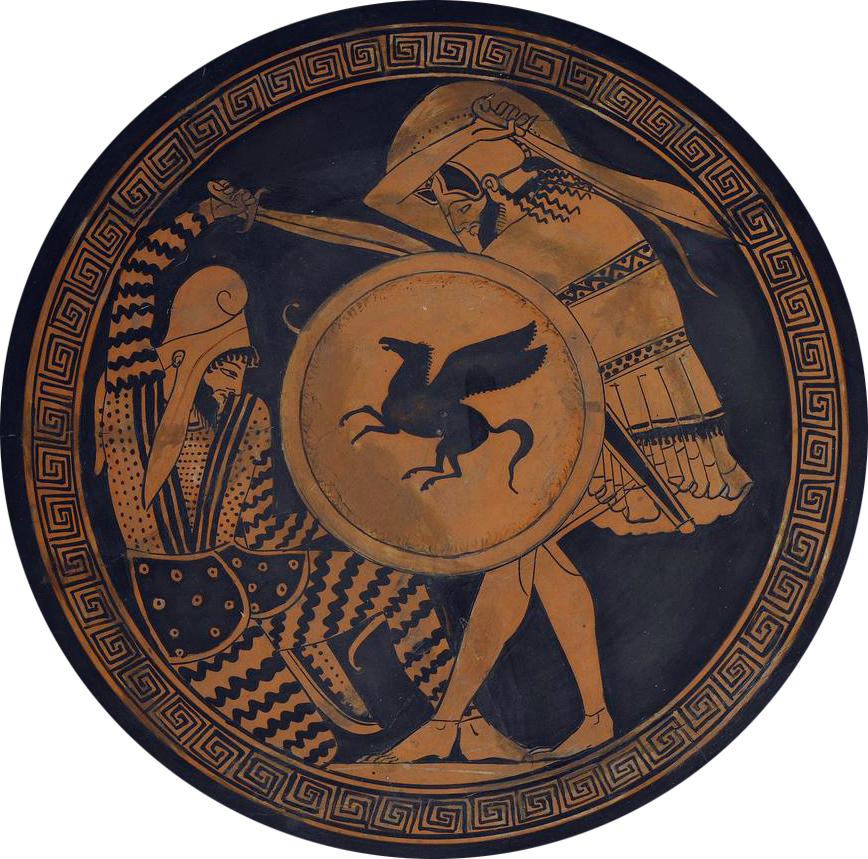
Despite its humble origins in Persis, the empire reached an enormous size under the leadership of Cyrus the Great. Cyrus created a multi-state empire where he allowed regional rulers, satraps, to rule as his proxy over a certain designated area of his empire called a satrapy. The basic rule of governance was based upon loyalty and obedience of each satrapy to the central power, or the king, and compliance with tax laws. Due to the ethno-cultural diversity of the subject nations under the rule of Persia, its enormous geographic size, and the constant struggle for power by regional competitors, the creation of a professional army was necessary for both maintenance of the peace and to enforce the authority of the king in cases of rebellion and foreign threat. Cyrus managed to create a strong land army, using it to advance in his campaigns in Babylonia, Lydia, and Asia Minor, which after his death was used by his son Cambyses II, in Egypt against Psamtik III. Cyrus would die battling a local Iranian insurgency in the empire, before he could have a chance to develop a naval force. Darius I assumed that responsibility, establishing the Persians' first royal navy to confront foes across imperial waters such as the Black Sea, Aegean Sea, Persian Gulf, Ionian Sea, and Mediterranean Sea.
The empire included many peoples and Herodotus mentions the following as participating in the Second Persian invasion of Greece: Persians, Macedonians, European Thracians, Paeonians, Medes, Achaean Greeks, Cissians, Hyrcanians, Assyrians, Chaldeans, Bactrians, Sacae, Arians, Parthians, Chorasmians, Sogdians, Gandarans, Dadicae, Caspians, Sarangae, Pactyes, Utians, Mycians, Phoenicians, Judeans, Egyptians, Cyprians, Cilicians, Pamphylians, Lycians, Dorians of Asia, Carians, Ionians, Aegean islanders, Aeolians, Greeks from Pontus, Paricanians, Arabians, Ethiopians of Africa, Ethiopians of Baluchistan, Libyans, Paphlagonians, Ligyes, Matieni, Mariandyni, Cappadocians, Phrygians, Armenians, Lydians, Mysians, Asian Thracians, Lasonii, Milyae, Moschi, Tibareni, Macrones, Mossynoeci, Mares, Colchians, Alarodians, Saspirians, Red Sea islanders, Sagartians, Hindush, Eordi, Bottiaei, Chalcidians, Brygians, Pierians, Perrhaebi, Enienes, Dolopes, and Magnesians.
The Achaemenid infantry consisted of three groups: the Immortals, the Sparabara, and the Takabara, though in the later years of the Achaemenid Empire, a fourth group, the Cardaces, were introduced.
The Immortals were described by Herodotus as being heavy infantry, led by Hydarnes II, that were kept constantly at a strength of exactly 10,000 men. He claimed that the unit's name stemmed from the custom that every killed, seriously wounded, or sick member was immediately replaced with a new one, maintaining the numbers and cohesion of the unit. They had wicker shields, short spears, swords or large daggers, and bow and arrows. Underneath their robes they wore scale armour coats. The spear counterbalances of the common soldiery were of silver; to differentiate commanding ranks, the officers' spear butt-spikes were golden. Surviving Achaemenid colored glazed bricks and carved reliefs represent the Immortals as wearing elaborate robes, hoop earrings and gold jewellery, though these garments and accessories were most likely worn only for ceremonial occasions.
The Sparabara were usually the first to engage in hand-to-hand combat with the enemy. Though little survives about them, they are thought to have formed the Persian army's core, creating a shield wall and wielding two-metre spears to shield vulnerable units such as archers. The Sparabara were taken from the full members of Persian society, were trained from childhood to be soldiers and when not called out to fight on campaigns in distant lands they practised hunting on the vast plains of Persia. However, when all was quiet and the Pax Persica held true, the Sparabara returned to normal life farming the land and grazing their herds. Because of this, they lacked true professional quality on the battlefield, yet they were well trained and courageous to the point of holding the line in most situations long enough for a counter-attack. They were armoured with quilted linen and carried large rectangular wicker shields as a form of light maneuverable defence. This, however, left them at a severe disadvantage against heavily armoured opponents such as the hoplite, and their two-metre-long spear was not able to give the Sparabara ample range to plausibly engage a trained phalanx. The wicker shields were able to effectively stop arrows but not strong enough to protect the soldier from spears. However, the Sparabara could deal with most other infantry, including trained units from the East.
The Achaemenids relied heavily on archery. Major contributing nations were the Scythians, Medes, Persians, and the Elamites. The composite bow was used by the Persians and Medes, who adopted it from the Scythians and transmitted it to other nations, including the Greeks. Achaemenid armies typically used socketed, three-bladed (also known as trilobate or Scythian) arrowheads. These arrowheads were cast from leaded tin-bronze, which made them amenable to mass-production unlike the wrought iron arrowheads of the period that had to be individually forged.
The Takabara were a rare unit who were a tough type of peltasts. They tended to fight with their own native weapons which would have included a crescent-shaped light wickerwork shield and axes as well as light linen cloth and leather. The Takabara were recruited from territories that incorporated modern Iran.
The Persian cavalry was crucial for conquering nations and maintained its importance in the Achaemenid army to the last days of the Achaemenid Empire. The cavalry was separated into four groups. The Persian mounted forces comprised horse cavalry, chariotry (including scythed chariots), and units of camel-borne troops, though the chariots and camels were rarely effective against massed infantry.
In the later years of the Achaemenid Empire, the chariot archer had become merely a ceremonial part of the Persian army, yet in the early years of the Empire, their use was widespread. The chariot archers were armed with lances, bows, arrows, swords, and scale armour. The horses were also suited with scale armour similar to scale armour of the Sassanian cataphracts. The chariots would contain imperial symbols and decorations.
The horses used by the Achaemenids for cavalry were often suited with scale armour, like most cavalry units. The riders often had the same armour as Infantry units, wicker shields, short spears, swords or large daggers, bow and arrow, and scale armour coats. The camel cavalry was different, because the camels and sometimes the riders, were provided little protection against enemies, yet when they were offered protection, they would have lances, swords, bow, arrow, and scale armour. The camel cavalry was first introduced into the Persian army by Cyrus the Great, at the Battle of Thymbra. The elephant was most likely introduced into the Persian army by Darius I after his conquest of the Indus Valley. Elephants may have been used in Greek campaigns by Darius and Xerxes I, but Greek accounts only mention 15 of them being used at the Battle of Gaugamela.
Since its foundation by Cyrus, the Persian empire had been primarily a land empire with a strong army but void of any actual naval forces. By the 5th century BC, this was to change, as the empire came across Greek and Egyptian forces, each with their own maritime traditions and capabilities. Darius I was the first Achaemenid king to invest in a Persian fleet. Even by then no true "imperial navy" had existed either in Greece or Egypt. Persia would become the first empire, under Darius, to inaugurate and deploy the first regular imperial navy. Despite this achievement, the personnel for the imperial navy would not come from Iran, but were often Phoenicians (mostly from Sidon), Egyptians and Greeks chosen by Darius the Great to operate the empire's combat vessels.
At first the ships were built in Sidon by the Phoenicians; the first Achaemenid ships measured about 40 meters in length and 6 meters in width, able to transport up to 300 Persian troops at any one trip. Soon, other states of the empire were constructing their own ships, each incorporating slight local preferences. The ships eventually found their way to the Persian Gulf and Persian naval forces laid the foundation for a strong Persian maritime presence there. Persians also had ships often of a capacity 100 to 200 troops patrolling the empire's various rivers including the Karun, Tigris and Nile in the west, as well as the Indus.
The Achaemenid navy established bases located along the Karun, and in Bahrain, Oman, and Yemen. The Persian fleet was not only used for peace-keeping purposes along the Karun but also opened the door to trade with India via the Persian Gulf. While Darius's navy ranked as a world power, Artaxerxes II constructed a formidable fleet in summer 397 BC as part of a rearmament that culminated in his decisive victory at Knidos in 394 BC, restoring Achaemenid control over Ionia. Artaxerxes II would also use his navy to later on quell a rebellion in Egypt.
The construction material of choice was wood, but some armoured Achaemenid ships had metallic blades on the front, often meant to slice enemy ships using the ship's momentum. Naval ships were also equipped with hooks on the side to grab enemy ships, or to negotiate their position. The ships were propelled by sails or manpower. The ships the Persians created were unique. As far as maritime engagement, the ships were equipped with two mangonels that would launch projectiles such as stones, or flammable substances.
Xenophon describes his eyewitness account of a massive military bridge created by joining 37 Persian ships across the Tigris. The Persians used each boat's buoyancy to support a connected bridge above which supply could be transferred. Herodotus also gives many accounts of the Persians using ships to build bridges.
Darius I, in an attempt to subdue the Scythian horsemen north of the Black Sea, crossed over at the Bosphorus, using an enormous bridge made by connecting Achaemenid boats, then marched up to the Danube, crossing it by means of a second boat bridge. The bridge across the Bosporus joined the closest points of Asia and Europe, covering at least 1,000 meters of open water. Herodotus describes the spectacle, and calls it the "bridge of Darius":
Strait called Bosphorus, across which the bridge of Darius had been thrown, is hundred and twenty furlongs in length, reaching from the Euxine, to the Propontis. The Propontis is five hundred furlongs across and fourteen hundred long. Its waters flow into the Hellespont, the length of which is four hundred furlongs ...
Years later, a similar boat bridge would be constructed by Xerxes I, in his invasion of Greece. Although the Persians failed to capture the Greek city-states completely, the tradition of maritime involvement was carried down by the Persian kings, most notably Artaxerxes II. In spring 327 BC, during Alexander's invasion of Persia and his advance into India, he followed Persian military practice by having Hephaestion and Perdiccas construct a similar boat-bridge at the Indus river.
05Culture
During the reign of Cyrus II and Darius I, and as long as the seat of government was still at Susa in Elam, the language of the chancellery was Elamite. This is primarily attested in the Persepolis fortification and treasury tablets that reveal details of the day-to-day functioning of the empire. The Elamite texts in the kings' large rock-face inscriptions are invariably accompanied by Akkadian (Babylonian dialect) and Old Persian versions, and appear to be translations of the Old Persian originals. It is then likely that although Elamite was used by the capital government in Susa, it was not a standardized language of gcitation needed|date=January 2026}}
Following the conquest of Mesopotamia, the Aramaic language (as used in that territory) was adopted as a "vehicle for written communication between the different regions of the vast empire with its different peoples and languages. The use of a single official language, which modern scholarship has dubbed "Official Aramaic" or "Imperial Aramaic", can be assumed to have greatly contributed to the astonishing success of the Achaemenids in holding their far-flung empire together for as long as they did."
In 1955, Richard Frye questioned the classification of Imperial Aramaic as an official language, noting that no surviving edict expressly and unambiguously accorded that status to any particular language. Frye reclassifies Imperial Aramaic as the lingua franca of the Achaemenid empire, suggesting that the use of Aramaic language in Achaemenid empire was more widespread than generally thought. Many centuries after the fall of the empire, Aramaic script and—as ideograms—Aramaic vocabulary would survive as the essential characteristics of the Pahlavi writing system.
Although Old Persian also appears on some seals and art objects, that language is attested primarily in the Achaemenid inscriptions of Western Iran, suggesting then that Old Persian was the common language of that region. However, by the reign of Artaxerxes II, the grammar and orthography of the inscriptions was so "far from perfect" that it has been suggested that the scribes who composed those texts had already largely forgotten the language, and had to rely on older inscriptions, which they to a great extent reproduced verbatim.
When the occasion demanded, Achaemenid administrative correspondence was conducted in Greek, making it a widely used bureaucratic language. Native Old Iranian sources show no Greek linguistic influence, despite extensive Achaemenid-Greek contact and the Achaemenid conquest of many Greek-speaking areas in Europe and Asia Minor at various times. Besides Herodotus' accounts, evidence shows Greeks were deployed and employed in the empire's core regions and also lived and worked in its heartland, Iran. For example, Greeks were part of the various ethnicities that constructed Darius' palace in Susa, apart from the Greek inscriptions found nearby there, and one short Persepolis tablet written in Greek.
Herodotus mentions that the Persians were invited to great birthday feasts (Herodotus, Histories 8), which would be followed by many desserts, a treat which they reproached the Greeks for omitting from their meals. He also observed that the Persians drank wine in large quantities and used it even for counsel, deliberating on important affairs when drunk, and deciding the next day, when sober, whether to act on the decision or set it aside.
Religious toleration has been described as a "remarkable feature" of the Achaemenid Empire. The Hebrew Bible reports that Persian king Cyrus the Great released the Jewish people from the Babylonian captivity in 539–530 BC and permitted them to return to their homeland. Cyrus the Great assisted in the restoration of the sacred places of various cities, including to rebuild the Israelites' Temple in Jerusalem.
It was during the Achaemenid period that Zoroastrianism reached southwestern Iran, where it came to be accepted by the rulers and through them became a defining element of Persian culture. The religion was not only accompanied by a formalization of the concepts and divinities of the traditional Iranian pantheon but also introduced several novel ideas, including that of free will.
Mithra was worshipped in the Empire; his temples and symbols were the most widespread, most people bore names related to him and most festivals were dedicated to him.
During the reign of Artaxerxes I and Darius II, the Greek historian Herodotus wrote: "[the Persians] have no images of the gods, no temples nor altars, and consider the use of them a sign of folly. This comes, I think, from their not believing the gods to have the same nature with men, as the Greeks imagine." He claims the Persians offer sacrifice to: "the sun and moon, to the earth, to fire, to water, and to the winds. These are the only gods whose worship has come down to them from ancient times. At a later period, they began the worship of Urania, which they borrowed from the Arabians and Assyrians. Mylitta is the name by which the Assyrians know this goddess, to whom the Persians referred as Anahita."
The Babylonian scholar and priest Berosus records—although writing over seventy years after the reign of Artaxerxes II—that the emperor had been the first to make cult statues of divinities and have them placed in temples in many of the major cities of the empire. Berosus also substantiates Herodotus when he says the Persians knew of no images of gods until Artaxerxes II erected those images. On the means of sacrifice, Herodotus adds "they raise no altar, light no fire, pour no libations." Herodotus also observed that "no prayer or offering can be made without a magus present".
The position of women in the Achaemenid Empire varied depending on the culture to which they belonged and therefore differed by region. The position of Persian women in Persia proper has traditionally been reconstructed from mythological Biblical references and the sometimes biased Ancient Greek sources, neither fully reliable, while the most reliable evidence is the archeological Persepolis Fortification Tablets (PFT), which describe women connected to the royal court at Persepolis, from royal women to female laborers who received food rations there.
The hierarchy of royal women at the Persian court was ranked as follows: the king's mother, then the queen, the king's daughters, the king's concubines, and the other women of the royal palace. The king normally married a female member of the royal family or a Persian noblewoman related to a satrap or another important Persian man; it was permitted for members of the royal family to marry relatives, but there is no evidence for marriage between closer family members than half-siblings. The king's concubines were often either slaves, sometimes prisoners of war, or foreign princesses, whom the king did not marry because they were foreigners, and whose children did not have the right to inherit the throne.
Greek sources accuse the king of having hundreds of concubines secluded in a harem. There is no archeological evidence supporting the existence of a harem, or the seclusion of women from contact with men, at the Persian court. The royal women joined the king at breakfast and dinner and accompanied him on his journeys. They may have participated in the royal hunt, as well as during the royal banquets. Herodotus relates how the Persian envoys at the Macedonian court demanded the presence of women during a banquet because it was the custom for women to participate in the banquets in their own country.
The queen may have attended the king's audience, and archeological evidence shows that she gave her own audiences, at least for female supplicants. Royal women and noblewomen at court could travel on their own, accompanied by both male and female staff, own and manage their own fortune, land, and business. Depictions of Persian women show them with long dresses and veils which did not cover their faces or their hair, only flowing down over their neck at the back of the head as an ornament.
Royal and aristocratic Achaemenid women were given an education in subjects that did not appear compatible with seclusions, such as horsemanship and archery. Royal and aristocratic women held and managed vast estates and workshops and employed large numbers of servants and professional laborers. Royal and aristocratic women do not seem to have lived in seclusion from men, since it is known that they appeared in public and traveled with their husbands, participated in hunting and in feasts. The chief wife of a royal or aristocratic man did not live in seclusion, as it is stated that wives customarily accompanied their husbands at dinner banquets. They left the banquet when the "women entertainers" came in and the men began "merrymaking".
No woman ever ruled the Achaemenid Empire, as monarch or as regent, but some queen's consorts are known to have had influence over the affairs of state, notably Atossa and Parysatis.
There is not evidence of any women being employed as an official in the administration or within religious service; however, there are plenty of archeological evidence of women being employed as free labourers in Persepolis, where they worked alongside men. Women could be employed as the leaders of their workforce, known by the title arraššara pašabena, which were then given a higher salary than the male workers of their workforce. Female laborers were given less than men. Qualified workers within the crafts were given equal pay regardless of their sex. Women are abundant in religious context in the cuneiform sources from late Achaemenid and Hellenistic Babylon.
Achaemenid architecture included large cities, temples, palaces, and mausolea such as the Tomb of Cyrus the Great. The quintessential feature of its architecture was its eclectic nature, with elements of Median, Assyrian, and Asiatic Greek all incorporated, yet maintaining a unique Persian identity seen in the finished products. Its influence pervades the regions ruled by the Achaemenids, from the Mediterranean shores to India, especially with its emphasis on monumental stone-cut design and gardens subdivided by water-courses.
Achaemenid art includes frieze reliefs, metalwork such as the Oxus Treasure, decoration of palaces, glazed brick masonry, fine craftsmanship (masonry, carpentry, etc.), and gardening. Although the Persians drew artists from all corners of their empire, incorporating their styles and techniques, they did not merely produce a combination of styles, but a synthesis of a new, unique Persian style.
One of the most remarkable examples of both Achaemenid architecture and art is the grand palace of Persepolis, and its detailed workmanship, coupled with its grand scale. In describing the construction of the Palace of Darius in Susa, Darius the Great records:
Yaka timber was brought from Gandara and from Carmania. The gold was brought from Sardis and from Bactria ... the precious stone lapis-lazuli and carnelian ... was brought from Sogdiana. The turquoise from Chorasmia, the silver and ebony from Egypt, the ornamentation from Ionia, the ivory from Ethiopia and from Sindh and from Arachosia. The stone-cutters who wrought the stone were Ionians and Sardians. The goldsmiths were Medes and Egyptians. The men who wrought the wood were Sardinians and Egyptians. The men who wrought the baked brick were Babylonians. The men who adorned the wall, those were Medes and Egyptians.
Many Achaemenid rulers built tombs for themselves. Naqsh-e Rostam, the most famous, is an ancient necropolis about 12 km north-west of Persepolis, where four of the dynasty's kings have tombs carved into the mountain: Darius I, Xerxes I, Artaxerxes I and Darius II. Other kings constructed their own tombs elsewhere.
Artaxerxes II and Artaxerxes III preferred to carve their tombs beside their spring capital Persepolis.
06Legacy
The Achaemenid Empire has been referred to as the first "world empire" as it contained in the words of Persian kings "many people and many languages". The diverse groups which made up the empire enjoyed a great deal of legal and cultural autonomy. The Achaemenid Empire has also left a lasting impression on the heritage and cultural identity of Asia and the Middle East, and influenced the development and structure of future empires. In fact, the Greeks, and later on the Romans, adopted the best features of the Persian method of governing an empire.
The Persian model of governance was particularly formative in the expansion and maintenance of the Abbasid Caliphate, whose rule is widely considered the period of the Islamic Golden Age. Similar to the ancient Persians, the Abbasid dynasty established its empire's center in Mesopotamia, founding the new cities of Baghdad and Samarra near the historic site of Babylon. The dynasty drew significant support from the Persian aristocracy and integrated Persian language and architecture extensively into Islamic culture.
The Achaemenid Empire is noted in Western history as the antagonist of the Greek city-states during the Greco-Persian Wars and for the emancipation of the Jewish exiles in Babylon. The historical mark of the empire went far beyond its territorial and military influences and included cultural, social, technological and religious influences as well. For example, many Athenians adopted Achaemenid customs in their daily lives in a reciprocal cultural exchange, some being employed by or allied to the Persian kings. The impact of the Edict of Cyrus is mentioned in Judeo-Christian texts, and the empire was instrumental in the spread of Zoroastrianism as far east as China. The empire also set the tone for the politics, heritage and history of Iran (also known as Persia).
Historian Arnold Toynbee regarded Abbasid society as a "reintegration" or "reincarnation" of Achaemenid society, as the synthesis of Persian, Turkic and Islamic modes of governance and knowledge allowed for the spread of Persianate culture over a wide swath of Eurasia through the Turkic-origin Seljuq, Ottoman, Safavid and Mughal empires. Historian Bernard Lewis writes,
The work of Iranians can be seen in every field of cultural endeavor, including Arabic poetry, to which poets of Iranian origin composing their poems in Arabic made a very significant contribution. In a sense, Iranian Islam is a second advent of Islam itself, a new Islam sometimes referred to as Islam-i-Ajam. It was this Persian Islam, rather than the original Arab Islam, that was brought to new areas and new peoples: to the Turks, first in Central Asia and then in the Middle East in the country which came to be called Turkey, and of course to India. The Ottoman Turks brought a form of Iranian civilization to the walls of Vienna. [...] By the time of the great Mongol invasions of the thirteenth century, Iranian Islam had become not only an important component; it had become a dominant element in Islam itself, and for several centuries the main centers of the Islamic power and civilization were in countries that were, if not Iranian, at least marked by Iranian civilization ... The major centers of Islam in the late medieval and early modern periods, the centers of both political and cultural power, such as India, Central Asia, Iran, Turkey, were all part of this Iranian civilization.
Georg W. F. Hegel in his work The Philosophy of History introduces the Persian Empire as the "first empire that passed away" and its people as the "first historical people" in history. According to his account:
The Persian Empire is an empire in the modern sense—like that which existed in Germany, and the great imperial realm under the sway of Napoleon; for we find it consisting of a number of states, which are indeed dependent, but which have retained their own individuality, their manners, and laws. The general enactments, binding upon all, did not infringe upon their political and social idiosyncrasies, but even protected and maintained them; so that each of the nations that constitute the whole, had its own form of constitution. As light illuminates everything—imparting to each object a peculiar vitality—so the Persian Empire extends over a multitude of nations, and leaves to each one its particular character. Some have even kings of their own; each one its distinct language, arms, way of life and customs. All this diversity coexists harmoniously under the impartial dominion of Light ... a combination of peoples—leaving each of them free. Thereby, a stop is put to that barbarism and ferocity with which the nations had been wont to carry on their destructive feuds.
Will Durant, the American historian and philosopher, during one of his speeches, "Persia in the History of Civilization", as an address before the Iran–America Society in Tehran on 21 April 1948, stated:
For thousands of years Persians have been creating beauty. Sixteen centuries before Christ there went from these regions or near it ... You have been here a kind of watershed of civilization, pouring your blood and thought and art and religion eastward and westward into the world ... I need not rehearse for you again the achievements of your Achaemenid period. Then for the first time in known history an empire almost as extensive as the United States received an orderly government, a competence of administration, a web of swift communications, a security of movement by men and goods on majestic roads, equalled before our time only by the zenith of Imperial Rome.
Article sections from Wikipedia (CC BY-SA 4.0). Excerpted for readability.