Egypt, officially the Arab Republic of Egypt, is a country spanning the northeast corner of Africa and southwest corner of Asia via the Sinai Peninsula. It is bordered by the Mediterranean Sea to the north, Palestine and Israel to the northeast, the Red Sea to the east, Sudan and the Sahara to the south, and Libya to the west. The Gulf of Aqaba in the northeast separates Egypt from Jordan and Saudi Arabia. Cairo is the capital, largest city, and leading cultural centre, while Alexandria is the second-largest city and an important hub of industry and tourism. With over 107 million inhabitants, Egypt is the most populous country in the Arab world, third-most populous country in Africa, and 15th-most populated in the world.
Egypt has one of the longest histories of any country, tracing its heritage along the Nile Delta back to the 6th–4th millennia BCE. Considered a cradle of civilisation, Ancient Egypt saw some of the earliest developments of writing, agriculture, urbanisation, organised religion and central government. Following nearly three millennia of pharaonic rule, Egypt came under foreign rule beginning in the 6th century BC. Egypt was an early and important centre of Christianity, later adopting Islam from the seventh century onwards. Alexandria, Egypt's former capital and currently second largest city, was a hub of global knowledge through its Library. Cairo became the capital of the Fatimid Caliphate in the tenth century and of the subsequent Mamluk Sultanate in the 13th century. Egypt then became part of the Ottoman Empire in 1517, until its local ruler Muhammad Ali established modern Egypt as an autonomous Khedivate in 1867. The country was then occupied by the British Empire along with Sudan and gained independence in 1922 as a monarchy.
After the 1948 Arab–Israeli War, Egypt occupied the Gaza Strip. Following the 1952 revolution, Egypt declared itself a republic. In 1958, Egypt merged with Syria to form the United Arab Republic, with Syria withdrawing in 1961 after their coup. Egypt fought several armed conflicts with Israel in 1948, 1956, 1967 and 1973. After the 1967 war, Egypt lost the Sinai Peninsula and the Gaza Strip to Israel. In 1978, Egypt signed the Camp David Accords, which recognised Israel and heavily demilitarised the Sinai in exchange for the latter's withdrawal from the occupied Sinai, completely turning over control of the Sinai to Egypt in 1982. After the Arab Spring, which led to the 2011 Egyptian revolution and overthrow of Hosni Mubarak, the country faced a protracted period of political unrest; its first democratic election in 2012 resulted in the short-lived, Muslim Brotherhood-aligned government of Mohamed Morsi, which was overthrown by the military after mass protests in 2013. The current government is a semi-presidential republic led by Abdel Fattah el-Sisi, who was elected in 2014 but is widely regarded as authoritarian.
Egypt is a developing country with the second-largest economy in Africa. It is considered to be a regional power in the Middle East, North Africa and the Muslim world, and a middle power worldwide. Islam is the official religion and Arabic its official language. Egypt is a founding member of the United Nations, the Non-Aligned Movement, the Arab League, the African Union, Organisation of Islamic Cooperation, World Youth Forum, and a member of BRICS.
Summary from Wikipedia (CC BY-SA 4.0)
01Names

Ancient Egypt had several names; one of them was (𓆎 𓅓 𓏏𓊖) km.t, which is formed from 𓆎 𓅓, meaning black. This likely refers to the fertile black soils of the Nile floodplains, distinct from the deshret ⟨dšṛt⟩, or 'red land' of the desert. This name is commonly vocalised as Kemet [kɛmɛt], but was pronounced differently in Ancient Egyptian. Scholars reconstruct its Old Egyptian pronunciation as [ˈkuːmat], its Middle Egyptian pronunciation as [ˈkuːmaʔ], and its Late Egyptian pronunication as [ˈkeːmə]. The name is realised as K(h)ēmə (Bohairic: ⲭⲏⲙⲓ, Sahidic: ⲕⲏⲙⲉ) in Egyptian Coptic, and appeared in Early Greek as Χημία (Khēmía). Another name was ⟨tꜣ-mry⟩ 'land of the riverbank'.
The names of Upper and Lower Egypt were Ta-Sheme'aw (⟨tꜣ-šmꜥw⟩) 'sedgeland' and Ta-Mehew (⟨tꜣ mḥw⟩) 'northland', respectively. They were also collectively called tꜣwy (tāwy), meaning 'The Two Lands', referring to both Lower Egypt and Upper Egypt after unification.
The English name Egypt is derived from the Ancient Greek Aígyptos (Αἴγυπτος), via Middle French Egypte and Latin Aegyptus. It is reflected in early Greek Linear B tablets as a-ku-pi-ti-yo. The ancient Greek geographer Strabo provided a folk etymology stating that Αἴγυπτος (Aigýptios) had originally evolved as a compound from Aἰγαίου ὑπτίως (Aegaeou huptiōs), meaning 'below the Aegean'. Another tradition claims that it was named after the legendary king Aegyptus. The actual derivation is thought to be from 'ḥwt-kꜣ-ptḥ (Hutkaptah, Late Egyptian pronunciation [ħəjˌkojpəˈtaħ]), 'temple of the Ka of Ptah," a term for the city of Memphis.
Greco-Roman writers report that Egypt was sometimes called Aeria (Ἀερία). Stephanus of Byzantium derives the name from aer (ἀήρ, 'air'), explaining that Egypt was a "misty land". From this name, the ethnic form Aerioi (Ἀέριοι) is also recorded for its inhabitants. Thomas George Tucker suggested that Aeria could derive not only from "misty" or "hazy air", but also be understood in the sense of "far-off" or "dimly seen".
Miṣr (Arabic pronunciation: [misˤɾ]; مِصر) is the Classical Quranic Arabic and modern official name of Egypt, while Maṣr (Egyptian Arabic pronunciation: [mɑsˤɾ]; مَصر) is the local pronunciation in Egyptian Arabic. The current name of Egypt, Misr/Misir/Misru, stems from the Ancient Semitic name for it. The term originally connoted "Civilisation" or "Metropolis". Classical Arabic Miṣr (Egyptian Arabic: Maṣr) is directly cognate with the Biblical Hebrew Miṣráyīm (מִצְרַיִם / מִצְרָיִם), meaning 'the two straits', a reference to the predynastic separation of Upper and Lower Egypt. Also mentioned in several Semitic languages as Mesru, Misir and Masar. The oldest attestation of this name for Egypt is the Akkadian mi-iṣ-ru (miṣru) related to miṣru/miṣirru/miṣaru, meaning 'border' or 'frontier'. The Neo-Assyrian Empire used the derived term , Mu-ṣur.
02History
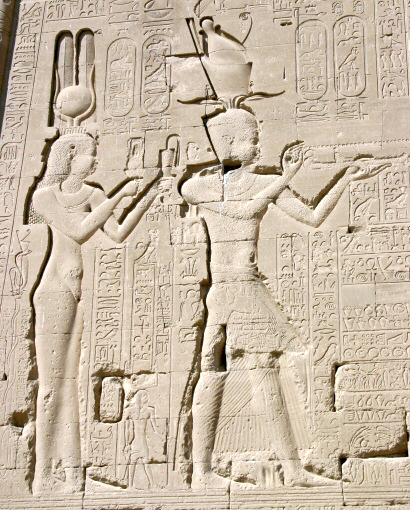
Evidence of rock carvings along the Nile and in surrounding oases indicates early habitation. In the 10th millennium BCE, a culture of hunter-gatherers and fishers was replaced by a grain-grinding culture. Climate changes or overgrazing around 8000 BCE began to desiccate the pastoral lands of Egypt, forming the Sahara. Early tribal peoples migrated to the Nile River where they developed a settled agricultural economy and more centralised society.
By about 6000 BCE, a Neolithic culture took root in the Nile Valley. During the Neolithic era, several predynastic cultures developed independently in Upper and Lower Egypt. The Badarian culture and the successor Naqada series are generally regarded as precursors to dynastic Egypt. The earliest known Lower Egyptian site, Merimda, predates the Badarian by about seven hundred years. Contemporaneous Lower Egyptian communities coexisted with their southern counterparts for more than two thousand years, remaining culturally distinct, but maintaining frequent contact through trade. The earliest known evidence of Egyptian hieroglyphic inscriptions appeared during the predynastic period on Naqada III pottery vessels, dated to about 3200 BCE.
Around c. 3150 BCE, King Menes unified Egypt, establishing a succession of dynasties that ruled for three millennia. Egyptian civilisation thrived with distinctive achievements in religion, art, and writing. The Old Kingdom (c. 2700–2200 BCE) saw the construction of the pyramids, including those at Giza. A brief interregnum followed, succeeded by the Middle Kingdom (c. 2040 BCE), a phase of renewed stability and prosperity under rulers such as Amenemhat III.
After the Second Intermediate Period and the Hyksos occupation, Egypt was reunified by Ahmose I, founder of the Eighteenth Dynasty and the New Kingdom (c. 1550–1070 BCE). This era marked Egypt's height as a major power in the region, extending influence into Nubia and the Levant. It produced many of Egypt's most renowned Pharaohs, Hatshepsut, Thutmose III, Akhenaten, Tutankhamun, and Ramesses II, and witnessed the rise of Atenism, one of the earliest forms of monotheism. Despite later invasions by Libyans, Nubians, and Assyrians, native dynasties eventually reasserted control.
In 525 BCE, Cambyses II of Persia conquered Egypt, beginning the Achaemenid satrapy period (the Twenty-seventh Dynasty). Although several revolts occurred, Egypt remained under Persian control until briefly regaining independence before falling again in 343 BCE. The Thirtieth Dynasty was the last native royal house. Following renewed Persian domination, Alexander the Great conquered Egypt in 332 BCE, after which his general Ptolemy I Soter established the Ptolemaic dynasty.
The Ptolemaic Kingdom was a Hellenistic state from southern Syria to Cyrene and south to Nubia, with Alexandria as its capital and a centre of Greek culture and trade. The Ptolemies adopted pharaonic traditions to legitimise their rule, appearing on monuments in Egyptian style and participating in local religious life. The Lighthouse of Alexandria, built c. 280 BCE, was one of the Seven Wonders of the Ancient World, later destroyed by earthquakes. The last ruler, Cleopatra VII, committed suicide after Octavian captured Alexandria, ending the dynasty and paving the way for Roman annexation. Native rebellions and dynastic disputes weakened the kingdom, facilitating its annexation by Rome.
Egypt was a wealthy imperial province of the Roman Empire, supplying grain and hosting the major city of Alexandria. Governed with Roman administration and Hellenistic culture, its population primarily spoke Greek in major cities and Coptic Egyptian in rural areas. Christianity reached Egypt in the 1st century, brought by Saint Mark the Evangelist. During Diocletian's reign (284–305 CE), the New Testament had been translated into Egyptian and many Egyptian Christians were persecuted. By CE 451, a distinct Coptic Church was firmly established.
The Byzantines regained control of Egypt after a brief Sasanid Persian invasion early in the 7th century, until 639–42, when the country was conquered by Arab Muslim forces under Amr ibn al-As during the Early Muslim conquests. The Arabs defeated the Byzantine armies, bringing Islam to Egypt. Alexandria briefly returned to Byzantine control in 645 but fell again to the Arabs in 646. In 654, an invasion fleet sent by Constans II was repulsed. The Arabs founded Fustat, later replaced by Cairo in 969.
Under the Abbasid caliphate, Egypt was governed through deputies residing in Baghdad. Revolts occurred frequently, including the Egyptian revolt of 828 and the uprising of 831 when Copts joined Muslims against the government. Semi-independent dynasties arose, including the Tulunid dynasty (868–905) and Ikhshidid dynasty (935–969), which maintained Abbasid allegiance while exercising local authority.
The Fatimid Caliphate ruled Egypt from the 10th century, with Cairo as their capital. After the Fatimids, the Ayyubid dynasty governed until 1250, when the Mamluks, a military caste of Turco-Circassian origin, took control. The Mamluks ruled Egypt for the next three centuries and maintained control over parts of the Levant. By the late 13th century, Egypt linked trade routes connecting the Red Sea with India, Malaya, and the East Indies. The mid-14th century Black Death killed about 40% of Egypt's population.
Egypt was conquered by the Ottomans in 1517, following the defeat of the Mamluk Sultanate, and became a province of the Ottoman Empire. The Mamluks, who had dominated Egypt's military and political life for centuries, retained influence under Ottoman rule, creating a semi-autonomous power structure. The Ottomans faced repeated challenges in maintaining control, while plagues and famines weakened the economy and civil society. Between 1687 and 1731, Egypt experienced six major famines, including the 1784 famine that killed roughly one-sixth of the population.
In 1798, Napoleon Bonaparte invaded Egypt, defeating the Mamluks at the Battle of the Pyramids. The French occupation was short-lived, but it destabilised the region and set the stage for Muhammad Ali Pasha's rise. After the French were expelled, power struggles ensued between the Ottomans, the Mamluks, and Albanian mercenaries in Ottoman service, leaving Egypt politically fragmented.
In 1805, Muhammad Ali Pasha seized power, massacring the remaining Mamluks and establishing a dynasty that would rule Egypt until 1952. He reorganised the army along European lines, introduced conscription, and developed a centralised administration. At the same time, he promoted cash-crop agriculture, especially long-staple cotton, to integrate Egypt into global markets. His successors, including Ibrahim Pasha, Abbas I, Sa'id, and Isma'il Pasha, continued reforms in agriculture, science, and industry, and abolished slavery.
Muhammad Ali expanded Egypt's control over Northern Sudan (1820–1824), Syria (1833), and parts of Arabia and Anatolia, but European powers intervened in 1841, forcing him to relinquish most of his conquests. He modernised Egypt's infrastructure, built factories and irrigation networks, and strengthened the military, while broader education remained largely limited to military and technical training. The centralisation of power and focus on military and economic modernisation laid the foundation for Egypt's transformation into a regional power.
In 1867, Egypt was formally granted autonomous status as a vassal state of the Ottoman Empire. The Suez Canal, completed in 1869 with French assistance, became a key strategic and commercial asset. Financial mismanagement and mounting debts led Isma'il Pasha to sell Egypt's shares in the canal to Britain in 1875, increasing European influence. Rising discontent culminated in the Urabi revolt, after which Britain occupied Egypt in 1882, establishing a de facto protectorate while maintaining nominal Ottoman sovereignty. The Anglo-Egyptian Condominium Agreement of 1899 placed Sudan under joint Egyptian and British administration, though Britain retained real control. Incidents such as the Denshawai incident in 1906 intensified nationalist sentiment, laying the groundwork for political movements that challenged both Ottoman and European dominance.
In 1914, as the Ottoman Empire joined World War I alongside the Central Powers, Khedive Abbas II declared support for the Ottoman side. In response, the British deposed him and installed his brother Hussein Kamel, who assumed the title of Sultan of Egypt. Egypt was formally declared independent from the Ottoman Empire but remained under British protection.
After World War I, nationalist sentiments surged. Saad Zaghloul and the Wafd Party secured popular support, but the British exiled Zaghloul and his colleagues to Malta on 8 March 1919, prompting the first modern revolution. This uprising pressured the UK to issue a declaration of independence on 22 February 1922. Sultan Fuad I then assumed the title of King of Egypt. Despite nominal independence, Britain retained military presence and political influence.
In 1923, a new constitution established a parliamentary government. The Wafd Party won a decisive victory in the 1923–24 elections, with Saad Zaghloul becoming prime minister. The 1936 treaty led to British troop withdrawal from most of Egypt, except the Suez Canal. The treaty left the status of Sudan unresolved, as real control remained with Britain.
During World War II, Egypt served as a strategic base for Allied operations, particularly in North Africa. Although Egypt declared martial law and severed diplomatic relations with Axis powers, the Egyptian army did not engage directly. Political tensions persisted, highlighted by the 1942 Abdeen Palace Incident, in which British forces pressured King Farouk to install a Wafd-coalition government.
After the war, nationalist and anti-British sentiments intensified. British troops largely withdrew in 1947, leaving a residual presence around the Suez Canal. Egypt's defeat in the First Arab-Israeli War fuelled anti-monarchy feeling. The Wafd Party's 1950 election victory forced King Farouk to appoint Mostafa El-Nahas as prime minister. In 1951, Egypt unilaterally renounced the 1936 treaty and demanded British troop withdrawal. The situation around the Suez Canal escalated, culminating in violent confrontations that led to the killing of 43 Egyptian policemen in 1952 by British troops. The Ismailia incident outraged Egypt and led to the subsequent Black Saturday anti-British riots, which saw widespread destruction in Cairo.
These events precipitated the Free Officers Movement coup on 22–23 July 1952, led by Muhammad Naguib and Gamal Abdel Nasser. King Farouk abdicated in favour of his infant son, Fuad II, but real power rested with the Egyptian Revolutionary Command Council. By 18 June 1953, the monarchy was formally abolished, the 1923 constitution suspended, and Egypt was declared a republic, with Naguib as president and Nasser as prime minister.
Following the 1952 Revolution led by the Free Officers Movement, Egypt came under military control, and all political parties were banned. On 18 June 1953, the Republic of Egypt was officially declared, with Muhammad Naguib serving as the first President. His presidency lasted less than a year and a half, as Gamal Abdel Nasser, a Pan-Arabist and the principal architect of the 1952 movement, gradually consolidated power. Naguib was forced to resign in 1954 and placed under house arrest. The presidency remained vacant until Nasser was formally elected in 1956.
In October 1954, Egypt and the United Kingdom agreed to end the Anglo-Egyptian Condominium Agreement of 1899, granting Sudan full independence, which came into effect on 1 January 1956. In June 1956, Nasser assumed the presidency and immediately became the central figure in Egypt's domestic and foreign policy.
03Geography

Egypt lies primarily between latitudes 22° and 32°N, and longitudes 25° and 35°E. At 1,001,450 square kilometres (386,660 sq mi), it is the world's 29th largest country. Due to the extreme aridity of Egypt's climate, population centres are concentrated along the narrow Nile Valley and Delta, meaning that about 99% of the population uses about 5.5% of the total land area. 98% of Egyptians live on 3% of the territory.
Egypt is bordered by Libya to the west, the Sudan to the south, and the Gaza Strip and Israel to the east. A transcontinental nation, it possesses a land bridge (the Isthmus of Suez) between Africa and Asia, traversed by a navigable waterway (the Suez Canal) that connects the Mediterranean Sea with the Indian Ocean by way of the Red Sea.
Apart from the Nile Valley, the majority of Egypt's landscape is desert, with a few oases scattered about. Winds create prolific sand dunes that peak at more than 30 metres (100 ft) high. Egypt includes parts of the Sahara desert and of the Libyan Desert.
Sinai peninsula hosts the highest mountain in Egypt, Mount Catherine at 2,642 metres. The Red Sea Riviera, on the east of the peninsula, is renowned for its wealth of coral reefs and marine life.
Towns and cities include Alexandria, the second largest city; Aswan; Asyut; Cairo, the modern Egyptian capital and largest city; El Mahalla El Kubra; Giza, the site of the Pyramid of Khufu; Hurghada; Luxor; Kom Ombo; Port Safaga; Port Said; Sharm El Sheikh; Suez, where the south end of the Suez Canal is located; Zagazig; and Minya. Oases include Bahariya, Dakhla, Farafra, Kharga and Siwa. Protectorates include Ras Mohamed National Park, Zaranik Protectorate and Siwa.
On 13 March 2015, plans for a proposed new capital of Egypt were announced.
Most of Egypt's rain falls in the winter months. South of Cairo, rainfall averages only around 2 to 5 mm (0.1 to 0.2 in) per year and at intervals of many years. On a very thin strip of the northern coast the rainfall can be as high as 410 mm (16.1 in), mostly between October and March. Snow falls on Sinai's mountains and some of the north coastal cities such as Damietta, Baltim and Sidi Barrani, and rarely in Alexandria. A very small amount of snow fell on Cairo on 13 December 2013, the first time in many decades. Frost is also known in mid-Sinai and mid-Egypt.
Egypt has a very hot, sunny and dry climate. Average temperature highs are very high to extremely high throughout most of the country. The exception to this is the northern part of the country, which, although still hot, has its temperatures moderated by the cool Mediterranean winds consistently blowing in over the sea coast, especially at the height of summer. The Khamaseen is a hot, dry wind that originates from the vast deserts in the south and blows in the spring or in the early summer. It brings scorching sand and dust particles, and usually brings daytime temperatures over 40 °C (104 °F) and sometimes over 50 °C (122 °F) in the interior, while the relative humidity can drop to 5% or even less.
Prior to the construction of the Aswan Dam, the Nile flooded annually, replenishing Egypt's soil. This gave Egypt a consistent harvest throughout the years.
Egypt's hot and arid climate is under increasing strain from climate change, which has brought extreme temperatures, droughts, floods, and rising sea levels. Egypt is highly vulnerable, and these shifts threaten food security, water availability, public health, and economic stability.
Egypt signed the Rio Convention on Biological Diversity on 9 June 1992, and became a party to the convention on 2 June 1994. It produced a National Biodiversity Strategy and Action Plan which was received by the convention on 31 July 1998.
The plan stated that the following numbers of species of different groups had been recorded from Egypt: algae (1483 species), animals (about 15,000 species of which more than 10,000 were insects), fungi (more than 627 species), monera (319 species), plants (2426 species), protozoans (371 species). For some major groups, for example lichen-forming fungi and nematode worms, the number was not known. Apart from small and well-studied groups like amphibians, birds, fish, mammals and reptiles, the many of those numbers are likely to increase as further species are recorded from Egypt. For the fungi, including lichen-forming species, for example, subsequent work has shown that over 2200 species have been recorded from Egypt, and the final figure of all fungi actually occurring in the country is expected to be much higher. For the grasses, 284 native and naturalised species have been identified and recorded in Egypt.
04Government

The House of Representatives, whose members are elected to serve five-year terms, specialises in legislation. Elections were held between November 2011 and January 2012, which were later dissolved.
After a wave of public discontent with the Muslim Brotherhood government of President Mohamed Morsi, on 3 July 2013 then-General Abdel Fattah el-Sisi announced the removal of Morsi from office and the suspension of the constitution. A 50-member constitution committee was formed for modifying the constitution which was later published for public voting and was adopted on 18 January 2014.
The next parliamentary election was announced to be held within 6 months of the constitution's ratification on 18 January 2014, and were held in two phases, from 17 October to 2 December 2015. Originally, the parliament was to be formed before the president was elected, but interim president Adly Mansour pushed the date. The 2014 Egyptian presidential election took place on 26–28 May. Official figures showed a turnout of 25,578,233 or 47.5%, with Abdel Fattah el-Sisi winning with 23.78 million votes, or 96.9% compared to 757,511 (3.1%) for Hamdeen Sabahi.
In 2024, as part of its Freedom in the World report, Freedom House rated political rights in Egypt at 6 (with 40 representing the most free and 0 the least), and civil liberties at 12 (with 60 being the highest score and 0 the lowest), which gave it the freedom rating of "Not Free". According to the 2023 V-Dem Democracy indices Egypt is the eighth least democratic country in Africa. The 2023 edition of The Economist Democracy Index categorises Egypt as an "authoritarian regime", with a score of 2.93.
Egypt has the oldest continuous parliamentary tradition in the Arab world. The first popular assembly was established in 1866. It was disbanded as a result of the British occupation of 1882, and the British allowed only a consultative body to sit. In 1923, however, after the country's independence was declared, a new constitution provided for a parliamentary monarchy.
Egypt's foreign policy is shaped by its strategic geographical position, historical legacy, and diplomatic influence in Africa, the Mediterranean, and Southwest Asia. As a founding member of the Non-Aligned Movement and the United Nations, Egypt has maintained a non-aligned stance while remaining active in regional diplomacy. Cairo, historically a crossroads of commerce and culture, remains a centre of intellectual and political influence in the region.
The United States has been a key partner, providing Egypt with US$1.3 billion in annual military assistance as of 2015. In 1989, Egypt was designated a major non-NATO ally, but relations soured following the 2013 Egyptian coup d'état, as the Obama administration criticised Egypt's crackdown on the Muslim Brotherhood and suspended joint military exercises. Under President Donald Trump, relations improved, with Abdel Fattah el-Sisi's 2017 visit to the White House marking the first by an Egyptian president in eight years.
Relations with Russia strengthened after Morsi's removal, with both nations expanding military cooperation and trade relations. Similarly, relations with China have deepened, culminating in the establishment of a "comprehensive strategic partnership" in 2014.
In 2024, Egypt and the European Union elevated their relationship to a "strategic and comprehensive partnership", emphasising political cooperation, and economic collaboration. Both sides are also working on deepening trade relations under the Association Agreement, supporting Egypt's economic stability, and strengthening counterterrorism efforts.
Egypt remains an influential mediator in Middle Eastern conflicts, particularly in brokering ceasefires in Gaza and facilitating the Israeli–Palestinian peace process. It is also a Member State of the African Union and the Arab League, hosting the Arab League headquarters in Cairo. The Arab League temporarily moved to Tunis in 1978 in protest of the Egypt–Israel peace treaty, but returned to Cairo in 1989. Egypt has also cultivated strong economic ties with Gulf nations such as Saudi Arabia and the United Arab Emirates, both of which have provided billions of dollars in financial assistance.
The Egyptian Armed Forces constitute Egypt's military establishment, comprising the Egyptian Army, Navy, Air Force, and Air Defence Forces under the direct supervision of the Chief of Staff, with their headquarters at the State Strategic Command Center, commonly known as the Octagon, in the New Administrative Capital. The military primarily oversees external defence but also plays a domestic role, assisting police in protecting vital infrastructure during emergencies and counterterrorism operations. They also participate in foreign peacekeeping missions and engage in bilateral and multinational military exercises.
The military wields significant political influence, operating autonomously and remaining exempt from many civilian laws. A significant amount of military information is not made publicly available, including budget information, the names of the general officers and the military's size (which is considered a state secret). In addition, the military is a major driver of Egypt's economic landscape, engaging in infrastructure development, consumer goods production, and real estate holdings through the National Service Projects Organization.
With an active personnel strength of 438,500 and 479,000 reservists, it is one of the largest and best-equipped militaries in the region. Conscription is mandatory for men aged 18–30, with service obligations ranging from 14 to 36 months, depending on educational level, followed by a nine-year reserve duty. Voluntary enlistment is possible from age 16 for men and 17 for women.
The military operates a diverse arsenal sourced primarily from China, France, Germany, Italy, Russia, and the United States. Recent efforts have focused on modernisation and procurement of advanced weaponry. The domestic defence industry is also well-established, manufacturing small arms, armoured vehicles, and naval vessels, while maintaining licensed production agreements with countries such as Germany and the United States.
Egypt is one of few countries in the region to possess spy satellites, launching EgyptSat 1 in 2007, followed by EgyptSat 2 in 2014. In 2019, Egypt launched MisrSat-A, an observation satellite, followed later that year by Tiba-1, a civilian and military communications satellite. In 2023, Egypt launched Horus-1 and Horus-2, about a month apart. The country also placed MisrSat-2 into orbit later that year. All three of them are high-resolution observation satellites. In 2024, two months after MisrSat-2's launch, the country successfully completed the initial operational phase of NEXSAT-1, its first experimental Earth observation satellite, achieving milestones such as developing indigenous onboard software, advanced attitude-control systems, and independently capturing and processing satellite imagery, all of which marked a major step forward in Egypt's national space capabilities.
The legal system is based on Islamic and civil law (particularly the Napoleonic Code); and judicial review by a Supreme Court, which accepts compulsory International Court of Justice jurisdiction only with reservations. The highest judicial authority of Egypt is the Supreme Constitutional Court, located in the Maadi district of Cairo.
Islamic jurisprudence is the principal source of legislation. Sharia courts and qadis are run and licensed by the Ministry of Justice. The personal status law that regulates matters such as marriage, divorce and child custody is governed by Sharia. In a family court, a woman's testimony is worth half of a man's testimony.
On 26 December 2012, the Muslim Brotherhood attempted to institutionalise a controversial new constitution. It was approved by the public in a referendum held 15–22 December 2012 with 64% support, but with only 33% electorate participation. It replaced the 2011 Provisional Constitution of Egypt, adopted following the revolution.
The Penal code was unique as it contains a "Blasphemy Law". The present court system allows a death penalty including against an absent individual tried in absentia. Several Americans and Canadians were sentenced to death in 2012.
On 18 January 2014, the interim government successfully institutionalised a more secular constitution. The president is elected to a four-year term and may serve 2 terms. The parliament may impeach the president. Under the constitution, there is a guarantee of gender equality and absolute freedom of thought. The military retains the ability to appoint the national Minister of Defence for the next two full presidential terms since the constitution took effect. Under the constitution, political parties may not be based on "religion, race, gender or geography".
The National Council for Human Rights was established in 2003, but it has faced criticism from activists who argue it serves as a government propaganda tool to justify human rights violations and repressive laws such as the Emergency Law.
Egypt has been ranked among the worst countries for religious freedom, with widespread discrimination against minorities such as Coptic Christians, Baháʼís, and other Muslim sects. A 2009 report by Pew Forum on Religion & Public Life ranked Egypt fifth worst globally for religious freedom, while the United States Commission on International Religious Freedom has placed Egypt on its watch list due to state-tolerated violations. A 2010 Pew survey found that 84% of Egyptians supported the death penalty for apostasy, 77% backed amputations for theft, and 82% endorsed stoning for adultery.
Since the 2013 Egyptian coup d'état, political repression has intensified, with mass arrests and harsh crackdowns on dissent. During the August 2013 sit-in dispersal, 595 protesters were killed, making 14 August 2013 the deadliest day in Egypt's modern history. Since then, an estimated 60,000 political prisoners remain behind bars.
Egypt has also drawn international condemnation for mass death sentences, including a 2014 ruling sentencing 529 people to death in a single hearing. The United Nations and human rights groups have condemned these trials as gross violations of international law.
Homosexuality remains de facto criminalised, with 95% of Egyptians opposing its acceptance, according to a 2013 Pew survey. A poll by the Thomson Reuters Foundation, based on assessments from specialists in women's rights, ranked Cairo as the worst megacity for women, evaluating cities on sexual harassment, healthcare access, harmful cultural practices, and economic opportunities.
Reporters Without Borders ranked Egypt in their 2017 World Press Freedom Index at No. 160 out of 180 nations. At least 18 journalists were imprisoned in Egypt, as of August 2015. A new anti-terror law was enacted in August 2015 that threatens members of the media with fines ranging from about US$25,000 to $60,000 for the distribution of wrong information on acts of terror inside the country "that differ from official declarations of the Egyptian Department of Defence".
Egypt is divided into 27 governorates. The governorates are further divided into regions. The regions contain towns and villages. Each governorate has a capital, sometimes carrying the same name as the governorate.
05Economy
The economy of Egypt is the second-largest in Africa and ranks 44th worldwide as of 2025. It is a major emerging market economy, marked by its membership in organisations like the African Union, Arab League, BRICS, and its participation in the African Continental Free Trade Area (AfCFTA). The Egyptian economy has evolved significantly since the early 2000s, transitioning towards a market-oriented system through fiscal and monetary reforms, privatisation efforts, and foreign investment incentives. These measures have contributed to macroeconomic stability and improved unemployment and poverty rates.
Despite waves of privatisation and fiscal reforms, the government remains one of the country's largest employers, and state contracts continue to stimulate activity in other sectors of the still partly socialised economy. Construction, particularly large-scale public works, has remained a major source of employment and public expenditure. However, as part of an $8 billion International Monetary Fund programme launched in 2024, Egypt has committed to rationalising such spending. As a result, private investments rose to 47.5% of total executed investments in FY 2024/25, up from 39.6%, while public investment fell to 43.3%. This marks the highest private share in five years and represents a clear shift in Egypt's investment landscape.
Egypt is among the world's top five recipients of remittances, which have more than doubled over the past decade, rising from $17.1 billion in FY 2015/2016 to a record $36.5 billion in FY 2024/2025, according to data from the Central Bank of Egypt. These inflows are crucial for Egypt's foreign reserves and household incomes.
International trade is a key component of Egypt's economy, accounting for 40% of GDP according to the World Bank. The country has pursued broader economic integration through free trade agreements, including the EU-Egypt Association Agreement and AfCFTA. Egypt's exports have seen significant growth in the past years, and the government aims to raise them to $145 billion by 2030.
Since 1979, Egypt has received substantial United States foreign aid, averaging $1.5 billion annually, with approximately $200 million allocated to economic assistance and the remainder directed towards military aid for procuring weapon systems from American suppliers.
Egypt has the largest manufacturing sector in Africa, accounting for approximately 22% of the continent's total manufacturing value. Under Egypt Vision 2030 and its related development plans, the country has relied on industrial parks, free zones and special economic zones to boost industrialisation and manufacturing.
The industrial base is diverse, spanning chemicals, electronics, steel, automotive manufacturing, pharmaceuticals, and textiles. The chemical industry, one of the largest, includes plastics, rubber, detergents, fertilisers, and glass, with petrochemicals alone contributing about 12% of industrial output, while total sector exports are projected to reach $9 billion in 2024.
Light manufacturing is one of Egypt's main industries, and several government-led programmes aim to grow it further. The Egypt Makes Electronics initiative has attracted factories from international firms, including Vivo, Infinix, Oppo, Xiaomi, Nokia, Electrolux, Samsung, Hisense, Beko, and Haier. These plants have made Egypt a regional centre for electronics and home appliance production. The textile industry is also a cornerstone of Egypt's economy, contributing around 12% of export earnings and employing 2.5 million people. It spans the entire production chain from cotton cultivation to finished garments and is globally recognised for its premium Giza cotton.
In addition to light manufacturing, the economy also includes a heavy manufacturing sector. Egypt is Africa's leading steel producer and ranks 20th globally, with 9.8 million tons in 2022. Egyptian steel company EZDK is the largest in the region, ranked 77th globally in 2020. The country's automotive industry, led by Nasr, Ghabbour, and MCV, is expanding through partnerships with global manufacturers under the government's 2024–2030 National Automotive Industry Development Strategy, which targets 500,000 vehicles annually and promotes local electric vehicle production.
Egypt's retail and services sector has expanded steadily in recent years, driven by population growth, rising incomes, and urbanisation. As of 2020 the country's retail market, which covers shopping malls, supermarkets, convenience stores, and e-commerce platforms, was worth around $200 billion.
The retail food and grocery sector is still largely dominated by traditional, family-run stores and wet markets, although supermarket and convenience store chains expanded in both size and popularity between 2015 and 2020. Hypermarkets and wholesale discounters recorded the highest growth rates over this period, at 153% and 162% respectively, accounting for 26% of the sector's sales.
Many shopping malls have opened in Egypt in recent years. Cairo has the highest concentration with over 20 commercial malls, while smaller cities such as Mansoura and Tanta have only just got their first.
The Egyptian government controls much of the telecommunications sector through its majority ownership of Telecom Egypt. Between 2019 and 2022, mobile internet subscriptions in Egypt grew 77.9%, from 39 million to 69.4 million, with total mobile subscriptions reaching 106.2 million by December 2023. Internet penetration reached 72.2% in early 2024, with 82 million users. Since 2022 Egypt has the fastest internet speeds in Africa.
Egyptian banks are among the largest and most dynamic in the region. Most Egyptian lenders are adopting new technologies to expand into nonbanking financial services. The fintech sector has grown 5.5-fold since 2020, with 177 startups, ranking Egypt 10th among emerging markets. The banking sector is dominated by four state-owned commercial banks, the National Bank of Egypt, Banque Misr, Banque du Caire, and Alexbank, which together account for about 55% of total banking assets. CIB is the country's largest private bank and the third-largest overall.
Egypt's oil production is concentrated in the Western Desert, the Gulf of Suez, and the Nile Delta, with peak crude oil output reaching approximately 941,000 bbl/d (149,600 m3/d) in 1993 before declining to 630,000 bbl/d (100,000 m3/d) by 2008. This decline transformed Egypt into a net oil importer by 2008–2009, prompting a strategic shift towards natural gas.
Natural gas has since become central to Egypt's economy, drawing major foreign investment. The Zohr gas field, discovered by Eni in 2015, is the Mediterranean's largest reserve, containing about 30 trillion cubic feet of gas. Production began in 2017 and reached 2.7 billion cubic feet per day (bcf/d) by 2019, greatly enhancing Egypt's energy outlook, though recent technical issues have reduced output; new drilling is planned to restore capacity. BP has made major investments, including a $12 billion commitment in 2015 to the West Nile Delta project, along with other developments such as Atoll, North Damietta, and Qattameya, which began production in 2020.
Egypt possesses substantial mineral wealth, with deposits of gold, copper, iron ore, phosphate, uranium, tantalum, manganese, chromium, coal, zinc, lead, tin, and black sand minerals such as ilmenite, zircon, rutile, and magnetite. It also produces abundant industrial materials like granite, marble, limestone, white sand, kaolin, and feldspar. The gold mining sector has grown rapidly following investment reforms and exploration bids involving AngloGold Ashanti and Alexander Nubia International. The Sukari mine remains the core operation, with the sector's GDP share expected to reach 5–6% by 2030. Gold exports doubled to $2.17 billion in 2024, with Egypt aiming to join the world's top ten exporters by 2027.
Egypt's agricultural sector remains essential to its economy, though its share of GDP and employment has declined over time. Egypt produces substantial quantities of wheat, maize, sugarcane, fruits, vegetables, fodder, and rice, yet remains reliant on wheat and maize imports, primarily from Ukraine and Russia, despite yield improvements since 1970. This dependency stems from high domestic demand, driven by subsidies and a culinary preference for bread, as well as Egypt's limited arable land and its emphasis on high-value export crops. In 2024, Egypt exported $4.1 billion in agricultural goods and roughly $6.1 billion in food industry products.
The country has achieved self-sufficiency in several key agricultural products, including vegetables, fruits, poultry, dairy, eggs, and rice, while nearing full self-sufficiency in sugar and fish, with production reaching approximately 90% of demand. Self-sufficiency ratios are lower for red meat (60%), cereals (58%), vegetable oils (26%), and oil crops (35%). Consequently, Egypt relies on imports for roughly 45% of its domestic food demand.
The Aswan High Dam, completed in 1971, improved irrigation stability. In 2010, 3.6 million hectares were cultivated, with the government targeting 4.8 million hectares by 2030. Major initiatives include the New Delta and Toshka Project, designed to convert desert areas into farmland using advanced irrigation techniques, wastewater treatment, groundwater and water desalination. Efforts to deregulate agriculture have improved price alignment with global markets, but climate change and water scarcity continue to pose long-term challenges.
Tourism is an important sector in Egypt's economy. Egypt received a record 15.7 million tourists in 2024, up from 14.9 million in 2023. Tourism revenues also rose, to $14.1 billion.
Egypt's tourism strategy aims to attract 30 million tourists by 2028, with a focus on infrastructure improvements, high-profile projects like the Grand Egyptian Museum, and enhancing visitor experiences. In 2024, the country's top tourism markets included Germany, Russia, and Saudi Arabia.
The Giza Necropolis is one of Egypt's best-known tourist attractions; it is the only one of the Seven Wonders of the Ancient World still in existence.
Egypt's beaches on the Mediterranean and the Red Sea, which extend to over 3,000 kilometres (1,900 miles), are also popular tourist destinations; the Gulf of Aqaba beaches, Safaga, Sharm el-Sheikh, Hurghada, Luxor, Dahab, Ras Sidr and Marsa Alam are popular sites.
06Infrastructure
Egypt's electricity sector has shifted from full state control to a more diversified energy mix that includes natural gas, renewables, and nuclear power, with growing private sector participation and regional interconnections. Fossil fuels still dominate, generating 88% of electricity in 2023, while hydropower provides 7% and wind and solar together 5%, up from 1% in 2015 but still below the global average of 13% and Africa's 6%. Egypt remains Africa's largest producer of gas-fired electricity, accounting for 45% of the continent's total in 2022, yet its per capita carbon emissions remain below the global average.
The government undertook a series of rapid reforms in response to blackouts during the summer of 2014 that lasted for up to six hours per day, cutting energy subsidies, and quickly developing the Zohr gas field in the Mediterranean, which was discovered in 2015. The country now has an oversupply of electricity and aims to source 20% of its electricity from renewables by 2022 and 55% by 2050. As part of its renewable energy strategy, Egypt has undertaken large-scale projects like the Benban Solar Park and the Gabal El Zeit wind farm. Benban, located near Aswan, has a total capacity of 1650 MW and generates about 3.8 TWh annually, making it the fourth-largest solar power plant globally. Additionally, the Gabal El Zeit wind farm, costing €340 million, spans 100 square kilometres with 300 turbines, generating 580 MW of electricity. Egypt is currently constructing its first nuclear power facility, the El Dabaa Nuclear Power Plant, in the northern coastal region.
Egypt and Cyprus are considering implementing the proposed EuroAfrica Interconnector project. This consists of laying a 2 GW HVDC undersea power cable between them and between Cyprus and Greece, thus connecting Egypt to the greater European power grid. The interconnector will make Egypt an electricity hub between Europe and Africa. The president of Egypt and the prime minister of Cyprus met in Nicosia on 21 November 2017 and showed their full support for the EuroAfrica Interconnector pointing out its importance for their energy security.
Transport in Egypt is primarily concentrated around Cairo, following the Nile River's settlement patterns. The country's 4,800-kilometre (3,000 mi) railway network is operated by Egyptian National Railways, with its main line running from Alexandria to Aswan. In 2021, Egypt launched a $4.5 billion high-speed rail project to connect Ain Sokhna, Mersa Matruh, and Alexandria, later expanding to include routes linking Greater Cairo to Aswan and Luxor to Hurghada and Safaga.
The Cairo Metro operates three lines, with a fourth line under construction and plans for additional expansions in the future. Meanwhile, two monorail lines are also being built in the city, along with a metro system in Alexandria.
Egypt has undertaken major road infrastructure expansion through the National Roads Project, increasing the total length of main roads by nearly 30% from 23,500 km in 2014 to 30,500 km in 2024. Alongside constructing new highways, thousands of kilometres of roads have been upgraded. Egypt's ranking in the Road Quality Index rose from 118th place in 2015 to 18th place in 2024.
Egypt's aviation sector is led by EgyptAir, the country's flag carrier and largest airline, founded in 1932 by Talaat Harb. Now state-owned, EgyptAir operates from its Cairo International Airport hub, with scheduled passenger and cargo services to over 75 destinations across the Middle East, Europe, Africa, Asia, and the Americas. The airline's current fleet consists of 80 aircraft.
The Suez Canal, an artificial sea-level waterway, connects the Mediterranean Sea and the Red Sea, enabling direct shipping between Europe and Asia without navigating around Africa. In 2023, it generated a record $9.4 billion in revenue for Egypt. Opened in November 1869, the 193.30 km (120+1⁄8 mi) canal runs from Port Said in the north to Port Tawfiq in the south, with Ismailia situated 3 kilometres (1+7⁄8 miles) west of its midpoint.
The canal is 24 metres (79 feet) deep and 205 m (673 ft) wide as of 2010, consisting of a 22 km (14 mi) northern access channel, a 162.25 km (100+7⁄8 mi) main section, and a 9 km (5+1⁄2 mi) southern access channel. The Ballah By-Pass and the Great Bitter Lake provide passing points along the canal, which operates without locks, allowing seawater to flow freely. Expansions completed in 2015 increased its daily capacity from 49 to 97 ships, reducing transit times and boosting global maritime trade.
Egypt's water supply is heavily dependent on the Nile River, which provides approximately 90% of the country's total water resources, with an annual share of 55 billion cubic metres, unchanged since 1954. An additional 0.5 billion cubic metres comes from non-renewable groundwater sources. However, national demand exceeds 90 billion cubic metres annually, creating a persistent water deficit. As a result, Egypt's per capita water share fell to 570 cubic metres in 2018, well below the 1,000 cubic metre international water scarcity threshold. To address this, the government has prioritised efficient water management, particularly in response to population growth and agricultural expansion.
Even so, water access has improved sharply. Between 1990 and 2010, piped water coverage rose from 89% to 100% in urban areas and from 39% to 93% in rural areas, eliminating open defecation in rural regions and achieving near-universal access to an improved water source. By 2015, 90% of the population had access to safely managed drinking water, increasing to 96.9% by 2019. Similarly, proper sanitation coverage expanded from 50% in 2015 to 66.2% in 2019, while the percentage of treated wastewater relative to total wastewater rose from 50% to 68.7% in the same period, reaching 74% in 2022. However, gaps in sanitation infrastructure have historically led to health concerns, with a 2007 report estimating 17,000 child deaths annually from diarrhoeal diseases linked to poor sanitation.
Egypt has made significant investments in wastewater treatment infrastructure as part of its broader water management strategy. In 2021, the Bahr El Baqar Wastewater Treatment Plant was completed, becoming the largest in the world at the time, with a capacity of 5 million cubic metres per day. The treated water from this facility is allocated to irrigating 342,000 acres under the Sinai Peninsula Development Plan. In 2023, Egypt inaugurated the New Delta Wastewater Treatment Plant, surpassing Bahr El Baqar as the largest wastewater facility globally, with a capacity of 7.5 million cubic metres per day. A key component of Egypt's agricultural expansion strategy, the plant supports the New Delta reclamation project while also reducing pollution in Lake Mariout and the Mediterranean Sea.
Given Egypt's arid climate and lack of appreciable rainfall, agriculture is entirely dependent on irrigation. The Nile River, regulated by the Aswan High Dam, releases an annual average of 55 billion cubic metres, of which 46 billion cubic metres are diverted into irrigation canals. This irrigation sustains 33,600 square kilometres (13,000 square miles) of agricultural land in the Nile Valley and Nile Delta, producing an average of 1.8 crops per year.
Article sections from Wikipedia (CC BY-SA 4.0). Excerpted for readability.