The German Empire (German: Deutsches Reich), also referred to as Imperial Germany or the Second Reich, was the period of the German Reich from the unification of Germany in 1871 until the November Revolution in 1918, when Germany changed its form of government to a republic. The German Empire consisted of 25 states, each with its own nobility: four constituent kingdoms, six grand duchies, five duchies (six before 1876), seven principalities, three free Hanseatic cities, and one imperial territory. While Prussia was only one of the four kingdoms in the realm, it contained about two-thirds of the Empire's population and territory, and Prussian dominance was also constitutionally established, since the king of Prussia was also the German Emperor (Deutscher Kaiser).
The empire was founded on 18 January 1871, when the south German states, except for Austria, Switzerland and Liechtenstein, joined the North German Confederation. The new constitution came into force on 16 April, changing the name of the federal state to the German Empire and introducing the title of German Emperor for Wilhelm I, King of Prussia from the House of Hohenzollern. Berlin remained its capital, and Otto von Bismarck, Minister President of Prussia, became chancellor, the head of government. During its 47 years of existence, the German Empire became an industrial, technological, and scientific power in Europe, and by 1913, Germany was the largest economy in continental Europe and the third largest in the world. The success of the German Empire in the natural sciences was such that one-third of all Nobel Prizes went to German inventors and researchers. Germany also became a great power, building Europe's most extensive rail network, the world's strongest army, and a fast-growing industrial base. Starting very small in 1871, in a decade, the navy became second only to Britain's Royal Navy.
Otto von Bismarck served as the first and longest-tenured chancellor of the German Empire from 1871 to 1890. His tenure began with relatively liberal measures and broad reforms but gradually shifted toward conservatism, marked by the Kulturkampf against the Catholic Church. In foreign affairs, Bismarck concluded the Dual Alliance with Austria-Hungary in 1879 and fostered close ties to the Ottoman Empire; the former expanded into the Triple Alliance with Italy in 1882. Despite denouncing liberals and socialists as "enemies of the Reich", he introduced pioneering social programs that laid the foundation for the modern European welfare state. In the 1880s, Germany entered the colonial race despite Bismarck's earlier reluctance, acquiring territories in Africa, the Pacific, and China and building the world's third-largest colonial empire after the British and French. Following Bismarck's dismissal in 1890, Wilhelm II pursued Weltpolitik ("world politics"), a more aggressive and expansionist course that abandoned Bismarck's complex alliance system, leaving Germany increasingly isolated. When the July Crisis of 1914 escalated into the First World War, Italy distanced itself from the Triple Alliance while the Ottoman Empire aligned with Germany. The emperor's inconsistent and often unpredictable decisions contributed to the tensions that culminated in the outbreak of the war.
In the First World War, German plans to capture Paris quickly failed, and the war on the Western Front became a stalemate. The Allied naval blockade was a major contributing factor in the severe shortages of food and supplements. However, Imperial Germany had success on the Eastern Front; it occupied a large amount of territory to its east following the Treaty of Brest-Litovsk. The German decision to restart unrestricted submarine warfare in early 1917 contributed to bringing the United States into the war. In October 1918, after the failed Spring Offensive, Germany's armies were in retreat, its allies, Austria-Hungary and the Ottoman Empire, had collapsed, and Bulgaria had surrendered. The empire collapsed in the November 1918 Revolution with the abdication of Wilhelm II, which left the postwar federal republic to govern a devastated populace. The Treaty of Versailles imposed postwar reparation costs of 132 billion gold marks (around US$269 billion or €240 billion in 2019, or roughly US$32 billion in 1921), as well as limiting the army to 100,000 men and disallowing conscription, armored vehicles, submarines, aircraft, and more than six battleships. The consequential economic devastation, later exacerbated by the Great Depression, and the humiliation and outrage experienced by the German population are considered leading factors in the rise of Adolf Hitler and Nazism.
Summary from Wikipedia (CC BY-SA 4.0)
01History

The German Confederation had been created by an act of the Congress of Vienna on 8 June 1815 as a result of the Napoleonic Wars, after being alluded to in Article 6 of the 1814 Treaty of Paris.
The liberal Revolutions of 1848 were crushed after the relations between affluent educated liberals and the urban artisans broke down; Otto von Bismarck's pragmatic Realpolitik, which appealed to peasants as well as the aristocracy, took its place. Bismarck sought to extend Hohenzollern hegemony throughout the German states; to do so meant unification of the German states and the exclusion of Prussia's main German rival, Austria, from the subsequent German Empire. He envisioned a conservative, Prussian-dominated Germany. The Second Schleswig War against Denmark in 1864, the Austro-Prussian War in 1866, and the Franco-Prussian War in 1870–1871 sparked a growing pan-German ideal and contributed to the formation of the German state, with victory for the Kleindeutsche Lösung ("Lesser German solution").
The German Confederation ended as a result of the Austro-Prussian War of 1866 between the constituent Confederation entities of the Austrian Empire and its allies on one side and Prussia and its allies on the other. The war resulted in the partial replacement of the Confederation in 1867 by a North German Confederation, comprising the 22 states north of the Main. The patriotic fervor generated by the Franco-Prussian War of 1870 overwhelmed the remaining opposition to a unified Germany (aside from Austria) in the four states south of the Main, and during November 1870, they joined the North German Confederation by treaty.
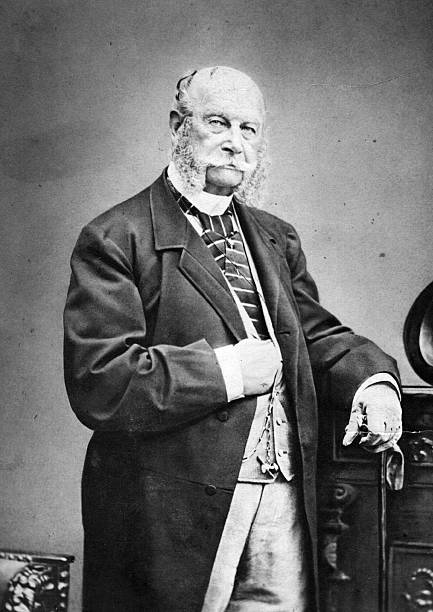
On 10 December 1870, the North German Confederation Reichstag renamed the Confederation the "German Empire" and gave the title of German Emperor to William I, King of Prussia, as Bundespräsidium of the Confederation. The new constitution (Constitution of the German Confederation) and the title Emperor came into effect on 1 January 1871. During the siege of Paris on 18 January 1871, William was proclaimed Emperor in the Hall of Mirrors at the Palace of Versailles.
The Constitution, adopted by the Reichstag on 14 April 1871 and proclaimed by the Emperor on 16 April, was substantially based upon Bismarck's North German Constitution. The political system remained the same. The empire had a parliament called the Reichstag, which was elected by universal male suffrage. However, the original constituencies drawn in 1871 were never redrawn to reflect the growth of urban areas. As a result, by the time of the great expansion of German cities in the 1890s and 1900s, rural areas were grossly overrepresented.
Legislation also required the consent of the Bundesrat, the federal council of deputies from the 25 states. Executive power was vested in the emperor (Kaiser), who was assisted by a chancellor responsible only to him. The emperor was given extensive powers by the constitution. He alone appointed and dismissed the chancellor, was supreme commander-in-chief of the armed forces, and final arbiter of all foreign affairs, and could also disband the Reichstag to call for new elections. Officially, the chancellor was a one-man cabinet and was responsible for the conduct of all state affairs; in practice, the State Secretaries (top bureaucratic officials in charge of such fields as finance, war, foreign affairs, etc.) functioned much like ministers in other monarchies. The Reichstag had the power to pass, amend, or reject bills and to initiate legislation. However, as mentioned above, in practice, the real power was vested in the emperor, who exercised it through his chancellor.
Although nominally a federal empire and league of equals, in practice, the empire was dominated by the largest and most powerful state, Prussia. It stretched across the northern two-thirds of the new Reich and contained three-fifths of the country's population. The imperial crown was hereditary in the ruling house of Prussia, the House of Hohenzollern. With the exception of 1872–1873 and 1892–1894, the chancellor was always simultaneously the prime minister of Prussia. With 17 out of 58 votes in the Bundesrat, Berlin needed only a few votes from the smaller states to exercise effective control.
The other states retained their own governments but had only limited aspects of sovereignty. For example, both postage stamps and currency were issued for the empire as a whole. Coins through one mark were also minted in the name of the empire, while higher-valued pieces were issued by the states. However, these larger gold and silver issues were virtually commemorative coins and had limited circulation. While the states issued their own decorations and some had their own armies, the military forces of the smaller ones were put under Prussian control. Those of the larger states, such as the Kingdoms of Bavaria and Saxony, were coordinated along Prussian principles and would, in wartime, be controlled by the federal government. The evolution of the German Empire is somewhat in line with parallel developments in Italy, which became a united nation-state a decade earlier. Some key elements of the German Empire's authoritarian political structure were also the basis for conservative modernization in Imperial Japan under Emperor Meiji and the preservation of an authoritarian political structure under the tsars in the Russian Empire.
One factor in the social anatomy of these governments was the retention of a very substantial share in political power by the landed elite, the Junkers, resulting from the absence of a revolutionary breakthrough by the peasants in combination with urban areas.
Although authoritarian in many respects, the empire had some democratic aspects. Besides universal manhood suffrage, it permitted the development of political parties. Bismarck intended to create a constitutional façade that would mask the continuation of authoritarian policies. However, in the process, he created a system with a serious flaw. There was a significant disparity between the Prussian and German electoral systems. Prussia used a three-class voting system which weighted votes based on the amount of taxes paid, all but assuring a conservative majority. The king and (with two exceptions) the prime minister of Prussia were also the emperor and chancellor of the empire – meaning that the same rulers had to seek majorities from legislatures elected from completely different franchises. Universal suffrage was significantly diluted by gross over-representation of rural areas from the 1890s onward. From 1871 to the turn of the century, the urban-rural population balance shifted significantly, going from 64% rural and 36% urban in 1871 to 46% rural and 54% urban in 1900.
Bismarck's domestic policies played an important role in forging the authoritarian political culture of the Kaiserreich. Less preoccupied with continental power politics following unification in 1871, Germany's semi-parliamentary government carried out a relatively smooth economic and political revolution from above that pushed it along the way towards becoming the world's leading industrial power of the time.
Bismarck's "revolutionary conservatism" was a conservative state-building strategy designed to make ordinary Germans—not just the Junker elite—more loyal to the throne and empire. According to Kees van Kersbergen and Barbara Vis, his strategy was:
granting social rights to enhance the integration of a hierarchical society, to forge a bond between workers and the state so as to strengthen the latter, to maintain traditional relations of authority between social and status groups, and to provide a countervailing power against the modernist forces of liberalism and socialism.
Bismarck created the modern welfare state in Germany in the 1880s and enacted universal male suffrage in 1871. He became a great hero to German conservatives, who erected many monuments to his memory and tried to emulate his policies.
Bismarck's post-1871 foreign policy was conservative and sought to preserve the balance of power in Europe. British historian Eric Hobsbawm concludes that he "remained undisputed world champion at the game of multilateral diplomatic chess for almost twenty years after 1871, [devoting] himself exclusively, and successfully, to maintaining peace between the powers". This was a departure from his adventurous foreign policy for Prussia, where he favored strength and expansion, punctuating this by saying, "The great questions of the age are not settled by speeches and majority votes – this was the error of 1848–49 – but by iron and blood."
Bismarck's chief concern was that France would plot revenge after its defeat in the Franco-Prussian War. As the French lacked the strength to defeat Germany by themselves, they sought an alliance with Russia, or perhaps even the newly reformed empire of Austria-Hungary, which would envelop Germany completely. Bismarck wanted to prevent this at all costs and maintain friendly relations with the Austrians and the Russians, signing the Dual Alliance (1879) with Austria-Hungary in 1879. The Dual Alliance was a defensive alliance that was established against Russia, and by association France, in the event the alliance did not work out with the state. However, an alliance with Russia would come not long after the signing of the Dual Alliance with Austria, the Dreikaiserbund (League of Three Emperors), in 1881. During this period, individuals within the German military were advocating a preemptive strike against Russia, but Bismarck knew that such ideas were foolhardy. He once wrote that "the most brilliant victories would not avail against the Russian nation, because of its climate, its desert, and its frugality, and having but one frontier to defend", and he also believed that such a war would leave Germany with another bitter, resentful neighbor. Despite this, another alliance between Germany, Austria-Hungary, and Italy would be signed in 1882, preying on the fears of the German and Austro-Hungarian militaries of the untrustworthiness of Russia itself. This Triple Alliance continued to 1915, when Italy declared war on Austria-Hungary. Despite Germany's and especially Austria's lack of faith in the Russian alliance, the Reinsurance Treaty would be first signed in 1887, and renewed up until 1890, when the Bismarckian system collapsed upon Bismarck's resignation.
Meanwhile, the chancellor remained wary of any foreign policy developments that looked even remotely warlike. In 1886, he moved to stop an attempted sale of horses to France because they might be used for cavalry and also ordered an investigation into large Russian purchases of medicine from a German chemical works. Bismarck stubbornly refused to listen to Georg Herbert Münster, ambassador to France, who reported back that the French were not seeking a revanchist war and were desperate for peace at all costs.
Bismarck and most of his contemporaries were conservative-minded and focused their foreign policy attention on Germany's neighboring states. In 1914, 60% of German foreign investment was in Europe, as opposed to just 5% of British investment. Most of the money went to developing nations such as Russia that lacked the capital or technical knowledge to industrialize on their own. The construction of the Berlin–Baghdad railway, financed by German banks, was designed to eventually connect Germany with the Ottoman Empire and the Persian Gulf, but it also collided with British and Russian geopolitical interests. Conflict over the Baghdad Railway was resolved in June 1914.
Many consider Bismarck's foreign policy as a coherent system and partly responsible for the preservation of Europe's stability. It was also marked by the need to balance circumspect defensiveness and the desire to be free from the constraints of its position as a major European power. Bismarck's successors did not pursue his foreign policy legacy.
02Constitution

The Empire was a federal parliamentary constitutional monarchy.
The Federal Council (Bundesrat) held sovereignty over the Empire and served as its highest authority. The Bundesrat was a legislative body that possessed the right of legislative initiative (Article VII Nr. 1) and, because all laws required its consent, could effectively veto any bill coming from the Reichstag (Article V). The Bundesrat was able to set guidelines and make organizational changes within the executive branch, act as supreme arbitrator in administrative disputes between states, and serve as a constitutional court for states that did not have a constitutional court (Article LXXVI). It was composed of representatives who were appointed by and reported to the state governments.
The Imperial Diet (Reichstag) was a legislative body elected by universal male suffrage that effectively served as parliament. It had the right to propose bills and, with the concurrence of the Bundesrat, approve the state budget annually and the military budget for periods of seven years until 1893, then after that for five years. All laws required the Reichstag's approval to pass. After the constitutional reforms of October 1918, the Reich chancellor, through a change to Article XV, became dependent on the confidence of the Reichstag rather than the emperor.
The emperor (Kaiser) was head of state of the Empire – he was not a ruler. He appointed the chancellor, usually the person able to command the confidence of the Reichstag. The chancellor, in consultation with the emperor, determined the government's broad policy guidelines and presented them to the Reichstag. On the advice of the chancellor, the emperor appointed the ministers and – at least formally – all other imperial officers. All acts of the emperor except for military directives required the countersignature of the chancellor (Article XVII). The emperor was also responsible for signing bills into law, declaring war (which required the consent of the Bundesrat), negotiating peace, making treaties, and calling and adjourning sessions of the Bundesrat and the Reichstag (Articles XI and XII). The emperor was commander-in-chief of the Empire's Army (Article LXIII) and Navy (Article LIII); when exercising his military authority, he had plenary power.
The chancellor was head of government and chaired the Bundesrat and the Imperial Government, led the lawmaking process and countersigned all acts of the emperor (except for military directives).
03Constituent states
The Constitution of the German Empire came into force on 4 May 1871 and united 25 constituent states. These states consisted of four kingdoms, six grand duchies, five duchies, seven principalities and three free Hanseatic cities. In addition, the recently annexed area of Alsace-Lorraine was not a state in its own right, but was designated as a Reichsland, or imperial territory, by a law of 25 June 1873.
The Empire was constituted as a monarchy, as were nearly all of the states, with the exception of the three free cities which had a republican form of government. Several of these states had gained sovereignty following the dissolution of the Holy Roman Empire in 1806 and had been de facto sovereign from the mid-1600s onward. Others were created as sovereign states after the Congress of Vienna in 1815. Prussia was the largest of the constituent states, comprising two-thirds of the Empire's territory. States were not necessarily contiguous – many existed in several parts with exclaves and enclaves – as a result of historical acquisitions or divisions, and in several cases, the extinction of the ruling dynasties.
Each component elected deputies to the Reichstag via single-member districts. Each state also sent appointed representatives to the Bundesrat to represent their interests, though this right was not extended to Alsace-Lorraine until 1911.
Unusually for a federation or a nation-state, the German states maintained limited autonomy over foreign affairs and continued to exchange ambassadors and other diplomats, both with each other and directly with foreign nations. Shortly after the Empire was proclaimed, Bismarck implemented a convention in which his sovereign would only exchange envoys with other German states as the king of Prussia, while envoys to foreign nations always received credentials from the monarch in his capacity as German Emperor. In this way, the Prussian foreign ministry was largely tasked with managing relations with the other German states while the Imperial foreign ministry managed Germany's external relations.
04Borders and border railway stations

Until the outbreak of the First World War in 1914, the German Empire bordered the Russian Empire, Austria-Hungary, Switzerland, France (Alsace–Lorraine was part of the German Empire from 1871 to 1918), Luxembourg, Belgium, the Netherlands, and Denmark. The railway network was among the most developed in continental Europe. Since all neighboring countries except the Russian Empire used the standard European gauge (1,435 mm), railway systems were technically compatible. Due to customs and passport controls, border stations evolved into major logistical hubs.
Below is a list of the most important international border railway stations of the German Empire before 1918.
Eydtkuhnen ⇄ Verzhbolovo (Virbalis) (the most famous border crossing, frequently mentioned in Russian literature)
Prostken (Prostki) ⇄ Grajewo
Illowo-Osada ⇄ Mława
Ottlotschin–Thorn ⇄ Aleksandrów Kujawski
Nowe Skalmierzyce ⇄ Kalisz
Herby (Prussian) ⇄ Herby (Russian)
Mysłowice ⇄ Szczakowa
Annaberg (today Chałupki) ⇄ Oderberg (Bohumín)
Bad Schandau ⇄ Tetschen-Bodenbach (Děčín)
Bayerisch Eisenstein ⇄ Spitzberg / Železná Ruda
Passau ⇄ Schärding
Salzburg ⇄ Austria-Hungary Salzburg
Kiefersfelden ⇄ Kufstein
Basel Badischer Bahnhof ⇄ Basel
Konstanz ⇄ Switzerland Thurgau Railway
Deutsch-Avricourt (Alsace–Lorraine) ⇄ Nouvel-Avricourt
Montreux-Vieux (Alt-Münsterol) ⇄ Belfort
Igel ⇄ Wasserbillig
Herbesthal ⇄ Liège
Elten / Emmerich ⇄ Arnhem
Gronau ⇄ Enschede
Bentheim ⇄ Oldenzaal
Hvidding ⇄ Vamdrup (until 1918, North Schleswig was part of the German Empire, so the German–Danish border lay considerably farther north than today)
The border with the Russian Empire was the most technically challenging because of the change from the standard European gauge to the Russian broad gauge (1,524 mm). At all crossings, passengers were required to change trains, while freight had to be transshipped. Austria-Hungary was the German Empire's principal ally, and railway traffic across that border was particularly intensive.
05Demographics
About 92% of the population spoke German as their first language. The only minority language with a significant number of speakers (5.4%) was Polish (a figure that rises to over 6% when including the related Kashubian and Masurian languages).
The non-German Germanic languages (0.5%), like Danish, Dutch and Frisian, were located in the north and northwest of the empire, near the borders with Denmark, the Netherlands, Belgium, and Luxembourg. Low German was spoken throughout northern Germany and, though linguistically as distinct from High German (Hochdeutsch) as from Dutch and English, was considered "German", hence also its name. Danish and Frisian were spoken predominantly in the north of the Prussian province of Schleswig-Holstein and Dutch in the western border areas of Prussia (Hannover, Westphalia, and the Rhine Province).
Polish and other West Slavic languages (6.28%) were spoken chiefly in the east.
A few (0.5%) spoke French, the vast majority of these in the Reichsland Elsass-Lothringen where francophones formed 11.6% of the total population.
06Immigration
In the 1860s, Russia removed privileges for German emigrants and placed pressure on German immigrants to assimilate. The majority of German emigrants left Russia after the turn of the century. Many of these ethnic Germans immigrated back to Germany.
Article sections from Wikipedia (CC BY-SA 4.0). Excerpted for readability.