Saudi Arabia, officially the Kingdom of Saudi Arabia (KSA), is a country in West Asia that occupies the bulk of the Arabian Peninsula. Covering a land area of approximately 2,149,690 km2 (830,000 sq mi), it is the fifth-largest country in Asia and the twelfth-largest in the world. It is bordered by the Red Sea to the west, Jordan, Iraq, and Kuwait to the north, the Persian Gulf, Bahrain, Qatar, and the United Arab Emirates to the east, Oman to the southeast, and Yemen to the south. The Gulf of Aqaba in the northwest separates it from Egypt and Israel. Riyadh is the capital and largest city, while other major centers include Jeddah and the two holiest cities in Islam, Mecca and Medina.
Pre-Islamic Arabia, the territory that constitutes Saudi Arabia, was the site of several ancient cultures and civilizations; the archaeological study of the prehistory of Saudi Arabia has identified some of the earliest traces of human activity outside Africa. Islam emerged in what is now Saudi Arabia in the early seventh century. Islamic prophet Muhammad united the population of the Arabian Peninsula and created a single Islamic religious polity. Following his death in 632, his followers expanded Muslim rule beyond Arabia, conquering territories in North Africa, Central, South Asia and Iberia within decades. Arab dynasties originating from modern-day Saudi Arabia founded the Rashidun (632–661), Umayyad (661–750), Zubayrid (683-692), Abbasid (750–1258), and Fatimid (909–1171) caliphates, as well as numerous other Muslim states in Asia, Africa, and Europe.
Saudi Arabia was founded in 1932 by King Abdulaziz, who united Hejaz, Najd, parts of Eastern Arabia and South Arabia into a single state through a series of military and political campaigns beginning in 1902. The Kingdom is the Third Saudi State and the successor to the First Saudi State (1727–1818) and the Second Saudi State (1824–1891). The country has since been governed as an absolute monarchy under the House of Saud. In its Basic Law, Saudi Arabia defines itself as a sovereign Arab Islamic state with Islam as its official religion and Arabic as its official language. The ultraconservative Wahhabi religious movement within Sunni Islam was the prevailing political and cultural force until the 2000s. The Saudi government has attracted criticism for various policies such as its intervention in the Yemeni Civil War, restrictions on political and civil liberties, and poor human rights record. Since the mid-2010s, Saudi Arabia has instituted limited and gradual reforms to liberalize social, cultural, and religious life.
Saudi Arabia is considered both a regional and middle power, in addition to being a major non-NATO ally of the United States. Since petroleum was discovered in the country in 1938, the kingdom has become the world's second-largest oil producer and leading oil exporter, controlling the world's second-largest oil reserves and sixth-largest gas reserves. Saudi Arabia is categorized as a World Bank high-income economy and is the only Arab country among the G20 major economies. The Saudi economy is the largest in the Middle East and the world's nineteenth-largest by nominal GDP and seventeenth-largest by PPP. Ranking very high in the Human Development Index, Saudi Arabia offers free university tuition, no personal income tax, and free universal health care. With its dependence on foreign labour, Saudi Arabia has the world's third-largest immigrant population, with foreign-born residents comprising roughly 40% of the population. Saudi Arabians are among the world's youngest people, with approximately half being under 25 years old. Saudi Arabia is a member of the Gulf Cooperation Council, United Nations, Organisation of Islamic Cooperation, Arab League, and OPEC, as well as a dialogue partner of the Shanghai Cooperation Organisation.
Summary from Wikipedia (CC BY-SA 4.0)
01Etymology

Following the amalgamation of the Kingdom of Hejaz and Nejd, Abdulaziz issued a royal decree on 23 September 1932 naming the new state al-Mamlaka al-ʿArabiyya as-Suʿūdiyya (Arabic المملكة العربية السعودية), which is normally translated as "the Kingdom of Saudi Arabia" in English, but literally means "the Saudi Arab Kingdom", or "the Saudi Kingdom of Arabia" (compare the Hashemite Kingdom of Jordan).
The word "Saudi" is derived from the element as-Suʿūdīyya in the Arabic name of the country, which is a type of adjective known as a nisba, formed from the dynastic name of the Saudi royal family, the Al Saud (Arabic: آل سعود). Its inclusion expresses the view that the country is the personal possession of the royal family. Al Saud is an Arabic name formed by adding the word Al, meaning "family of" or "House of", to the personal name of an ancestor. In the case of Al Saud, this is Saud ibn Muhammad ibn Muqrin, the father of the dynasty's 18th-century founder, Muhammad bin Saud.
02History

There is evidence that human habitation in the Arabian Peninsula dates back to about 125,000 years ago. A 2011 study found that the first modern humans to spread east across Asia left Africa about 75,000 years ago across the Bab-el-Mandeb connecting the Horn of Africa and Arabia. The Arabian Peninsula is regarded as central to the understanding of evolution and dispersals of humanity. Arabia underwent an extreme environmental fluctuation in the Quaternary that led to profound evolutionary and demographic changes. Arabia's rich Lower Paleolithic record, marked by numerous Oldowan-like sites, indicates a significant role in the early hominin colonization of Eurasia.
In the Neolithic period, prominent cultures such as Al-Magar, whose centre lay in modern-day southwestern Najd, flourished. Al-Magar could be considered a "Neolithic Revolution" in human knowledge and handicraft skills. The culture is characterized as being one of the world's first to involve the widespread domestication of animals, particularly the horse. Al-Magar statues were made from local stone, and it seems that the statues were fixed in a central building that might have had a significant role in the social and religious life of the inhabitants.
In 2017, hunting scenes showing images of most likely domesticated dogs (resembling the Canaan Dog) were discovered in northwestern Saudi Arabia. These rock engravings date back more than 8,000 years, making them the earliest depictions of dogs in the world.
At the end of the 4th millennium BCE, Arabia entered the Bronze Age; metals were widely used, and the period was characterized by its 2 m high burials which were simultaneously followed by the existence of numerous temples that included many free-standing sculptures originally painted with red colours.
In May 2021, archaeologists announced that a 350,000-year-old Acheulean site named An Nasim in the Hail region could be the oldest human habitation site in northern Saudi Arabia. Paleolithic artefacts are similar to material remains uncovered at the Acheulean sites in the Nefud Desert.
The earliest sedentary culture in Saudi Arabia dates to the Ubaid period at Dosariyah. Climatic change and the onset of aridity may have brought about the end of this phase of settlement, as little archaeological evidence exists from the succeeding millennium. The settlement of the region picks up again in the period of Dilmun in the early 3rd millennium. Known records from Uruk refer to a place called Dilmun, associated on several occasions with copper, and in later periods it was a source of imported woods in southern Mesopotamia. Scholars have suggested that Dilmun originally designated the Eastern Province, notably linked with the major Dilmunite settlements of Umm an-Nussi and Umm ar-Ramadh in the interior and Tarout on the coast. It is likely that Tarout Island was the main port and the capital of Dilmun. Mesopotamian inscribed clay tablets suggest that, in the early period of Dilmun, a hierarchical organized political structure existed. In 1966, an earthwork in Tarout exposed an ancient burial field that yielded a large statue dating to the Dilmunite period (mid 3rd millennium BCE). The statue was locally made under the strong Mesopotamian influence on the artistic principle of Dilmun.
By 2200 BCE, the centre of Dilmun shifted for unknown reasons from Tarout and the Saudi Arabian mainland to the island of Bahrain, and a highly developed settlement emerged there, where a laborious temple complex and thousands of burial mounds dating to this period were discovered.
By the late Bronze Age, a historically recorded people and land (Midian and the Midianites) in the north-western portion of Saudi Arabia are well-documented in the Bible. Centred in Tabouk, it stretched from Wadi Arabah in the north to the area of al-Wajh in the south. The capital of Midian was Qurayyah, it consists of a large, fortified citadel encompassing 35 hectares and below it lies a walled settlement of 15 hectares. The city hosted as many as 12,000 inhabitants. The Bible recounts Israel's two wars with Midian, in the early 11th century BCE. Politically, the Midianites were described as having a decentralized structure headed by five kings (Evi, Rekem, Tsur, Hur, and Reba); the names appear to be toponyms of important Midianite settlements. It is common to view that Midian designated a confederation of tribes, the sedentary element settled in the Hijaz while its nomadic affiliates pastured and sometimes pillaged as far away as Palestine. The nomadic Midianites were one of the earliest exploiters of the domestication of camels that enabled them to navigate through the harsh terrains of the region.
At the end of the 7th century BCE, an emerging kingdom appeared in north-western Arabia. It started as a sheikdom of Dedan, which developed into the kingdom of Lihyan. During this period, Dedan transformed into a kingdom that encompassed a much wider domain. In the early 3rd century BCE, with bustling economic activity between the south and north, Lihyan acquired large influence suitable to its strategic position on the caravan road. The Lihyanites ruled over a large domain from Yathrib in the south and parts of the Levant in the north. In antiquity, Gulf of Aqaba used to be called Gulf of Lihyan, a testimony to the extensive influence that Lihyan acquired.
The Lihyanites fell into the hands of the Nabataeans around 65 BCE upon their seizure of Hegra then marching to Tayma, and to their capital Dedan in 9 BCE. The Nabataeans ruled large portions of north Arabia until their domain was annexed by the Roman Empire, which renamed it Arabia Petraea, and remained under the rule of the Romans until 630.
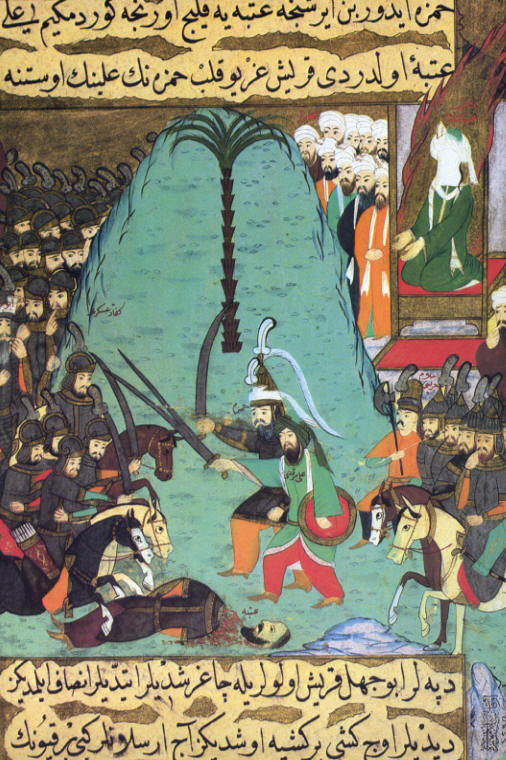
Shortly before the advent of Islam, apart from urban trading settlements (such as Mecca and Medina), much of what was to become Saudi Arabia was populated by nomadic pastoral tribal societies. Muhammad was born in Mecca in about 570 CE. In the early 7th century, Muhammad united the various tribes of the peninsula and created a single Islamic religious polity. Following his death in 632, his followers expanded the territory under Muslim rule beyond Arabia, conquering territory in the Iberian Peninsula in the west, to parts of Central and South Asia in the east, in a matter of decades. Arabia became a more politically peripheral region of the Muslim world as the focus shifted to the newly conquered lands.
Arabs originating from modern-day Saudi Arabia, the Hejaz in particular, founded the Rashidun (632–661), Umayyad (661–750), Abbasid (750–1517), and the Fatimid (909–1171) caliphates. From the 10th century to the early 20th century, Mecca and Medina were under the control of a local Arab ruler known as the Sharif of Mecca, but at most times the Sharif owed allegiance to the ruler of one of the major Islamic empires based in Baghdad, Cairo or Istanbul. Most of the remainder of what became Saudi Arabia reverted to traditional tribal rule.
For much of the 10th century, the Isma'ili-Shi'ite Qarmatians were the most powerful force in the Persian Gulf. In 930, the Qarmatians pillaged Mecca, outraging the Muslim world, particularly with their theft of the Black Stone. In 1077–1078, an Arab sheikh named Abdullah bin Ali Al Uyuni defeated the Qarmatians in Bahrain and al-Hasa with the help of the Seljuq Empire and founded the Uyunid dynasty. The Uyunid Emirate later underwent expansion, with its territory stretching from Najd to the Syrian Desert. They were overthrown by the Usfurids in 1253. Usfurid rule was weakened after Persian rulers of Hormuz captured Bahrain and Qatif in 1320. The vassals of Ormuz, the Shia Jarwanid dynasty came to rule eastern Arabia in the 14th century. The Jabrids took control of the region after overthrowing the Jarwanids in the 15th century and clashed with Hormuz for more than two decades over the region for its economic revenues, until finally agreeing to pay tribute in 1507. Al-Muntafiq tribe later took over the region and came under Ottoman suzerainty. The Bani Khalid tribe later revolted against them in the 17th century and took control. Their rule extended from Iraq to Oman at its height, and they too came under Ottoman suzerainty.
In the 16th century, the Ottomans added the Red Sea and Persian Gulf coast (the Hejaz, Aseer and Al-Ahsa) to the empire and claimed suzerainty over the interior. One reason was to thwart Portuguese attempts to attack the Red Sea (hence the Hejaz) and the Indian Ocean. The Ottoman degree of control over these lands varied over the next four centuries with the fluctuating strength or weakness of the empire's central authority. These changes contributed to later uncertainties, such as the dispute with Transjordan over the inclusion of the sanjak of Ma'an, including the cities of Ma'an and Aqaba.
The emergence of what was to become the Saudi royal family, known as the Al Saud, began at the town of Diriyah in central Arabia with the accession as emir of Muhammad bin Saud on 22 February 1727. In 1744 he joined forces with the religious leader Muhammad ibn Abd al-Wahhab, founder of the Wahhabi movement, a strict puritanical form of Sunni Islam. This alliance provided the ideological impetus to Saudi expansion and remains the basis of Saudi Arabian dynastic rule today.
The Emirate of Diriyah established in the area around Riyadh rapidly expanded and briefly controlled most of the present-day territory of Saudi Arabia, sacking Karbala in 1802, and capturing Mecca in 1803. In 1818, it was destroyed by the Ottoman viceroy of Egypt, Mohammed Ali Pasha. The much smaller Emirate of Nejd was established in 1824. Throughout the rest of the 19th century, the Al Saud contested control of the interior of what was to become Saudi Arabia with another Arabian ruling family, the Al Rashid, who ruled the Emirate of Jabal Shammar. By 1891, the Al Rashid were victorious and the Al Saud were driven into exile in Kuwait.
At the beginning of the 20th century, the Ottoman Empire continued to control or have a suzerainty over most of the peninsula. Subject to this suzerainty, Arabia was ruled by a patchwork of tribal rulers, with the Sharif of Mecca having pre-eminence and ruling the Hejaz. In 1902, Abdul Rahman's son, Abdulaziz—later known as Ibn Saud—recaptured control of Riyadh bringing the Al Saud back to Nejd, creating the third "Saudi state". Ibn Saud gained the support of the Ikhwan, a tribal army inspired by Wahhabism and led by Faisal Al-Dawish, and which had grown quickly after its foundation in 1912. With the aid of the Ikhwan, Ibn Saud captured Al-Ahsa from the Ottomans in 1913.
In 1916, with the encouragement and support of Britain (which was fighting the Ottomans in World War I), the Sharif of Mecca, Hussein bin Ali, led a pan-Arab Revolt against the Ottoman Empire to create a united Arab state. Although the revolt failed in its objective, the Allied victory in World War I resulted in the end of Ottoman suzerainty and control in Arabia, and Hussein bin Ali became King of Hejaz.
Ibn Saud avoided involvement in the Arab Revolt and instead continued his struggle with the Al Rashid. Following the latter's final defeat, he took the title Sultan of Nejd in 1921. With the help of the Ikhwan, the Kingdom of Hejaz was conquered in 1924–25, and on 10 January 1926, Ibn Saud declared himself king of Hejaz. For the next five years, he administered the two parts of his dual kingdom as separate units.
After the conquest of the Hejaz, the Ikhwan leadership's objective switched to expansion of the Wahhabist realm into the British protectorates of Transjordan, Iraq and Kuwait, and began raiding those territories. This met with Ibn Saud's opposition, as he recognized the danger of a direct conflict with the British. At the same time, the Ikhwan became disenchanted with Ibn Saud's domestic policies which appeared to favour modernization and the increase in the number of non-Muslim foreigners in the country.
03Geography

Saudi Arabia occupies about 80% of the Arabian Peninsula (the world's largest peninsula), lying between latitudes 16° and 33° N, and longitudes 34° and 56° E. Because the country's southeastern and southern borders with the United Arab Emirates and Oman are not precisely marked, the exact size of the country is undefined. The United Nations Statistics Division estimates 2149690 km2 (830000 sq mi) and lists Saudi Arabia as the world's 12th largest state. It is geographically the largest country in the Middle East and on the Arabian Plate.
Saudi Arabia's geography is dominated by the Arabian Desert, associated semi-desert, shrubland, steppes, several mountain ranges, volcanic lava fields and highlands. The 647500 km2 (250001 sq mi) Rub' al Khali ("Empty Quarter") in the southeastern part of the country is the world's largest contiguous sand desert. Saudi Arabia is the largest country in the world without permanent rivers. The nation features several endorheic lakes, but its hydrology relies primarily on ephemeral watercourses known as wadis, which are numerous throughout the kingdom. The fertile areas are to be found in the alluvial deposits in wadis, basins, and oases. There are approximately 1,300 islands in the Red Sea and Persian Gulf.
The main topographical feature is the central plateau which rises abruptly from the Red Sea and gradually descends into the Nejd and toward the Persian Gulf. On the Red Sea coast, there is a narrow coastal plain, known as the Tihamah, parallel to which runs along an imposing escarpment. The southwest province of Aseer is mountainous and contains the 3015 m (9892 ft) Jabal Soudah, which is the highest point in the country. Saudi Arabia is home to more than 2,000 dormant volcanoes. Lava fields in Hejaz, known locally by their Arabic name of harrat (the singular is harrah), form one of Earth's largest alkali basalt regions, covering some 180,000 square kilometres (69,000 sq mi).
Except for the southwestern regions such as Aseer, Saudi Arabia has a desert climate with very high day-time temperatures during the summer and a sharp temperature drop at night. Average summer temperatures are around 45 °C (113 °F) but can be as high as 54 °C (129 °F). In the winter the temperature rarely drops below 0 °C (32 °F) with the exception of mostly the northern regions of the country where annual snowfall, in particular in the mountainous regions of Tabuk Province, is not uncommon. The lowest recorded temperature, −12.0 °C (10.4 °F), was measured in Turaif. Of the Gulf states, Saudi Arabia is likely to experience snowfalls most frequently.
In the spring and autumn the heat is temperate, temperatures average around 29 °C (84 °F). Annual rainfall is very low. The southern regions differ in that they are influenced by the Indian Ocean monsoons, usually occurring between October and March. An average of 300 mm (12 in) of rainfall occurs during this period, which is about 60% of the annual precipitation.
Saudi Arabia is home to five terrestrial ecoregions: Arabian Peninsula coastal fog desert, Southwestern Arabian foothills savanna, Southwestern Arabian montane woodlands, Arabian Desert, and Red Sea Nubo-Sindian tropical desert and semi-desert. Wildlife includes the Arabian leopard, Arabian wolf, striped hyena, mongoose, baboon, Cape hare, sand cat, and jerboa. Animals such as gazelles, oryx, leopards and cheetahs were relatively numerous until the 19th century, when extensive hunting reduced these animals almost to extinction. The culturally important Asiatic lion occurred in Saudi Arabia until the late 19th century before it was hunted to extinction in the wild. Birds include falcons (which are caught and trained for hunting), eagles, hawks, vultures, sandgrouse, and bulbuls. There are several species of snakes, many of which are venomous. Domesticated animals include the legendary Arabian horse, Arabian camel, sheep, goats, cattle, donkeys, chickens, etc.
The Red Sea is a rich and diverse ecosystem with more than 1,200 species of fish around 10% of which are endemic. This also includes 42 species of deep water fish. The rich diversity is partly owed to the 2000 km (1240 mi) of coral reef extending along the coastline; these fringing reefs are largely formed of stony acropora and porites corals. The reefs form platforms and sometimes lagoons along the coast and occasional other features such as cylinders (such as the Blue Hole at Dahab). These coastal reefs are also visited by pelagic species, including some of the 44 species of shark. There are many offshore reefs including several atolls. Many of the unusual offshore reef formations defy classic (i.e., Darwinian) coral reef classification schemes and are generally attributed to the high levels of tectonic activity that characterize the area.
Reflecting the country's dominant desert conditions, plant life mostly consists of herbs, plants, and shrubs that require little water. The date palm (Phoenix dactylifera) is widespread, and is a national symbol.
04Government and politics
Saudi Arabia is an absolute monarchy; however, according to the Basic Law of Saudi Arabia adopted by royal decree in 1992, the king must comply with Sharia (Islamic law) and the Quran, while the Quran and the Sunnah (the traditions of Muhammad) are declared to be the country's constitution. No political parties or national elections are permitted. While some critics consider it to be a totalitarian state, others regard it as lacking aspects of totalitarianism but nevertheless classify it as an authoritarian regime. The Economist ranked the Saudi government 150th out of 167 in its 2022 Democracy Index, and Freedom House gave it its lowest "Not Free" rating, giving it a score of 8 out of 100 for 2023. In the V-Dem Democracy Indices, Saudi Arabia ranks amongst the lowest as a "closed autocracy," ranking at 179th and 167th out of 179 countries in electoral democracy and liberal democracy indices respectively. Additionally, according to International IDEA's Global State of Democracy (GSoD) Indices and Democracy Tracker, Saudi Arabia performs in the low range on overall democratic measures, with particular weaknesses in political representation, including credible elections, inclusive suffrage and effective parliament.
In the absence of national elections and political parties, politics in Saudi Arabia takes place in two distinct arenas: within the royal family, the Al Saud, and between the royal family and the rest of Saudi society. Participation in the political process is limited to a relatively small segment of the population and takes the form of the royal family consulting with the ulema, tribal sheikhs, and business elite on major decisions. This process is not reported by the Saudi media.
By custom, all males of full age have a right to petition the king directly through the traditional tribal meeting known as the majlis. In many ways the approach to government differs little from the traditional system of tribal rule. Tribal identity remains strong, and outside of the royal family, political influence is frequently determined by tribal affiliation. Tribal sheikhs continue to exert a considerable degree of influence over local and national events. In recent years there have been limited steps to widen political participation such as the establishment of the Consultative Council in the early 1990s and the National Dialogue Forum in 2003. In 2005, the first municipal elections were held. In 2007, the Allegiance Council was created to regulate the succession. In 2009, the king made significant personnel changes to the government by appointing reformers to key positions and the first woman to a ministerial post; however, these changes have been criticized as being too slow or merely cosmetic.
The rule of the Al Saud faces political opposition from four sources: Sunni Islamist activism; liberal critics; the Shi'ite minority—particularly in the Eastern Province; and long-standing tribal/regionalist opponents (for example in the Hejaz). Of these, the minority activists have been the most prominent threat to the government and have in recent years been involved in violent incidents in the country. However, open protest against the government, even if peaceful, is not tolerated.
The king combines legislative, executive, and judicial functions, with royal decrees forming the basis of the country's legislation. The prime minister presides over the Council of Ministers of Saudi Arabia and Consultative Assembly of Saudi Arabia. The king has usually been also the prime minister, with two exceptions: Crown Prince Faisal, who was prime minister during the reign of King Saud, and Crown Prince Mohammed Bin Salman, the current prime minister since 2022. The royal family dominates the political system. The family's vast numbers allows it to control most of the kingdom's important posts and to have an involvement at all levels of government. It is estimated there are at least 7000 princes, with most power and influence being wielded by the 200 or so male descendants of Ibn Saud. The key ministries are generally reserved for the royal family, as are the 13 regional governorships.
The Saudi government and the royal family have often been accused of corruption over many years, and this continues into the 21st century. In a country that is said to "belong" to the royal family and is named for them, the lines between state assets and the personal wealth of senior princes are blurred. The extent of corruption has been described as systemic and endemic, and its existence was acknowledged and defended by Prince Bandar bin Sultan (a senior member of the royal family) in an interview in 2001.
In its Corruption Perceptions Index for 2010, Transparency International gave Saudi Arabia a score of 4.7 (on a scale from 0 to 10 where 0 is "highly corrupt" and 10 is "highly clean"). Saudi Arabia has undergone a process of political and social reform, such as to increase public transparency and good governance, but nepotism and patronage are widespread when doing business in the country; the enforcement of the anti-corruption laws is selective and public officials engage in corruption with impunity. As many as 500 people, including prominent Saudi Arabian princes, government ministers, and businesspeople, were arrested in an anti-corruption campaign in November 2017.
Saudi Arabia is unique in giving the ulema (the body of Islamic religious leaders and jurists) a direct role in government. The preferred ulema are of the Salafi movement. The ulema have been a key influence in major government decisions, for example the imposition of the oil embargo in 1973 and the invitation to foreign troops to Saudi Arabia in 1990. In addition, they have had a major role in the judicial and education systems as well as a monopoly of authority over socio-religious affairs.
By the 1970s, as a result of oil wealth and the modernization initiated by King Faisal, important changes to Saudi society were underway, and the power of the ulema was in decline. However, this changed following the seizure of the Grand Mosque in Mecca in 1979 by Islamist radicals. The government's response to the crisis included strengthening the ulema's powers and increasing their financial support: in particular, they were given greater control over the education system and were allowed to enforce the stricter observance of Wahhabi rules of moral and social behaviour. After his accession to the throne in 2005, King Abdullah took steps to reduce the powers of the ulema, for instance transferring control over girls' education to the Ministry of Education.
The ulema have historically been led by the Al ash-Sheikh, the country's leading religious family. The Al ash-Sheikh are the descendants of Muhammad ibn Abd al-Wahhab, the 18th-century founder of Wahhabism which dominates Saudi society. The family is second in prestige only to the Al Saud (the royal family) with whom they formed a "mutual support pact" and power-sharing arrangement nearly 300 years ago. The pact, which persists to this day, is based on the Al Saud maintaining the Al ash-Sheikh's authority in religious matters while upholding and propagating Wahhabi doctrine. In return, the Al ash-Sheikh support the Al Saud's political authority thereby using its religious-moral authority to legitimize the royal family's rule. Although the Al ash-Sheikh's domination of the ulema has diminished in recent decades, they still hold the most important religious posts and are closely linked to the Al Saud by a high degree of intermarriage.
The primary source of law is the Islamic Sharia derived from the teachings of the Quran and the Sunnah (the traditions of Muhammad). Saudi Arabia is unique among modern Muslim states in that Sharia is not codified and there is no system of judicial precedent, allowing judges to use independent legal reasoning to make a decision. Thus, divergent judgments arise even in apparently identical cases, making predictability of legal interpretation difficult. Saudi judges tend to follow the principles of the Hanbali school of jurisprudence (fiqh) found in pre-modern texts and noted for its literalist interpretation of the Qur'an and hadith. In 2021, Saudi Arabia announced judicial reforms to entirely codify its laws and eliminate discrepancies.
Royal decrees are the other main source of law but are referred to as regulations rather than laws because they are subordinate to Sharia. Royal decrees supplement Sharia in areas such as labour, commercial and corporate law. Additionally, traditional tribal law and custom remain significant. Extra-Sharia government tribunals usually handle disputes relating to specific royal decrees. Final appeal from both Sharia courts and government tribunals is to the king, and all courts and tribunals follow Sharia rules of evidence and procedure.
Retaliatory punishments, or Qisas, are practised: for instance, an eye can be surgically removed at the insistence of a victim who lost his own eye. Families of someone unlawfully killed can choose between demanding the death penalty or granting clemency in return for a payment of diyya (blood money) by the perpetrator.
Saudi Arabia is divided into 13 regions (Arabic: مناطق إدارية; manatiq idāriyya, sing. منطقة إدارية; mintaqah idariyya). The regions are further divided into 118 governorates (Arabic: محافظات; muhafazat, sing. محافظة; muhafazah). This number includes the 13 regional capitals, which have a different status as municipalities (Arabic: أمانة; amanah) headed by mayors (Arabic: أمين; amin). The governorates are further subdivided into sub-governorates (Arabic: مراكز; marakiz, sing. مركز; markaz).
The foreign policy of Saudi Arabia is officially focused on cooperation with the oil-exporting Gulf States, the unity of the Arab world, Islamic solidarity, and support for the United Nations and multilateralism. It joined the UN in 1945 and is a founding member of the Arab League, Gulf Cooperation Council, Muslim World League, and the Organisation of Islamic Cooperation. Saudi Arabia joined the World Trade Organization in 2005 and plays a prominent role in the International Monetary Fund, the World Bank, and the G20. Although part of the Non-Aligned Movement, Saudi Arabia is generally considered pro-Western.
Since co-founding OPEC in 1960, Saudi Arabia's oil pricing policy has officially aimed to stabilize the world oil market and moderate sharp price movements so as not to jeopardize Western economies. In 1973, Saudi Arabia and other Arab nations imposed an oil embargo against the United States, United Kingdom, Japan, and other Western nations that supported Israel in the Yom Kippur War. The embargo caused an oil crisis with many short- and long-term effects on global politics and the global economy.
Saudi Arabia and the United States are strategic allies; the U.S. has been the most influential foreign power in the kingdom since the end of World War II. Saudi Arabia's role in the 1991 Gulf War, particularly the stationing of American troops on Saudi soil from 1991, prompted the development of a hostile Islamist response internally. As a result, Saudi Arabia has, to some extent, distanced itself from the U.S.; for example, it refused to support or participate in the U.S.-led invasion of Iraq in 2003. Nevertheless, Saudi Arabia remains a key strategic ally of the U.S. and a leading importer of American arms. In 2017, American President Donald Trump and King Salman signed a series of letters of intent for Saudi Arabia to purchase arms from the United States totalling $350 billion over 10 years.
Since Crown Prince Mohammed bin Salman took power in 2017, Saudi Arabia has pursued closer ties with both China and Russia as a balancing move away from its traditional reliance on the United States.
05Economy
With gross domestic product (GDP) at over $1.1 trillion nominally, and more than $2.3 trillion by purchasing power parity (PPP), Saudi Arabia has the second largest economy in the Middle East (after Turkey), the largest in the Arab world, and the 18th largest in the world. It has the world's second-largest proven reserves of petroleum, of which it is third largest producer and the largest exporter; the country also has the sixth-largest proven natural gas reserves. Saudi Arabia is considered an "energy superpower," having the third highest total estimated value of natural resources, valued at US$34.4 trillion in 2016.
Saudi Arabia has a command economy based largely on petroleum; the oil industry accounts for roughly 63% of budget revenue, 67% of export earnings, and 45% of nominal GDP compared with 40% from the private sector. It is strongly dependent on foreign workers, with about 80% of private sector employees being non-Saudi. Challenges to the economy include halting or reversing the decline in per-capita income, improving education to prepare youth for the workforce and providing them with employment, diversifying the economy, stimulating the private sector and housing construction, and diminishing corruption and inequality.
The Organization of Petroleum Exporting Countries (OPEC) limits its members' oil production based on their "proven reserves". Saudi Arabia's published reserves have shown little change since 1980, with the main exception being an increase of about 100 billion barrels (1.6×10¹⁰ m3) between 1987 and 1988. Matthew Simmons has suggested that Saudi Arabia is greatly exaggerating its reserves and may soon show production declines (see peak oil).
From 2003 to 2013, "several key services" were privatized—municipal water supply, electricity, telecommunications—and parts of education and health care, traffic control and car accident reporting were also privatized. According to Arab News columnist Abdel Aziz Aluwaisheg, "in almost every one of these areas, consumers have raised serious concerns about the performance of these privatized entities." In November 2005, Saudi Arabia was approved as a member of the World Trade Organization. Negotiations to join had focused on the degree to which Saudi Arabia is willing to increase market access to foreign goods and in 2000, the government established the Saudi Arabian General Investment Authority to encourage foreign direct investment in the kingdom. Saudi Arabia maintains a list of sectors in which foreign investment is prohibited, but the government plans to open some closed sectors such as telecommunications, insurance, and power transmission/distribution over time. The government has also made an attempt at "Saudizing" the economy, replacing foreign workers with Saudi nationals with limited success.
In addition to petroleum and gas, Saudi has a significant gold mining sector in the Mahd adh Dhahab region and significant other mineral industries, an agricultural sector (especially in the southwest) based on vegetables, fruits, dates etc. and livestock, and large number of temporary jobs created by the roughly two million annual hajj pilgrims. Saudi Arabia has had five-year "Development Plans" since 1970. Among its plans were to launch "economic cities" (e.g. King Abdullah Economic City) to diversify the economy and provide jobs.
Saudi Arabia is increasingly activating its ports in order to participate in trade between Europe and China in addition to oil transport. To this end, ports such as Jeddah Islamic Port or King Abdullah Economic City are being rapidly expanded, and investments are being made in logistics. The country is historically and currently part of the Maritime Silk Road.
Statistics on poverty in the kingdom are not available through the UN resources because the Saudi government does not issue any. The Saudi state discourages calling attention to or complaining about poverty. In December 2011, the Saudi interior ministry arrested three reporters and held them for almost two weeks for questioning after they uploaded a video on the topic to YouTube. Authors of the video claim that 22% of Saudis may be considered poor. Observers researching the issue prefer to stay anonymous because of the risk of being arrested.
The unexpected impact of the COVID-19 pandemic on the economy, along with Saudi Arabia's poor human rights records, laid unforeseen challenges before the development plans of the kingdom, where some of the programmes under 'Vision 2030' were also expected to be affected. In May 2020, the Finance Minister of Saudi Arabia admitted that the country's economy was facing a severe economical crisis for the first time in decades, because of the pandemic as well as declining global oil markets.
In July 2024 Saudi Arabia's Renewable Energy Localisation Company (RELC) has formed three joint ventures with Chinese companies to advance the kingdom's clean energy infrastructure. As part of Saudi Arabia's 2030 targets, the Public Investment Fund is actively promoting the localization of renewable energy components. RELC, a division of the sovereign fund, facilitates partnerships between global manufacturers and Saudi private sector firms to strengthen local supply chains. These initiatives aim to localize up to 75% of the components used in Saudi Arabia's renewable projects by 2030, positioning the country as a major global exporter of renewable technologies.
Saudi Arabia's predominantly arid environment, poor soil, and traditional nomadic lifestyle have long favoured pastoralism, particularly of camels, sheep, and goats; agricultural production has historically been localized and oriented towards basic subsistence. Less than two percent of the total land area is used for crops, with agriculture constituting only a fraction of GDP (2.5 percent) and employing a similar proportion of the workforce.
Initial attempts to develop dairy farming on a commercial scale occurred in the Al Kharj District south of Riyadh during the 1950s. Serious large-scale agricultural development began in the 1970s, particularly with wheat, with the government launching an extensive programme to promote modern farming technology; establish rural roads, irrigation networks and storage and export facilities; and encourage agricultural research and training institutions. The kingdom has continued prioritizing domestic food production through subsidies and generous incentives.
Owing to these efforts, there has been substantial growth in the production of all basic foods: Although it still imports the bulk of its food needs, Saudi Arabia is self-sufficient in several commodities, particularly wheat, meat, milk, and eggs. The country exports dates, dairy products, eggs, fish, poultry, fruits, vegetables, and flowers. Dates, which are indigenous to Saudi Arabia and a traditional staple of its diet, are now mainly grown for global humanitarian aid; the kingdom is the world's second largest producer after Egypt, producing 1.6 million tonnes as of 2022. Another indigenous crop, the olive, is also heavily cultivated: The Al Jouf region has millions of olive trees—including the world's largest olive farm at 7,713 hectares—and the number is expected to increase to 20 million trees. Saudi farmers also grow substantial amounts of other grains such as barley, sorghum, and millet.
Saudi Arabia has some of the most modern and largest dairy farms in the Middle East; milk production boasts a productive annual rate of 6,800 litres (1,800 US gallons) per cow, one of the highest in the world. Saudi dairy company Almarai is the largest vertically integrated dairy company in the Middle East, and the largest dairy firm in the world by volume; it operates the world's largest dairy farm at Al Safi.
Following an end to domestic wheat production in 2016 to preserve water, Saudi Arabia encouraged small famers to produce wheat in 2019 through a domestic production programme established under the Saudi Ministry of Environment, Water, and Agriculture (MEWA). In 2025, wheat production is forecast to more than double the five-year average.
Consuming nonrenewable groundwater resulted in the loss of an estimated four-fifths of the total groundwater reserves by 2012. About half the arable land is cultivated through rain-fed dry farming (mostly in Asir), two-fifths through the planting of local tree crops (namely dates and olives), and the remainder by irrigation, mostly by underground water.
As part of the Saudi Green Initiative, which seeks to restore vegetation cover and ecological sustainability, the kingdom aims to plant 100 million mangroves; as of 2024, the National Centre for Vegetation Cover Development and Combating Desertification announced it had planted 13 million seedlings.
One of the main challenges for Saudi Arabia is water scarcity. Substantial investments have been undertaken in seawater desalination, water distribution, sewerage and wastewater treatment. Today about 50% of drinking water comes from desalination, 40% from the mining of non-renewable groundwater, and 10% from surface water in the mountainous southwest of the country. Saudi Arabia is suffering from a major depletion of the water in its underground aquifers and a resultant break down and disintegration of its agriculture as a consequence. As a result of the catastrophe, Saudi Arabia has bought agricultural land in the United States, Argentina, and Africa. Saudi Arabia ranked as a major buyer of agricultural land in foreign countries.
According to the Joint Monitoring Programme (JMP) for Water Supply and Sanitation of the WHO and UNICEF, the latest reliable source on access to water and sanitation in Saudi Arabia is the 2004 census. It indicates that 97% of the population had access to an improved source of drinking water and 99% had access to improved sanitation. For 2015, the JMP estimates that access to sanitation increased to 100%. Sanitation was primarily through on-site solutions, and about 40% of the population was connected to sewers. In 2015, 886,000 people lacked access to "improved" water.
In 2019, Saudi Arabia adopted a general tourism travel visa to allow non-Muslims to visit. Although most tourism largely involves religious pilgrimages, there is growth in the leisure tourism sector. According to the World Bank, approximately 14.3 million people visited Saudi Arabia in 2012, making it the world's 19th-most-visited country. Tourism is an important component of the Saudi Vision 2030, and according to a report conducted by BMI Research in 2018 both religious and non-religious tourism have significant potential for expansion.
The kingdom offers an electronic visa for foreign visitors to attend sports events and concerts. In 2019, the kingdom announced its plans to open visa applications for visitors, where people from about 50 countries would be able to get tourist visas to Saudi. In 2020 it was announced that holders of a US, UK or Schengen visa are eligible for a Saudi electronic visa upon arrival.
06Demographics
Saudi Arabia's reported population is 32,175,224 as of 2022, making it the fourth most populous country in the Arab world. Close to 42% of its inhabitants are immigrants, mostly from the Middle East, South Asia, and Africa.
The Saudi population has grown rapidly since 1950, when it was estimated at 3 million. For much of the 20th century, the country had one of the highest population growth rates in the world, at around 3% annually; it continues to grow at a rate of 1.62% per year, slightly higher than the rest of the Middle East and North Africa. Consequently, the Saudi people are quite young by global standards, with over half the population under 25 years old.
Ethnically, 90% of citizens are Arab with 10% holding Afro-Arab ancestry. Most Saudis are concentrated in the southwest; Hejaz, which is the most populated region, is home to one-third of the population, followed by neighbouring Najd (28%) and the Eastern Province (15%). As late as 1970, most Saudis lived a subsistence life in the rural provinces, but in the last half of the 20th century, the kingdom has urbanized rapidly: as of 2023, about 85% of Saudis live in urban metropolitan areas—specifically Riyadh, Jeddah, and Dammam. As recently as the early 1960s, Saudi Arabia's slave population was estimated at 300000. Slavery was officially abolished in 1962.
The official language is Arabic. There are four main regional dialect groups spoken by Saudis: Najdi (about 14.6 million speakers), Hejazi (about 10.3 million speakers), Gulf (about 0.96 million speakers), and Southern Hejaz-Tihama dialects. Faifi is spoken by about 50000. The Mehri language is also spoken by around 20000 Mehri citizens. Saudi Sign Language is the principal language of the deaf community, amounting to around 100000 speakers. The large expatriate communities have brought their languages as well, the most numerous of which, according to 2018 data, are Bengali (~1 500000), Tagalog (~900000), Punjabi (~800000), Urdu (~740000), Egyptian Arabic (~600000), Rohingya, North Levantine Arabic (both ~500000) and Malayalam.
Virtually all Saudi inhabitants are Muslim; as by law Saudi citizens are Muslim. Estimates of the Sunni population range between 85% and 90%, with the remaining 10 to 15% being Shia Muslim, practicing either Twelver Shi'ism or Sulaymani Ismailism. Shia Muslims in Saudi Arabia are largely found in the Eastern Province, particularly in Qatif and Al–Ahsa. The official and dominant form of Sunni Islam is Salafism, commonly known as Wahhabism, which was founded in the Arabian Peninsula by Muhammad ibn Abd al-Wahhab in the 18th century. Other denominations, including Shia Islam, are systematically suppressed by the state apparatus. Atheism and apostasy are punishable by death or by life imprisonment.
Christianity is the second largest religion in Saudi Arabia, estimated at around 2.1 million, of whom the vast majority are foreign workers. Saudi Arabia allows Christians to enter the country as temporary foreign workers but does not allow them to practice their faith openly. There are officially no Saudi citizens who are Christians, as Saudi Arabia forbids religious conversion from Islam (apostasy) and punishes it by death. There are over 708,000 Hindus in Saudi Arabia, comprising the third largest religion; like other minority faiths in the country, with all of them coming from South Asia. There may be a significant fraction of atheists and agnostics, although they are officially designated as "terrorists". In its 2017 religious freedom report, the U.S. State Department named Saudi Arabia a Country of Particular Concern, denoting systematic, ongoing, and egregious violations of religious freedom.
Najran was once home to sizeable historical local Christian and Jewish communities. Before the founding of Israel, Najran had over 7,000 Jews, predominantly of Yemenite Jewish background. Following the establishment of Israel and the 1948 Arab–Israeli war, Jews began leaving for Israel via Yemen. By the 1970s, there were no Jews left in the country.
Education is free at all levels, although higher education is restricted to citizens only. The school system is composed of elementary, intermediate, and secondary schools. Classes are segregated by sex. At the secondary level, students are able to choose from three types of schools: general education, vocational or technical, and religious. The rate of literacy is 99% among males and 96% among females in 2020. Youth literacy rose to approximately 99.5% for both sexes.
Higher education has expanded rapidly, with large numbers of universities and colleges being founded particularly since 2000. Institutions of higher education include King Saud University at Riyadh, the Islamic University at Medina, and the King Abdulaziz University in Jeddah. Princess Norah University is the largest women's university in the world. King Abdullah University of Science and Technology, known as KAUST, is the first mixed-gender university campus in Saudi Arabia and was founded in 2009. Other colleges and universities emphasize curricula in sciences and technology, military studies, religion, and medicine. Institutes devoted to Islamic studies, in particular, abound. Women typically receive college instruction in segregated institutions.
The Academic Ranking of World Universities, known as Shanghai Ranking, ranked five Saudi institutions among its 2022 list of the 500 top universities in the world. The QS World University Rankings lists 14 Saudi universities among the 2022 world's top universities and 23 universities among the top 100 in the Arab world. The 2022 list of U.S. News & World Report Best Global University Ranking ranked King Abdulaziz University among the top 50 universities in the world and KAUST among the top 100 universities in the world.
In 2018, Saudi Arabia ranked 28th worldwide in terms of high-quality research output according to the scientific journal Nature. Saudi Arabia spends 9% of its gross domestic product on education, compared with the global average of 5%. Saudi Arabia was ranked 46th in the Global Innovation Index in 2025, up from 68th in 2019.
The Saudi education system has been accused of encouraging Islamic terrorism, leading to reform efforts. Following the 9/11 attacks, the government aimed to tackle the twin problems of encouraging extremism and the inadequacy of the country's university education for a modern economy, by slowly modernizing the education system through the "Tatweer" reform programme. The Tatweer programme is reported to have a budget of approximately US$2 billion and focuses on moving teaching away from the traditional Saudi methods of memorization and rote learning towards encouraging students to analyse and problem-solve. It also aims to create an education system which will provide a more secular and vocationally based training.
In 2021, the Washington Post reported on the measures taken by Saudi Arabia to clean textbooks from paragraphs considered antisemitic and sexist. The paragraphs dealing with the punishment of homosexuality or same-sex relations have been deleted, as well as the expressions of admiration for the extremist martyrdom. Antisemitic expressions and calls to fight the Jews became fewer. David Weinberg, director of international affairs for the Anti-Defamation League, said that references to demonizing Jews, Christians, and Shiites have been removed from some places or have toned down. The U.S. State Department expressed in an e-mail that it welcomed the changes. The Saudi Ministry of Foreign Affairs supports a training programme for Saudi teachers.
Saudi Arabia has a national health care system in which the government provides free health care services through government agencies. Saudi Arabia has been ranked among the 26 best countries in providing high quality healthcare. The Ministry of Health is the major government agency entrusted with the provision of preventive, curative, and rehabilitative health care. The ministry's origins can be traced to 1925, when several regional health departments were established, with the first in Makkah. The various healthcare institutions were merged to become a ministerial body in 1950. The Health Ministry created a friendly competition between each of the districts and between different medical services and hospitals. This idea resulted in the creation of the "Ada'a" project launched in 2016. The new system is a nationwide performance indicator, for services and hospitals. Waiting times and other major measurements improved dramatically across the kingdom.
A new strategy has been developed by the ministry, known as Diet and Physical Activity Strategy or DPAS for short, to address bad lifestyle choices. The ministry advised that there should be a tax increase on unhealthy food, drink, and cigarettes. This additional tax could be used to improve healthcare offerings. The tax was implemented in 2017. As part of the same strategy, calorie labels were added in 2019 to some food and drink products. Ingredients were also listed as an aim to reduce obesity and inform citizens with health issues to manage their diet. As part of the ongoing focus on tackling obesity, women-only gyms were allowed to open in 2017. Sports offered in each of these gyms include bodybuilding, running and swimming to maintain higher standards of health.
Smoking in all age groups is widespread. Before 2010, Saudi Arabia had no policies banning or restricting smoking.
The MOH has been awarded "Healthy City" certificates by the World Health Organization (WHO) for the cities of Unayzah and Riyadh Al Khabra as 4th and 5th Healthy Cities in Saudi Arabia.
The WHO had earlier classified three Saudi Arabian cities, Ad Diriyah, Jalajil, and Al-Jamoom as "Healthy city", as part of the WHO Healthy Cities Programme. Recently Al-Baha has also been classified as a healthy city to join the list of global healthy cities approved by the World Health Organization.
In May 2019, the then Saudi Minister of Health Tawfiq bin Fawzan AlRabiah received a global award on behalf of the Kingdom for combating smoking through social awareness, treatment, and application of regulations. The award was presented as part of the 72nd session of the World Health Assembly, held in Geneva in May 2019. After becoming one of the first nations to ratify the WHO Framework Convention on Tobacco Control in 2005, it plans to reduce tobacco use from 12.7% in 2017, to 5% in 2030.
Saudi Arabia has a life expectancy of 78 years (77 for males and 80 for females) according to the latest data for the year 2022 from the World Bank. Infant mortality in 2022 was 6 per 1000 (6 for males and 5 for females). In 2022, 71.8% of the adult population was overweight and 40.6% was obese.
The Central Department of Statistics & Information estimated the foreign population at the end of 2014 at 33% (10.1 million). The CIA Factbook estimated that as of 2013 foreign nationals living in Saudi Arabia made up about 21% of the population. Other sources report differing estimates. Indian: 1.5 million, Pakistani: 1.3 million, Egyptian: 900000, Yemeni: 800000, Bangladeshi: 400000, Filipino: 500000, Jordanian/Palestinian: 260000, Indonesian: 250000, Sri Lankan: 350000, Sudanese: 250000, Syrian: 100000 and Turkish: 80000.
According to The Guardian, as of 2013 there were more than half a million foreign-born domestic workers. Most have backgrounds in poverty and come from Africa, the Indian subcontinent and Southeast Asia. To go to work in Saudi Arabia, they must often pay large sums to recruitment agencies in their home countries. The agencies then handle the necessary legal paperwork.
As the Saudi population grows and oil export revenues stagnate, pressure for "Saudization" (the replacement of foreign workers with Saudis) has grown, and the Saudi government hopes to decrease the number of foreign nationals in the country.
Article sections from Wikipedia (CC BY-SA 4.0). Excerpted for readability.