Age IV · 500 CE – 1400 CE
Medieval
The medieval world
The medieval age, from about 500 to 1400, takes its name from European historians who saw it as a middle period between Rome and the Renaissance, and world historians often prefer the term post-classical. Either way it was not a dark interlude. Across Eurasia and Africa, the old classical empires were replaced by new states organised around universal religions, long-distance trade expanded over land and sea, and many inventions that would later transform the world, from printing to gunpowder, first came into use. The age closes in the aftermath of two great Eurasian events: the Mongol conquests and the Black Death.
Faith and empire
Three religious civilisations took shape. In the east Mediterranean, the Roman Empire survived as the Christian Byzantine Empire, which under Justinian I in the sixth century reconquered Italy and North Africa and built Hagia Sophia. In western Europe, Germanic kingdoms adopted Latin Christianity; Charlemagne, crowned emperor in 800, united much of the west, and Viking raiders, traders and settlers later reached from Newfoundland to Baghdad. From the 630s Islam spread with astonishing speed from Arabia, and within a century the Umayyad Caliphate ruled from Spain to the Indus. Under the Abbasids, Baghdad became the centre of the Islamic Golden Age, when scholars translated Greek, Persian and Indian works and made original advances in mathematics, astronomy, medicine and optics.
Buddhism, meanwhile, became a great pan-Asian religion. It flourished in Tang China, Korea and Japan, and in Tibet, Burma and the kingdoms of Southeast Asia, even as it declined in India, where Hindu dynasties, and from 1206 the Muslim rulers of the Delhi Sultanate, held power. Monasteries, mosques and temples were the age's great institutions of learning, and pilgrimage, to Mecca, Jerusalem, Rome or Bodh Gaya, moved people across continents.
The connected world
China was the most populous and technologically advanced state of the age. The Tang dynasty ruled a cosmopolitan empire from Chang'an, and under the Song (960 to 1279) China developed movable type, paper money, the magnetic compass for navigation and gunpowder weapons, while its cities grew larger than any in Europe. Paper making spread from China to the Islamic world in the eighth century and on to Europe, and Indian numerals with a zero reached the Arab world and later the West.
Trade linked distant regions as never before. Arab, Persian, Indian, Malay and Chinese ships crossed the Indian Ocean on the monsoon, enriching the Swahili ports of East Africa, the Chola kingdom of south India and the maritime state of Srivijaya. Camel caravans crossed the Sahara to the gold-rich empires of Ghana and then Mali, and Christian Ethiopia and the inland city of Great Zimbabwe flourished. In Southeast Asia the Khmer built Angkor. In the Americas, the classic Maya cities of the southern lowlands were largely abandoned in the ninth and tenth centuries, but new powers rose: the Toltecs, the Mississippian city of Cahokia, Chimor in Peru, and, in the fourteenth century, the early Aztec and Inca states. Polynesian voyagers completed the settlement of the Pacific, reaching New Zealand around 1250 to 1300.
Mongols, plague and the end of the age
In 1206 Genghis Khan united the Mongol tribes, and within seventy years his heirs had created the Mongol Empire, the largest contiguous land empire in history, reaching from Korea to eastern Europe. Its conquests were extraordinarily destructive, including the sack of Baghdad in 1258, but the peace it then imposed allowed merchants, missionaries and envoys to cross Eurasia, among them Marco Polo and, later, Ibn Battuta.
The same connections helped carry the Black Death, which spread from Central Asia to the Black Sea, Europe, the Middle East and North Africa in the late 1340s and killed between a third and a half of the population in many regions. By 1400 the Mongol khanates were fragmenting, the Ming dynasty had replaced the Mongol Yuan in China in 1368, Timur was campaigning from Central Asia, the Ottoman Turks were expanding in Anatolia and the Balkans, and Italian cities were nurturing the Renaissance. A new set of powers, and soon new ocean routes, would define the next age.
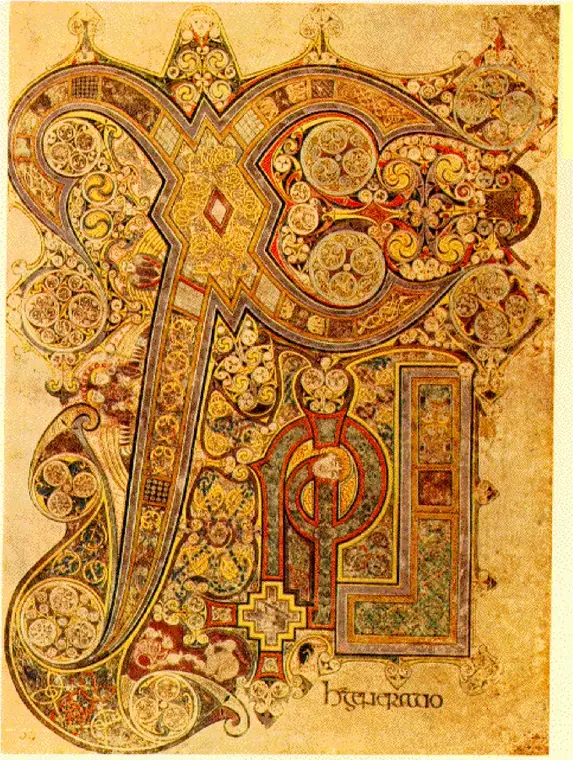
After Rome's western collapse, power fragmented and reformed: the Byzantine and Islamic worlds flourished, dynasties rose in China and India, and trading states like Mali grew rich. Faith and commerce tied distant regions together.
Maps of this age
10 mapsEmpires & states of the medieval age
20 places- Roman Empire27 BCE–1453
- Byzantine Empire285–1453
- Gupta Empire320–550
- Kingdom of Aksum400 BCE–960
- Sasanian Empire224–651
- Rashidun Caliphate632–661
- Umayyad Caliphate661–750
- Abbasid Caliphate750–1258
- Frankish Kingdom481–843
- Carolingian Empire800–887
- Tang dynasty618–907
- Tibetan Empire618–842
- Holy Roman Empire962–1806
- Mongol Empire1206–1368
- Golden Horde1243–1502
- Ilkhanate1256–1335
- Timurid Empire1370–1507
- Song dynasty960–1279
- Ming dynasty1368–1644
- Ghana Empire100–1200
Other ages