Age VI · 1800 CE – today
Modern
The modern world
The modern age, from about 1800 to the present, has changed human life more than any period since the invention of farming. World population grew from about one billion in 1800 to more than eight billion by 2022, average life expectancy more than doubled, and the share of people living in cities rose from a small minority to over half. Two forces opened the age: industrialisation, which multiplied the power available to human societies, and the political revolutions of the late eighteenth century, which spread the ideas of popular sovereignty, nationhood and individual rights.
Industry, nations and empires
The Industrial Revolution began in Britain in the late eighteenth century with mechanised textile mills and coal-fired steam engines, and spread to western Europe, the United States and later Japan and Russia. Railways, steamships and the telegraph shrank distances: a message that once took weeks to cross the Atlantic could, after the cable of 1866, arrive in minutes. Factories drew millions from the countryside into fast-growing cities, creating new working classes and new political movements, from liberalism to socialism.
Nationalism redrew the map. Brazil and most of Spain's American colonies won independence by the 1820s, Greece broke from the Ottoman Empire, and Italy and Germany were unified in 1861 and 1871. The Atlantic slave trade was abolished, and slavery itself ended in the British Empire in the 1830s, in the United States in 1865 and in Brazil in 1888. At the same time, industrial power gave a handful of states an overwhelming advantage. Britain extended its rule across India and much of the world, the European powers partitioned Africa after 1884, China was forced to open its ports after the Opium Wars, and Japan, modernising after 1868, became an imperial power in its own right.
The world wars
Rivalry among the industrial powers led to the First World War of 1914 to 1918, which killed some 15 to 20 million people and brought down the German, Austro-Hungarian, Russian and Ottoman empires. In Russia the Russian Revolution of 1917 created the first communist state, the Soviet Union. The Great Depression after 1929 helped bring authoritarian and fascist regimes to power, and the Second World War, from 1939 to 1945, was the deadliest conflict in history, killing an estimated 70 to 85 million people, including six million Jews murdered in the Holocaust. It ended with the atomic bombings of Hiroshima and Nagasaki.
Cold War, independence and globalisation
After 1945 the United States and the Soviet Union led rival blocs in the Cold War, a contest fought through an arms race, a space race, proxy wars in Korea, Vietnam and Afghanistan, and competition for influence across the world. The old empires dissolved: India and Pakistan became independent in 1947, Indonesia in 1949, and most of Africa between the late 1950s and the 1970s. The United Nations grew from 51 founding members in 1945 to 193 member states today. The People's Republic of China was founded in 1949 and, after market reforms from 1978, became an industrial giant.
Technology continued to transform daily life. Antibiotics and vaccines cut deaths from infectious disease, the Green Revolution raised crop yields, and the Apollo 11 mission landed people on the Moon in 1969. Computers, the internet and mobile phones connected billions of people by the early twenty-first century. The Cold War ended with the revolutions of 1989 and the dissolution of the Soviet Union in 1991. Since then, globalisation, the economic rise of Asia, the threat of climate change caused by fossil fuels and new conflicts, including Russia's full-scale invasion of Ukraine in 2022, have shaped a world that is more connected, and more crowded, than ever before.
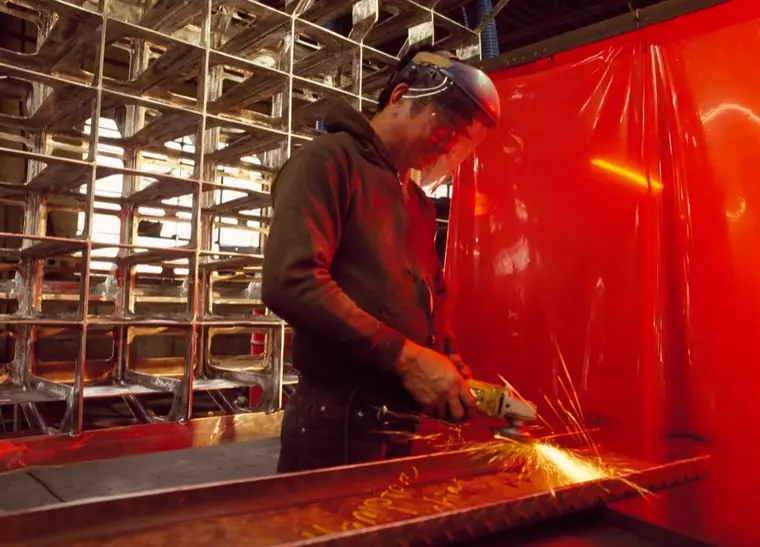
Industry, nations, and rapid change. Steam, electricity, and later digital technology transformed daily life; empires expanded and then dissolved; and world wars, decolonization, and globalization drew nearly every society into one connected world.
Maps of this age
15 mapsEmpires & states of the modern age
20 places- Holy Roman Empire962–1806
- Papal States754–1870
- Poland
- Ottoman Empire1299–1922
- Mughal Empire1526–1857
- Maratha Empire1674–1818
- Qing dynasty1616–1912
- Joseon dynasty1392–1897
- Spanish Empire1402–1976
- Portuguese Empire1415–1999
- Portugal
- British Empire1583–1997
- Netherlands
- Kingdom of Prussia1701–1918
- Habsburg Monarchy1526–1918
- Sweden
- Denmark
- Russia
- Russian Empire1721–1917
- First French Empire1804–1815
Other ages